

Table of Contents
MOUSE: P.I. For Hire on PS5
There is an immediate pleasure to MOUSE: P.I. For Hire that comes from seeing its world move. Before the first case has properly unfolded, before Jack Pepper has followed enough clues to realise that Mouseburg is rotting from the inside, the game from PlaySide Studios andFumi Games already has its claws in you through sheer presentation.
Its rubber hose animation is not just a surface-level trick. It informs the way characters bounce into frame, the way enemies collapse, the way weapons kick, and the way the city itself feels like an old cartoon reel left to fester in a detective’s drawer.
The black-and-white art direction is crucial to that effect. Where Cuphead leaned into colour, musicality, and manic boss theatre, MOUSE: P.I. For Hire uses the same broad animation tradition to create a moodier, grittier experience.
Mouseburg feels like a place built from newspaper ink, cigarette smoke, jazz clubs, back alleys, and crooked smiles. It is playful, certainly, but rarely soft. That contrast gives the game its best flavour. It can make you laugh at a ridiculous gag one moment, then pull you into a hardboiled conspiracy the next, without feeling like it has betrayed its own tone.
The story leans proudly into the familiar machinery of film noir. Jack Pepper is the weary private investigator. There are missing persons, suspicious deaths, dirty cops, political operators, cultish forces, and the inevitable feeling that every case is connected to something larger than it first appears. None of this is especially subtle, but subtlety is not really the point. The game understands the pleasure of genre texture. It knows that a shadowy office, a suspicious informant, a dangerous dame, and a city full of secrets can still work if they are delivered with enough confidence.
What helps most is that the setting in MOUSE: P.I. For Hire feels meaningfully inhabited. Mouseburg is not merely a collection of shooting galleries dressed up in vintage cartoon clothing. It has social spaces, optional conversations, small diversions, and a hub that gives Jack’s work a sense of routine. The city sells the illusion well enough that the lack of deeper investigation mechanics feels disappointing precisely because the world seems ready to support them.
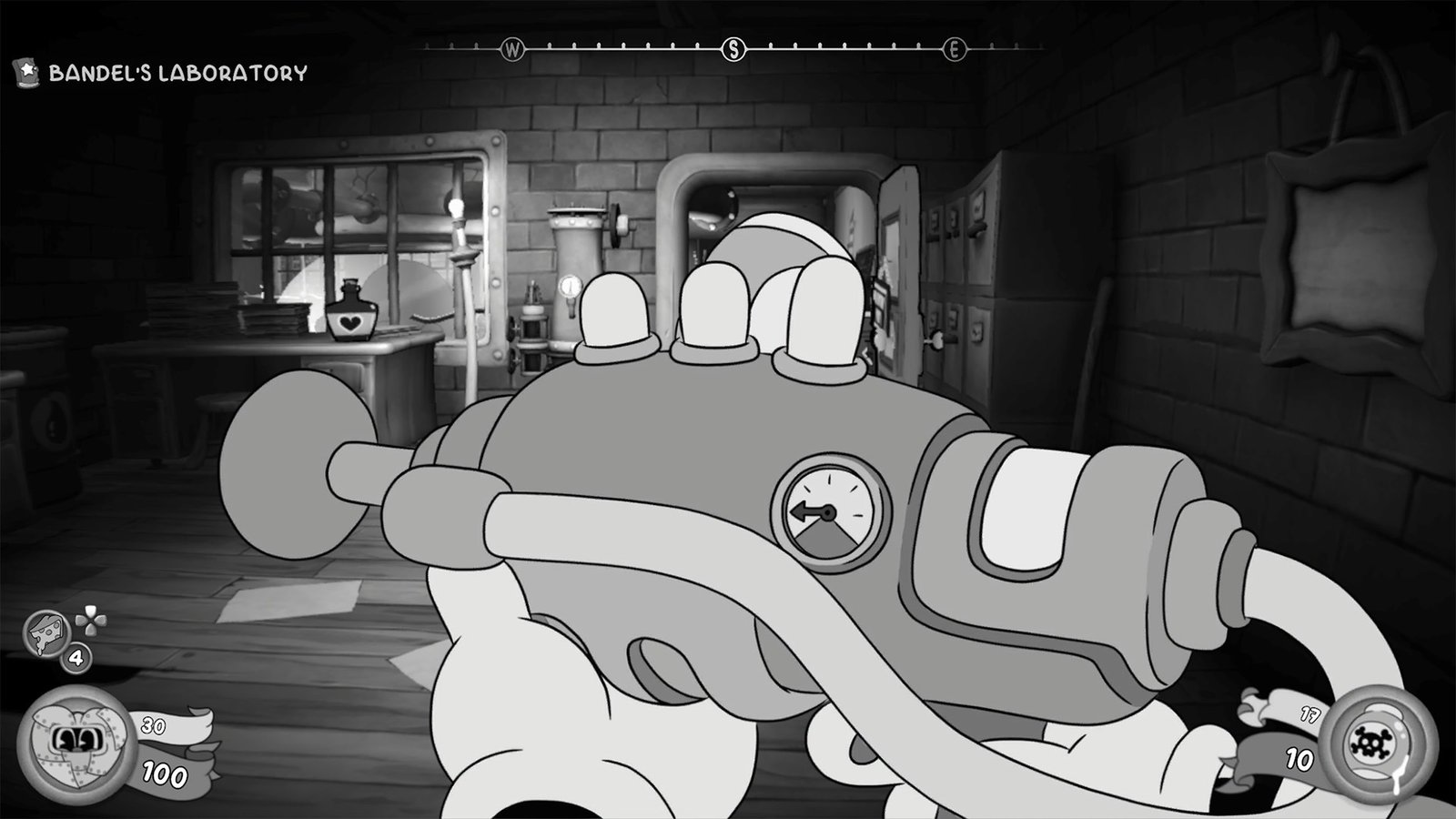
MOUSE: P.I. For Hire Shooting Is Sharper Than The Gimmick
The smartest surprise in MOUSE: P.I. For Hire is that it isn’t relying solely on novelty. It would have been easy for the game to coast on its art direction, toss in a few cartoon weapons, and let the visual concept carry the rest. Instead, this is a genuinely competent boomer shooter with fast movement, readable encounters, and weapons that feel satisfying once the controls are properly tuned. After a few sensitivity adjustments, the rhythm settles into place nicely, and the game becomes much easier to trust.
That trust matters. The black-and-white presentation could have easily worked against the action, especially in larger fights where enemies, pickups, hazards, and secrets all compete for attention. Instead, the game usually remains clear. Enemies are readable enough, routes make sense often enough, and the visual language rarely collapses into clutter. The result is a shooter that looks like a novelty but plays with a pleasing degree of confidence.
Combat shines most when MOUSE: P.I. For Hire lets its cartoon logic inform practical play. Shooting at an exposed foot beneath a riot shield, using environmental hazards to thin out crowds, and swapping between firearms that feel just exaggerated enough all help the action feel lively. The early arsenal follows familiar genre language, with a pistol, shotgun, double-barreled option, and Thompson-style weapon establishing a clear foundation. From there, the game grows stranger, giving its weapons enough comic identity to feel at home in this world.
The upgrade system adds another satisfying layer, even if its practical impact is uneven. Schematics improve ammo capacity and damage while unlocking alternate fire options, but not every alternate fire becomes essential. Some are fun to test, then easy to forget once the regular trigger pull remains the most reliable solution. The better reward is cosmetic. Upgraded weapons change visibly, gaining extra details that make progression feel tangible. It is a small touch, but an effective one, recalling the simple joy of seeing a weapon physically evolve after you have invested in it.
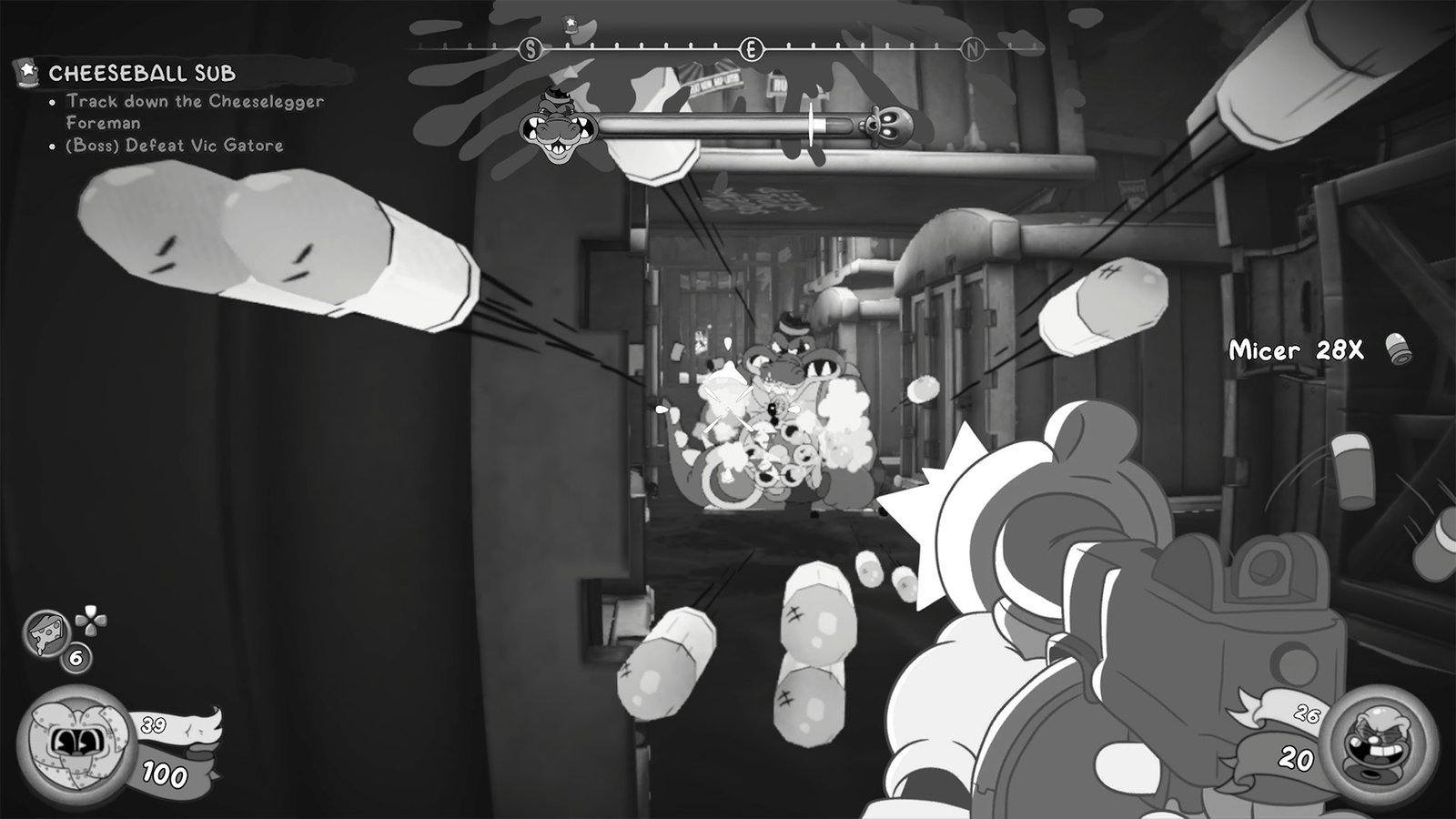
Boss fights are another highlight. They are not brutally demanding skill checks, but they break up the campaign with enough spectacle and pattern recognition to feel memorable. In a game where many standard encounters begin to repeat, these larger fights help restore energy. They remind you that MOUSE: P.I. For Hire is at its best when it treats combat as animation, choreography, and mechanical challenge all at once.
Repetition Starts To Gnaw At The Fun
For all its strengths, MOUSE: P.I. For Hire does run into the same problem that affects many retro-inspired shooters. It makes a strong first impression, has a very clear identity, and runs a generous campaign, but it does not always have enough variety to sustain that length without friction. Enemy variety is the most obvious culprit. There are distinct enemy types, but the game often dresses similar behaviours in different faction clothing rather than giving each group a truly different combat identity.
That repetition does not ruin the combat, but it does make certain stretches blur together. After enough melee attackers, shield users, and ranged foes have cycled through the same basic patterns, the joy of the setting has to work harder to carry the momentum. The best levels compensate with strong environmental ideas, visual jokes, or set-piece encounters. The weaker ones feel more like corridors between the next memorable bit of art direction.
The humour in MOUSE: P.I. For Hire has a similar issue. At its best, the writing understands the difference between homage and parody. It plays with noir language, cartoon violence, rodent puns, and old-Hollywood absurdity without entirely winking itself out of existence. Over time, though, the number of references begins to feel heavy. Nods to other games, films, memes, and pop culture can be amusing in isolation, but when they arrive too frequently, they flatten the game’s own voice. Mouseburg is interesting enough that it does not need to keep reminding players of other things.
The detective fantasy is also less interactive than what many might expect from MOUSE: P.I. For Hire. Jack collects evidence, pieces together cases, and updates his board, but much of the actual deduction is done for the player rather than by them. This keeps the pace moving, which makes sense for a shooter, but it also leaves a little unused potential on the table. The game gives you a fantastic detective office, a noir-soaked city, and a hero built for sleuthing, then often chooses to guide you through the mystery rather than let you wrestle with it.
That said, the guided nature does serve the pacing. MOUSE: P.I. For Hire is not trying to become L.A. Noire with cartoon firearms. It is a shooter first, a detective story second, and a mystery game only in flavour. Once that expectation is set, its limitations become easier to accept. The frustration is not that the game fails at being something else. It is that it comes close enough to something richer that you can see the missed opportunity.
Missable Secrets And Playful Extras Cut Both Ways
Exploration is one of the more interesting parts of MOUSE: P.I. For Hire, largely because the game makes secrets feel valuable. Collectibles include comic strips, baseball cards, newspapers, and weapon upgrade schematics, while side jobs give players more reasons to poke around its levels. The guidance brush, which helps point Jack towards the main route, is a clever compromise. It allows the game to preserve level complexity without leaving players stranded, and it is especially useful when you are trying to judge whether a path leads to progress or a secret.
The issue is that the game can be oddly inflexible about missed content. Once progression locks you out of backtracking, missing a collectible or side job can feel harsher than it needs to. The hub store softens this by letting players purchase certain missed collectibles, but that is not the same as finding them naturally. It solves the checklist problem without solving the satisfaction problem. Weapon schematics being excluded from that safety net makes the issue stand out even more.
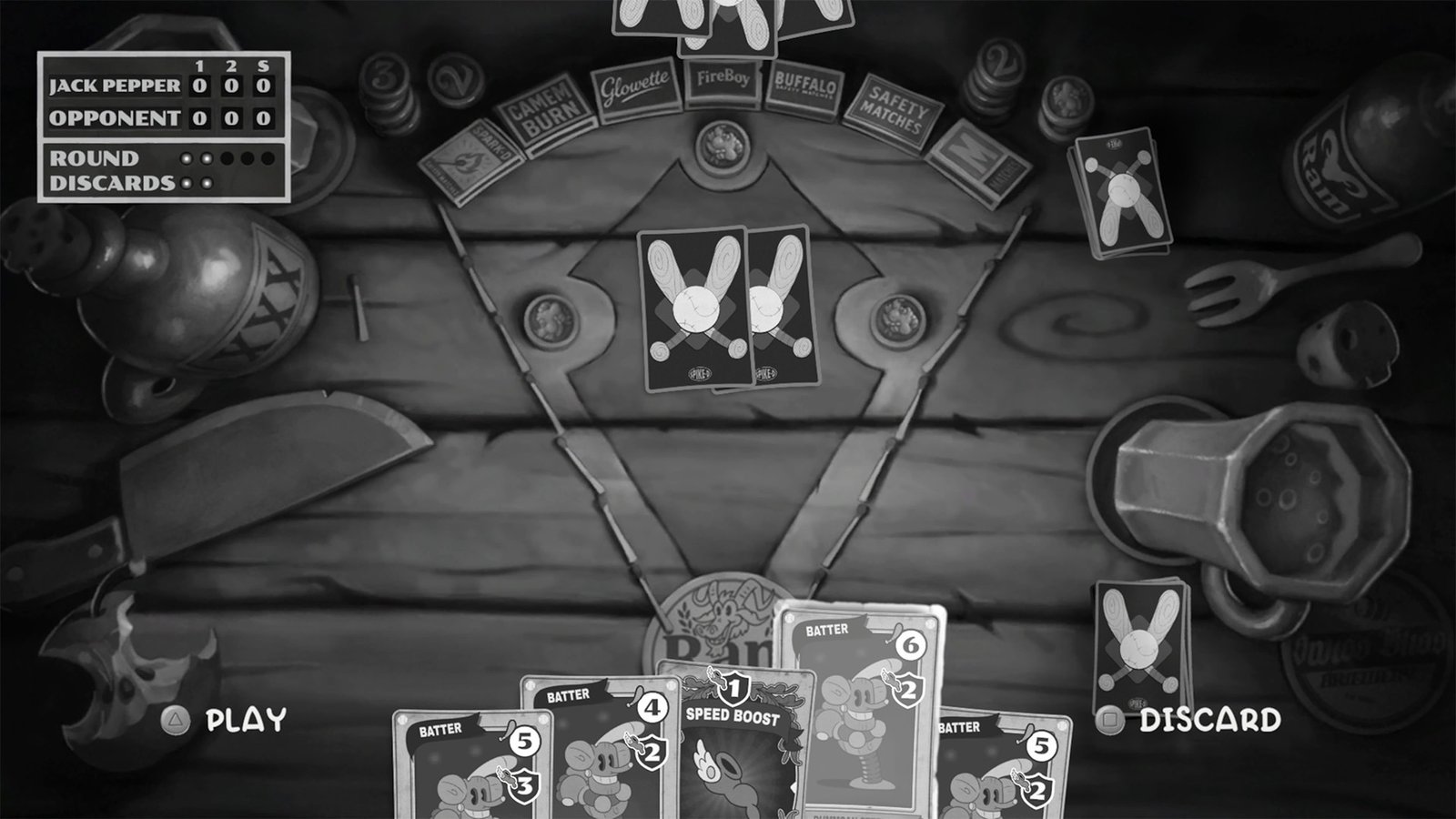
This becomes most frustrating because the optional content is often worthwhile. Baseball cards are not just menu filler in MOUSE: P.I. For Hire. They feed into a simple but charming card game in the hub, where batting and pitching cards are played against one another as a light diversion that adds more texture to the system. It is not deep enough to steal the show, but it gives Mouseburg one of its few proper non-story distractions, and it helps the world feel less like a series of missions stitched together by cutscenes.
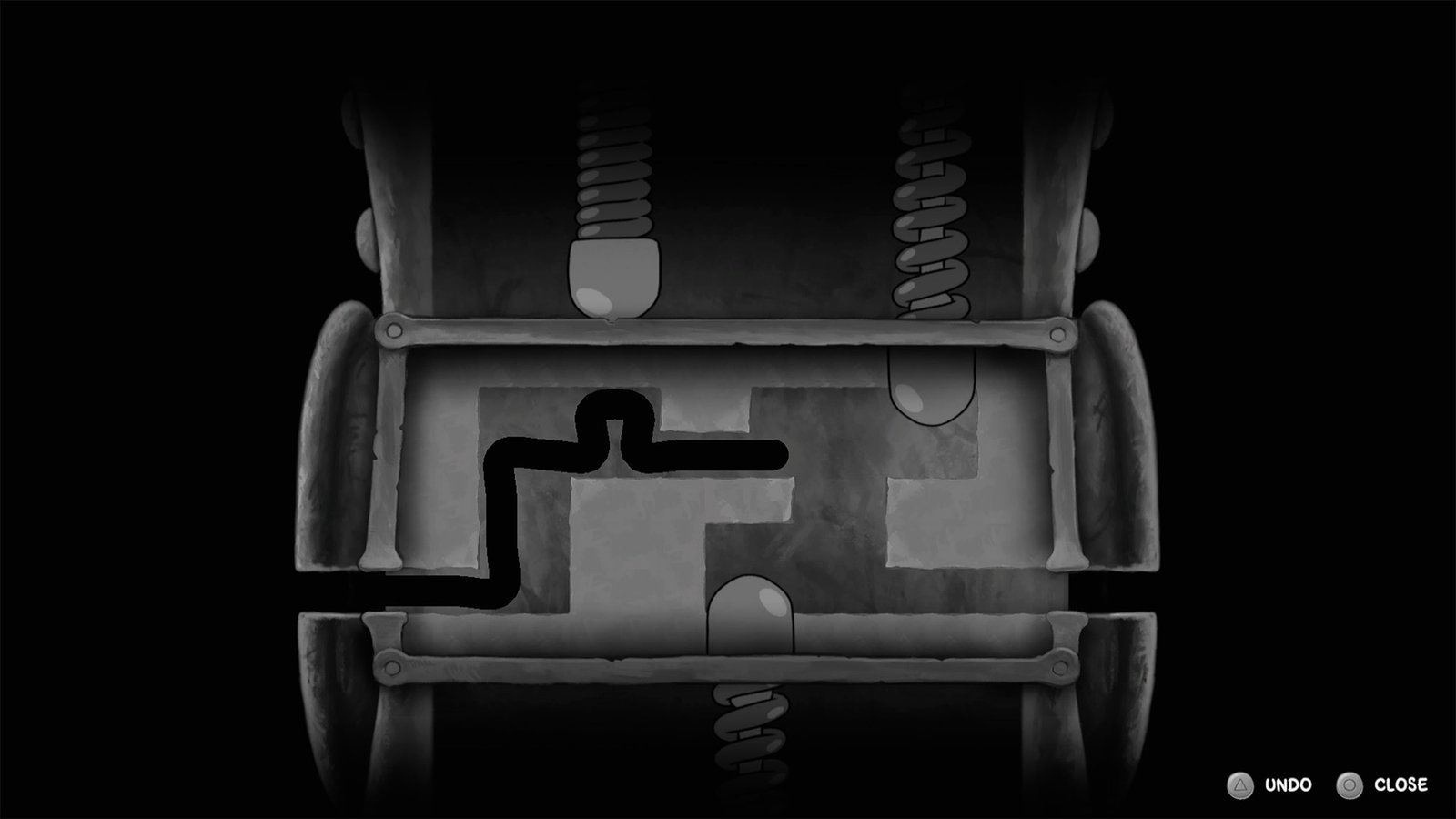
The lockpicking mechanic, or tailpicking as the game’s joke effectively makes it, is similarly charming. Simple locks are low-pressure mazes, while challenge locks introduce time limits, move limits, and hazards that can throw you out. It is a small system, but one that fits neatly into the world. Safe rewards can become predictable, especially once you recognise how money and schematics are distributed, yet the act of opening them remains satisfying because it has been dressed with the same playful specificity as everything else.
That is ultimately where MOUSE: P.I. For Hire sits. It is not flawless, and its frustrations are real. Enemy repetition dulls some of the later action, references occasionally smother the sharper writing, and the lack of mission replay makes its missable content more irritating than it should be.
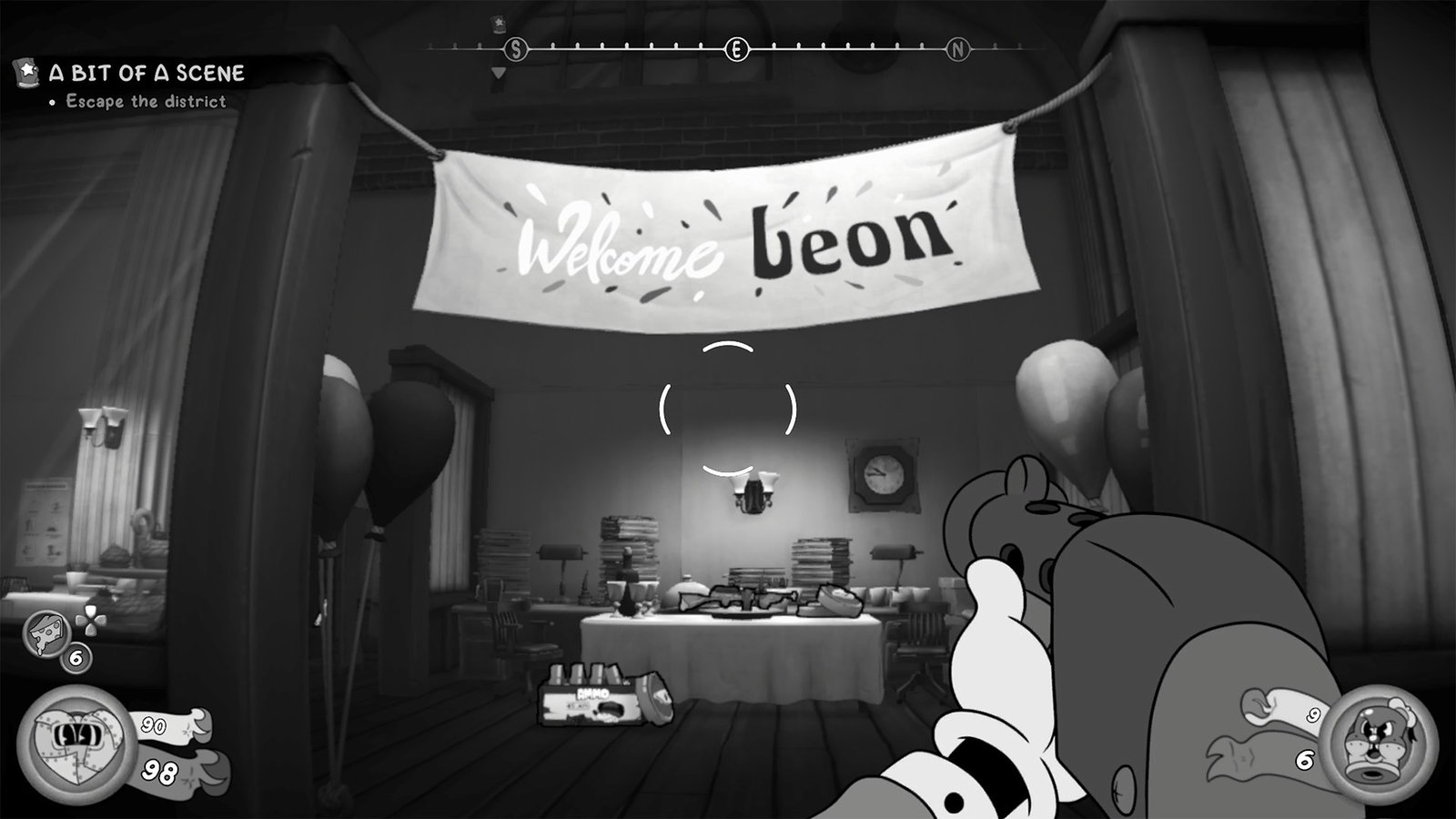
Even so, its style is not empty. It’s world has character, its guns feel good, its upgrades have personality, and its noir cartoon fantasy is delivered with enough craft to make the whole thing memorable. This is a smart, stylish, and surprisingly robust shooter that earns its cheese, even when it leaves a few crumbs behind.
MOUSE: P.I. For Hire is available now on PlayStation 5, Xbox Series X|S, PC, and Nintendo Switch.
SavePoint Score
Summary
MOUSE: P.I. For Hire is a lively and stylish FPS that makes excellent use of its cartoon noir identity. Its shooting is sharper than expected, its world is full of personality, and its best moments are bursting with visual wit. Repetition, missable content, and reference-heavy humour keep it from true greatness, but this is still a caper worth chasing.
