

Table of Contents
Styx: Blades of Greed on PS5 Pro
There is something immediately appealing about Styx: Blades of Greed simply because it knows exactly what it wants to be. At a time when stealth mechanics often end up diluted into broader action-adventure formulas, Cyanide and Nacon’s goblin antihero returns with a game that still believes in patience, planning, and punishment. Styx is not built to dominate a battlefield. He is built to slip through it, exploit it, and leave chaos in his wake without ever really earning the spotlight.
That commitment gives Styx: Blades of Greed a strong foundation. The best moments come when you are perched above a guarded route, studying patrols and looking for the tiny opening that turns an impossible approach into a clean infiltration. The game is at its most effective when it trusts you to observe your surroundings and make sense of a space on your own terms. That sense of vulnerability remains one of Styx’s greatest strengths. You are rarely encouraged to fight fair, and the game is better for it.
There is also a welcome sense of mischief in the way Styx moves through the world. He is still an unlikeable little schemer, but that suits the design. You are not a noble hero cleaning up a fantasy realm. You are a thief, an infiltrator, and an opportunist. When the systems click, that fantasy feels distinct enough to separate Styx: Blades of Greed from the many bigger-budget games that have long abandoned dedicated stealth as their main attraction.
Bigger Spaces Bring Bigger Possibilities
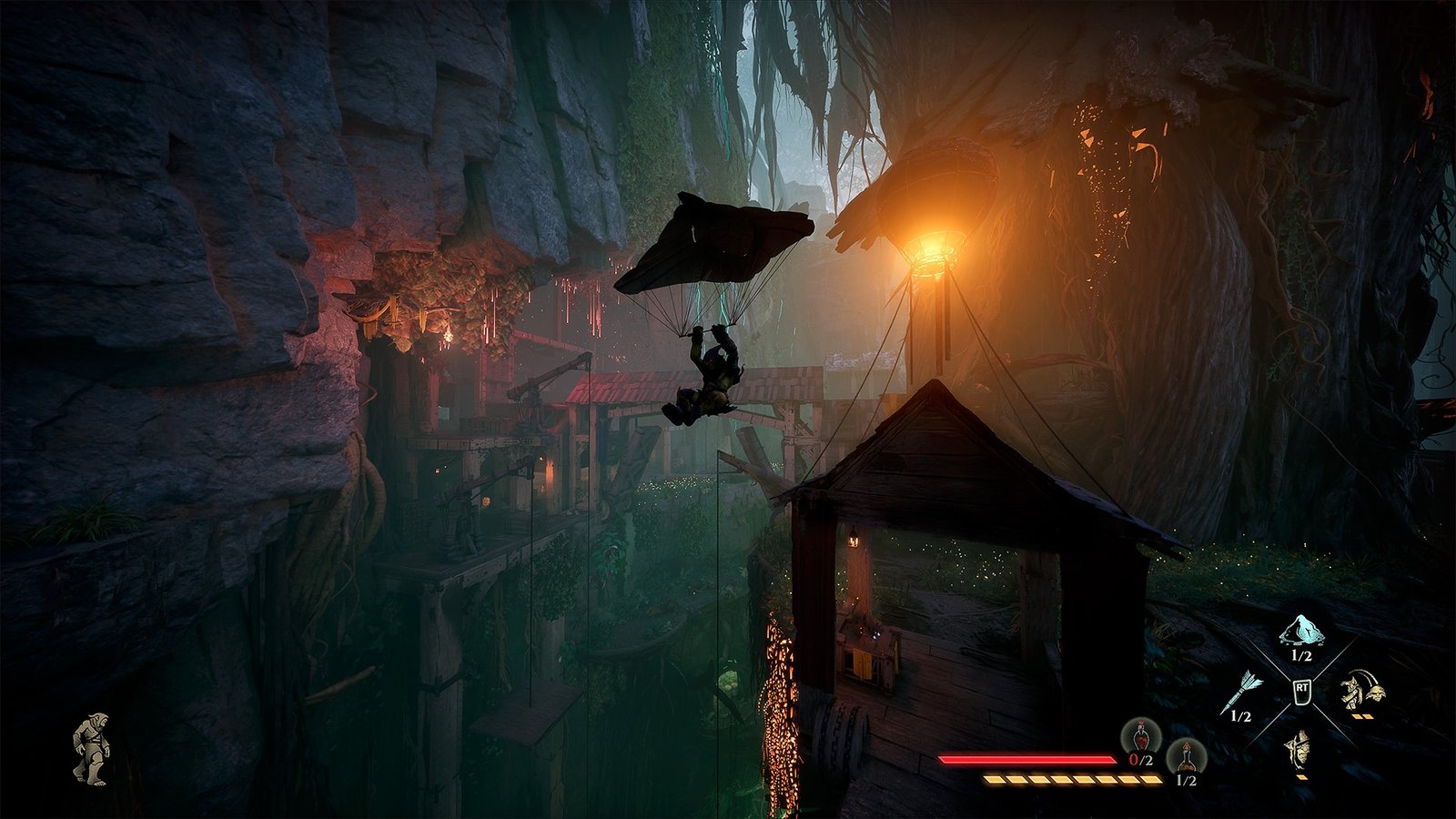
The biggest reason to play Styx: Blades of Greed is the level design. This is where the game most often justifies its return. The environments are broad, layered, and clearly built to support multiple routes. You are encouraged to think vertically, to look for overhead paths, hidden ledges, crawl spaces, and alternative approaches that make every objective feel like a spatial puzzle rather than a straightforward task marker.
When you thread together movement, timing, and abilities to bypass a heavily guarded area, there is a genuine sense of craft to the experience. Styx’s tools add enough flexibility to make infiltration feel playful rather than rigid. The game understands that stealth should not only be about avoiding detection, but also about making players feel clever for bending a hostile space to their will.
At its best, Styx: Blades of Greed captures that old-school stealth thrill of slowly mastering a space. The joy is not in flashy spectacle, but in seeing an area that first looked impossible gradually reveal its shortcuts, blind spots, and opportunities. In those stretches, the game can feel refreshingly confident. It does not need to hold your hand because the environment itself is doing the heavy lifting.
The trouble is that bigger spaces do not always mean better pacing. Some sections feel like they have been expanded without being sharpened. What begins as freedom can start to feel like drag, especially when navigation loses momentum or when repeated trial and error stops feeling like experimentation and becomes friction. There is a fine line between demanding stealth and cumbersome stealth, and Styx: Blades of Greed does not always stay on the right side of it.
The Same Roughness Still Holds It Back
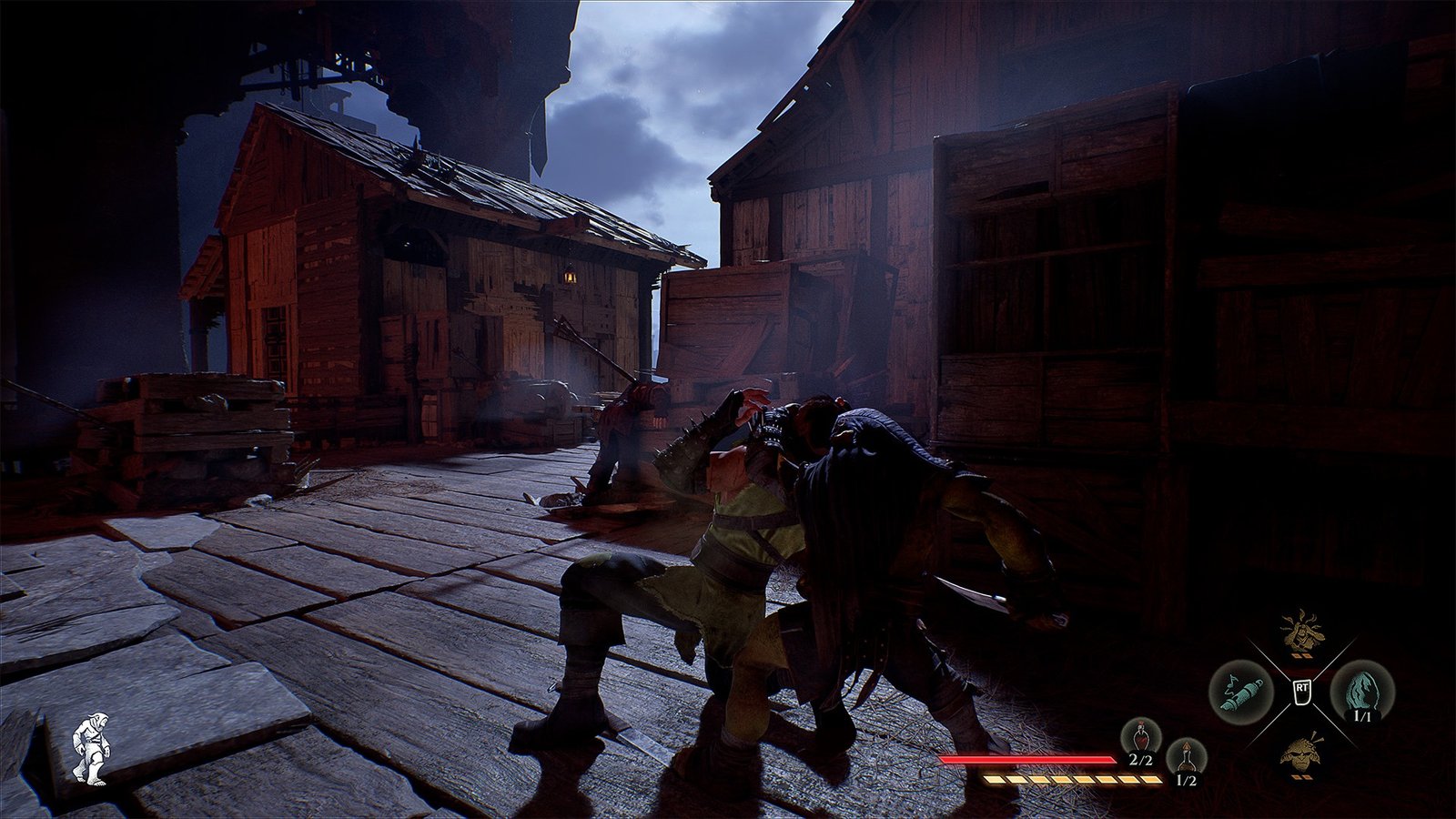
For all the intelligence in its stealth design, this latest entry remains stubbornly attached to the same kind of rough edges that have followed this series for years. That roughness shows up in ways that are difficult to ignore. Controls can feel a little awkward, animations can look stiff, and interactions do not always have the responsiveness that a stealth game like this needs. In a genre where precision matters, even small bits of friction can quickly chip away at trust.
That becomes especially frustrating because the game is built around careful execution. When you fail in a stealth game, you need to believe it was your fault. Styx: Blades of Greed does not always provide that clarity. Sometimes the line between player error and system awkwardness feels blurrier than it should. Those moments do not ruin the experience outright, but they do undermine the satisfaction that the game works so hard to build elsewhere.
The presentation also struggles to elevate the material. The story serves its function, but rarely becomes compelling in its own right. It moves Styx from one scenario to the next and gives him enough reason to keep stealing and scheming, but it lacks the dramatic pull needed to carry the quieter stretches. Voice work and general delivery do not help much either, often leaving the narrative feeling more serviceable than memorable.
Styx: Blades of Greed is not short on good ideas. In fact, some of its stealth fundamentals are stronger than those in many modern games. But the same old problems remain embedded in the experience, and they are significant enough to stop the game from rising above niche appeal.
A Good Stealth Game That Never Quite Escapes Its Past
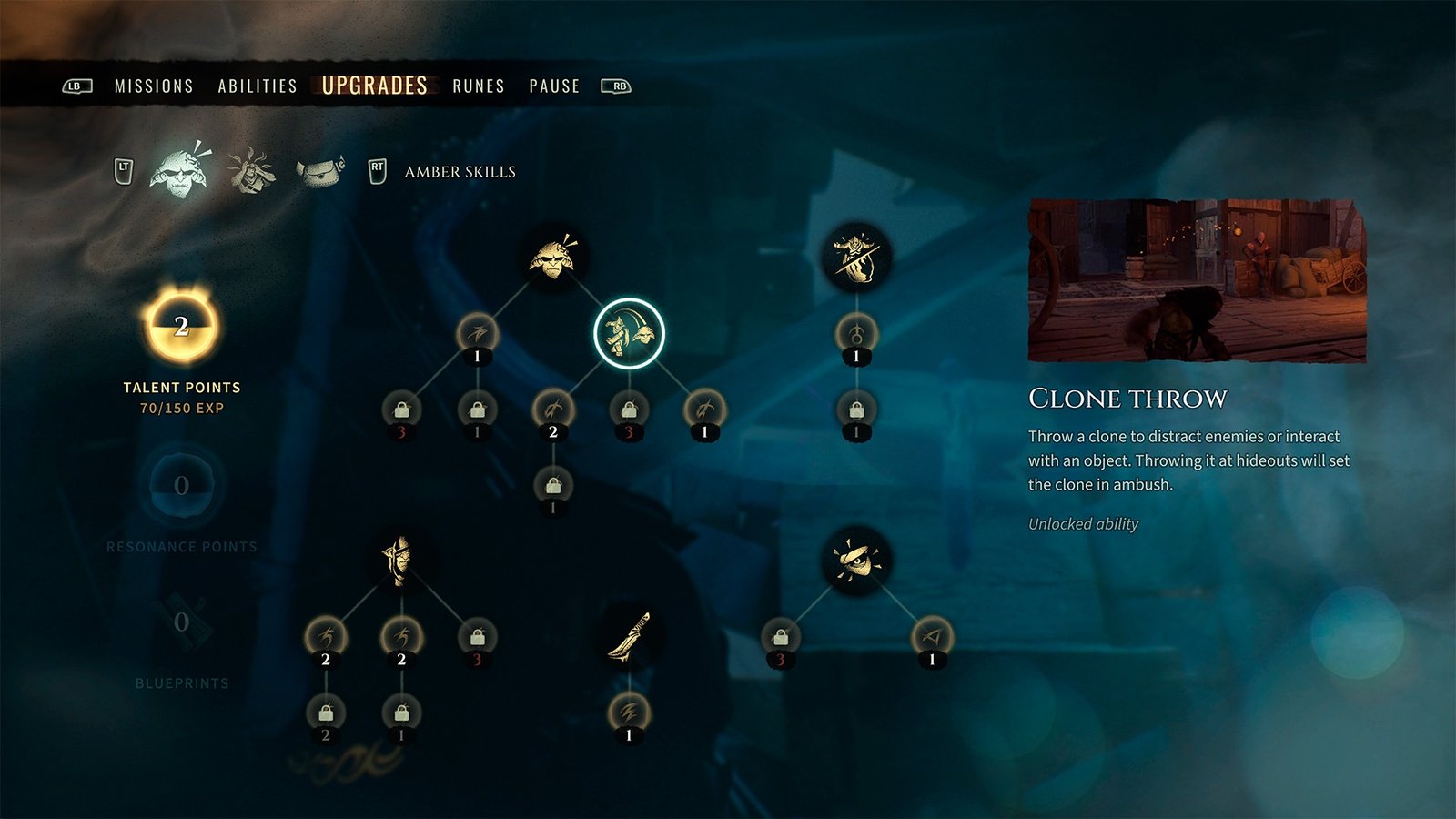
What makes Styx: Blades of Greed interesting is also what makes it frustrating. This is a game with a real identity, one that clearly understands the pleasures of infiltration, verticality, and player-driven problem solving.
When it is working, it feels sharp, deliberate, and wonderfully committed to a style of stealth that is increasingly rare. The rough handling, uneven pacing, and lacklustre narrative keep pulling it back. It is clever, yes, but it feels trapped in an older, less polished shell.
For players who miss dedicated stealth games and are willing to tolerate some mess, there is enough here to enjoy. For everyone else, Styx: Blades of Greed is a reminder that having smart ideas is only part of the battle. Sometimes the old problems cut deeper than cleverness can cover.
Styx: Blades of Greed is available now on PlayStation 5, Xbox Series X|S, and PC.
SavePoint Score
Summary
Styx: Blades of Greed still understands the appeal of pure stealth better than many of its peers. Sneaking through layered spaces, exploiting vertical routes, and using Styx’s tricks to outmanoeuvre enemies can be deeply satisfying. Yet for every clever infiltration, there is another reminder that this series still struggles to smooth out its long-standing frustrations. It remains an engaging stealth adventure, but one whose age shows in all the wrong places.
