

Table of Contents
Stranger Than Heaven’s New Combat Starts Strong Before Fighting Back
Stranger Than Heaven is meant to be the start of something new for RGG Studio, even if its historical setting and connections continue to invite comparisons to the Like a Dragon series. From its ambitious five-era structure to unexpected celebrity casting and some very deliberate links to familiar Like a Dragon history, it remains one of SEGA and RGG Studio’s boldest swings in years.
At Gamescom 2026, though, there was little time for questions about exactly how all of that fits together. Our hands-on demo was almost entirely concerned with one thing: fighting. That initially worked in Stranger Than Heaven’s favour. Its unusual left- and right-attack system was easier to understand than expected, and there are interesting ideas behind the way the protagonist, Makoto Daito, uses his fists, weapons, and surroundings.
Once the enemies started putting up a proper fight, however, the problems became harder to ignore. The focused demo skipped almost everything outside combat, throwing us into fights across three periods and locations: Kokura in 1915, Kure in Hiroshima in 1929, and Minami in Osaka in 1943.
After a short introduction showing Japanese American outcast Makoto arriving by train, it did not take long before several locals were looking for trouble.
Separate Controls Make a Surprisingly Good First Impression
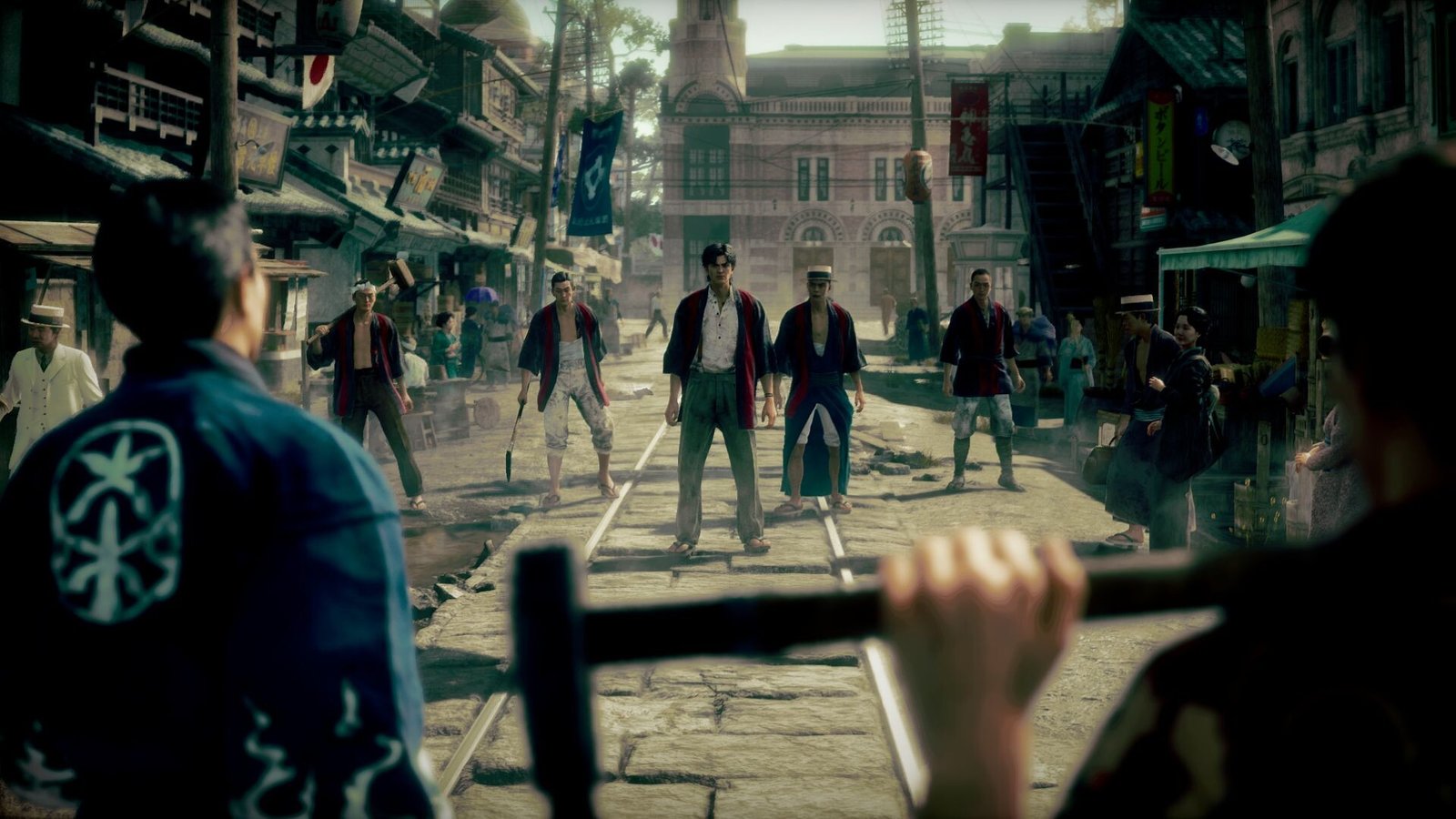
As RGG Studio explained before the demo, Stranger Than Heaven separates Makoto’s body across the controller. The left bumper and trigger control attacks from his left side, while the right equivalents handle the other. Inputs can be chained together into combinations, with buttons held down for stronger charged punches or kicks that can also help break an opponent’s defence.
It sounds needlessly complicated when first explained, particularly after years of far more conventional button mashing in real-time Like a Dragon combat, but it quickly becomes intuitive, and weapons make the idea more interesting.
Give Makoto a knife and one hand holds the blade while the other remains free to punch, push, or contribute to different contextual combinations depending on the sequence of inputs and his positioning. Getting knocked down also opens up additional responses, including rolling away or kicking approaching enemies backwards to create some breathing room.
Against the first group of relatively harmless opponents, the whole system shows plenty of promise. Using both triggers to grab, shake, and throw someone around is satisfying, while alternating attacks between both sides quickly starts feeling natural. It was once the demo began asking more of its defensive mechanics that things started falling apart.
Crowded Fights Expose Unreliable Defensive Options
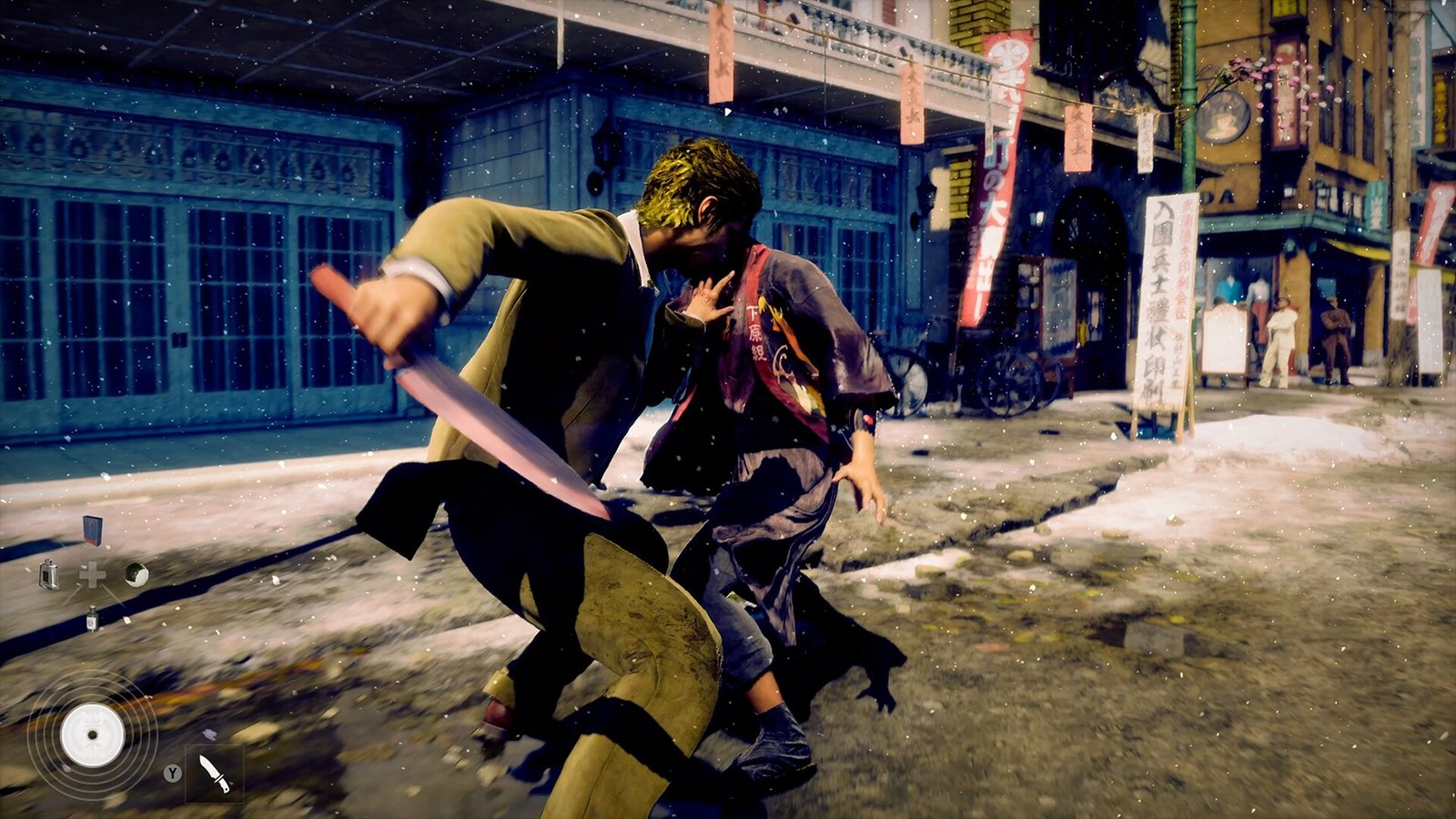
The snowy Hiroshima sequence pits Makoto against a much larger group, and initially hands him a sizeable metal pipe to even the odds. Long swings are effective at controlling crowds, particularly when enemies approach from the same direction, but every attack commits Makoto to a lengthy animation. Timing therefore matters considerably more once opponents begin surrounding him.
That should be where dodging becomes essential, but instead, I frequently found myself wishing it worked better. Makoto barely creates any distance when evading, making it difficult to properly escape a crowded situation. Even what appeared to be well-timed evasions sometimes resulted in incoming hits connecting anyway, giving the defensive action an unreliable quality that quickly became frustrating.
The problem became even clearer against the group’s largest opponent. Heavy pipe swings did little to interrupt him, while their lengthy animations left Makoto wide open to punishment. Switching to a smaller knife eventually proved more successful because I could slowly whittle his health down without committing to such cumbersome attacks.
But then the parry started causing problems of its own. When the enemy charged forward, Makoto lacked the mobility to simply sprint or sidestep clear of danger. Parrying was theoretically the answer, yet successfully deploying it never felt consistent enough for me to trust. Rather than thinking about how to beat the opponent, I increasingly felt like I was negotiating with the controls.
Awkward Parries Undercut the Tactical Ambition
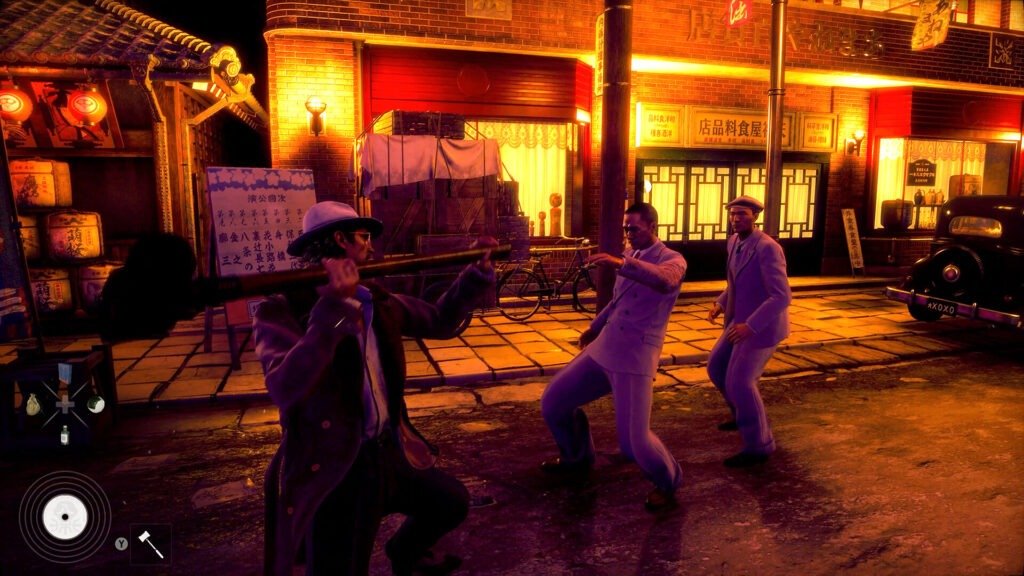
The final Osaka encounter made that disconnect much harder to overlook. Here, Makoto faces a single shirtless opponent armed with a katana. He is quick, extremely aggressive, and capable of carving through Makoto’s health before there is much opportunity to stop and use a healing item.
Running away is not really an option. Stranger Than Heaven effectively locks its combatants into a boxing match. Once a fight begins, you are expected to deal with the aggression directly rather than circle an arena waiting for an ideal opportunity, and in theory, I like that.
A relentless combat system that forces players to read attacks, respond quickly, and commit to their own offence could give Stranger Than Heaven a very different identity from RGG Studio’s other action games, but the current defensive controls make that idea considerably less enjoyable than it sounds.
Parrying requires a face button combined with the appropriate bumper, with separate inputs depending on which side of Makoto needs to respond. That might mechanically reinforce the left- and right-body concept, but during a fast fight, it feels like an unnecessary complication layered onto an action that needs to be immediate.
There was also too little visual feedback to make me confident that Makoto was properly defending. A strong parry system should gradually teach players to recognise an opponent’s rhythm until a difficult encounter begins feeling like a conversation between attacks and counters. Here, I spent far too much time wondering whether I had mistimed the input or whether the attack had simply ignored it.
The solution I eventually found was not particularly elegant, as I backed the katana wielder against a wall and repeatedly stabbed him. For whatever reason, his defence struggled to cope with the constant attacks, and I am fairly certain I simply cheesed my way through what was supposed to be the demo’s climactic duel.
It worked, but it also felt completely at odds with what Stranger Than Heaven seems to want its combat to be.
Stranger Than Heaven’s Combat Has Good Ideas That Need More Time
That is the frustrating part of our time with Stranger Than Heaven at Gamescom 2026. There is something genuinely interesting underneath the clumsiness, as separating Makoto’s left and right sides creates unusual combinations.
Weapons interact with his free limbs instead of simply replacing his entire moveset. Committing players to close-quarters fights could reinforce the physicality RGG Studio clearly wants in every punch, kick, and stab. The offensive side already shows flashes of that potential, but it is your defence that is currently getting in the way.
Dodges do not create enough separation, parries feel cumbersome during faster encounters, and long attack animations become particularly punishing when enemies refuse to react to heavy blows. When those problems overlap, fights stop feeling tactical and start feeling restrictive. There is still time for that to change before release, and this was a concentrated Gamescom demo rather than an indication of how every encounter in the full game will work.
But combat appears set to occupy a significant amount of Makoto’s journey across Stranger Than Heaven’s sprawling timeline. If RGG Studio wants its new system to feel more calculated than the chaos of Like a Dragon, the answer cannot be making familiar defensive actions harder to execute simply because each side of Makoto needs its own button.
The idea already has plenty of style; now, it needs the responsiveness to match.
Stranger Than Heaven launches on January 15, 2027 for PlayStation 5, Xbox Series X|S and PC, with Xbox Cloud Gaming and Game Pass support.
