

Table of Contents
Theos: Cities of Myth on PC
Building a city for a god is a divine undertaking, but reaching that future depends on getting everyday necessities down the right street. Theos: Cities of Myth understands the appeal of that collision. Its ancient Greece is a place of imposing sanctuaries and divine favour, but the foundations of a successful civilisation remain reassuringly practical: feed the population, keep essential services moving, and avoid expanding faster than the economy can support.
Developed by Triskell Interactive and published by Dotemu, this mythological city builder carries forward the studio’s work on Pharaoh: A New Era. The result is an inviting return to a familiar management style, given personality by its Olympian patrons, though running a larger settlement can become more exhausting than those attractive streets initially suggest.
A City Worthy of the Gods
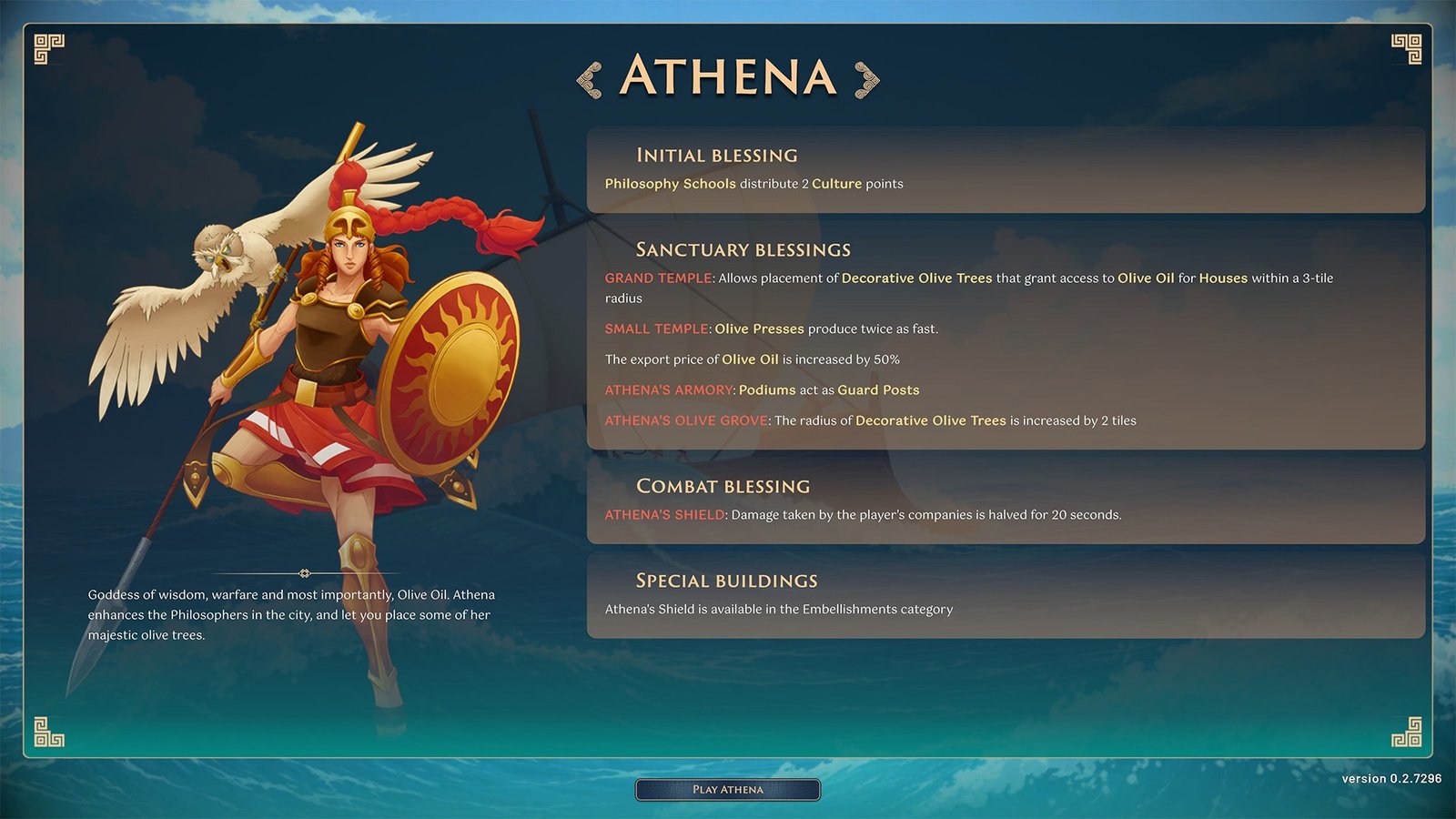
The Sanctuary gives each settlement its centre of gravity, establishing the relationship between civic development and divine approval. Seven patron deities offer benefits that encourage different priorities. Athena’s connection to culture and Ares’ military advantages give worship a practical purpose, making the choice of patron part of the city’s development rather than simply an excuse to erect a different monument. The challenge is finding room for those ambitions while maintaining the services that make ordinary life possible.
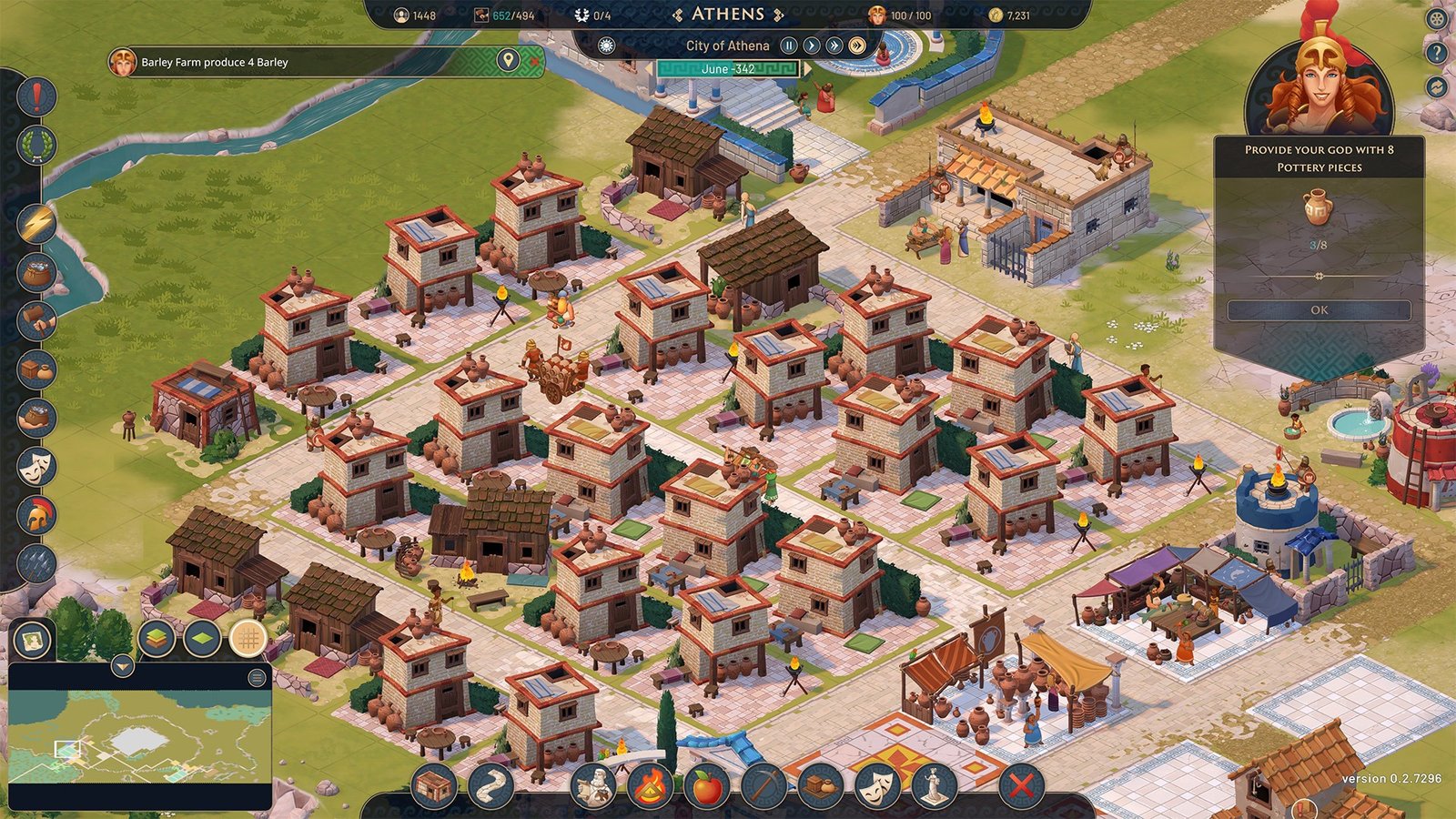
That relationship prospers in Theos: Cities of Myth because the setting embraces the overlap between history and mythology. Philosophy schools and theatres belong alongside monumental temples, while famous figures offer another incentive to develop a prosperous city. The pleasure comes from seeing these elements become part of a functioning settlement, where cultural achievement and religious ambition draw upon the same resources needed to house and sustain its people. The gods provide a compelling reason to keep building, even when the next requirement is another production chain.
Adventure mode offers a directed introduction through linked objectives and gradual unlocks, giving new responsibilities room to establish themselves before the city becomes more complicated. Sandbox play gives you more freedom to choose a patron and pursue a settlement of your own design. Together, they offer both the appeal of working toward a defined goal and the longer satisfaction of refining a city, since its layout still has room for improvement.
Prosperity Takes Careful Planning
The strongest foundations of Theos: Cities of Myth are the connections between production, storage and consumption. Building more homes means finding the goods and services to support them, while developing the economy introduces further demands on space and labour. That familiar progression remains persuasive because expansion creates problems worth solving. There is a particular satisfaction in understanding why a neighbourhood has stalled, then adjusting the wider network until it can grow again, a pleasure that also gives Pioneers of Pagonia much of its appeal.
Service delivery, however, demands a specific kind of attention. Workers travel along roads to supply goods and provide services, so placing a useful building nearby does not necessarily mean every home receives its benefits. Theos: Cities of Myth lets you set those routes directly, giving you control over a system that can otherwise leave players wondering why a seemingly sensible layout is failing. Planning a neighbourhood therefore involves considering the journey through it as carefully as the buildings themselves.
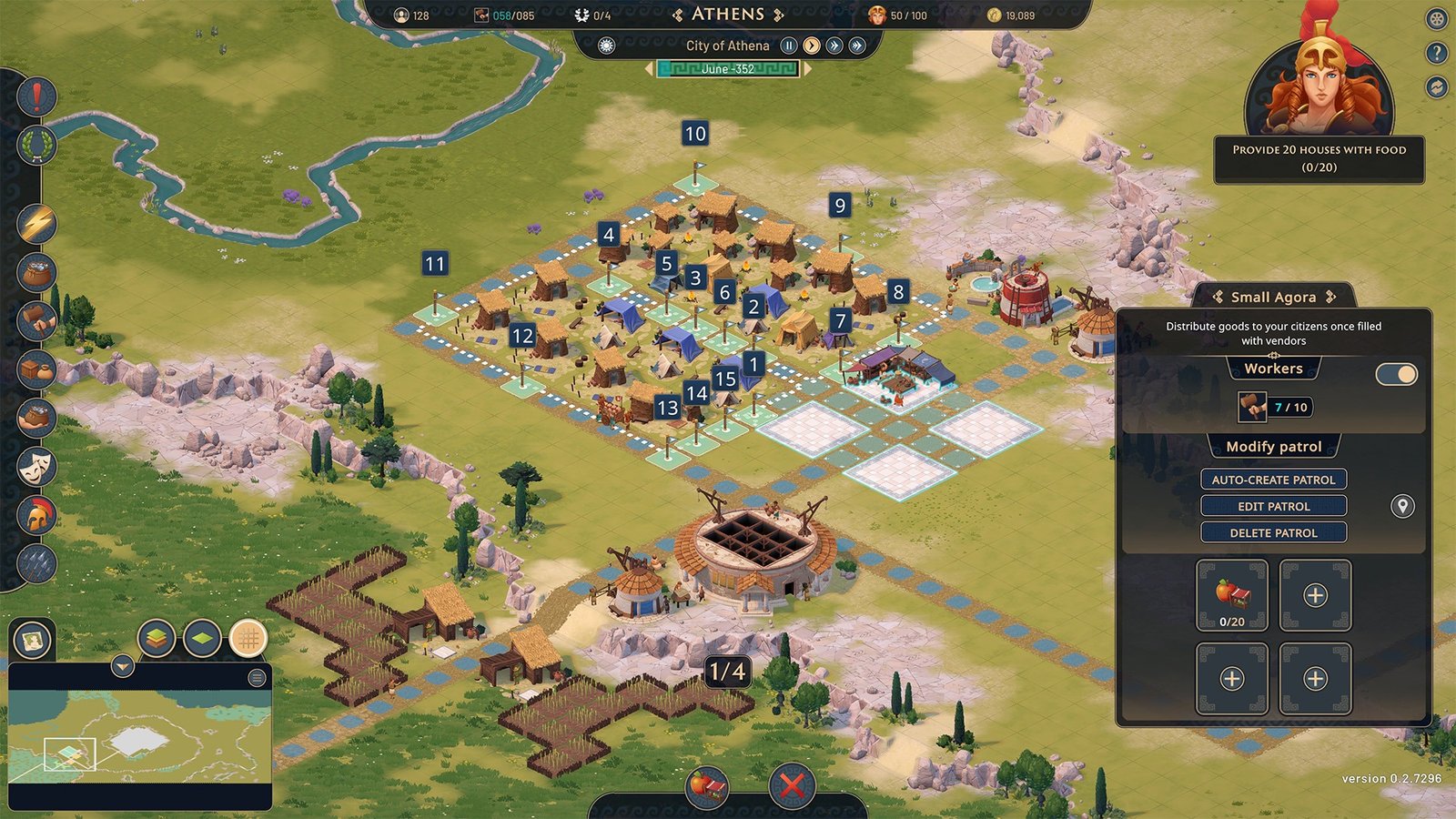
The trade-off is the effort of maintaining that coverage as the city expands. Automatic patrols can leave gaps, while manual adjustments add another task whenever a district changes. What begins as satisfying precision can become repetitive administration, particularly when several services need their own routes checked. This is where the game’s accessibility needs qualification: understanding its principles is relatively straightforward, but sustaining an efficient city demands a willingness to keep attending to its smallest logistical details.
The Burden of Divine Ambition
Beyond the streets, trade and colonies broaden the scope of development in Theos: Cities of Myth, giving the city reasons to look towards its neighbours. Access to resources becomes part of a wider regional relationship, lending purpose to production beyond simply filling warehouses. Military conflict adds another outlet for that economy, although its straightforward real-time encounters offer less depth and excitement than the management surrounding them. Warfare supplies additional pressure, but it is unlikely to be the reason anyone stays.
The presentation makes a stronger contribution. Colourful buildings, busy inhabitants and oversized divine visitors give these settlements an appealing sense of activity, with temples providing a visual reward for the work supporting them. There is personality in the combination of humble daily routines and extravagant religious architecture. Watching a city take shape matters in a game built around gradual progress, and the inviting aesthetic gives practical improvements a pleasingly tangible expression.
Ultimately, Theos: Cities of Myth is most convincing when divine ambition and civic necessity pull in the same direction. Its gods give familiar management routines character, and its growing settlements offer plenty of reasons to keep refining an economy. Patrol maintenance and modest combat prevent that momentum from remaining effortless, but players who enjoy carefully organised neighbourhoods will find much to appreciate. Olympus may demand impressive monuments; the more enduring achievement is building a city capable of supporting them.
Theos: Cities of Myth is available now on PC.
SavePoint Score
Summary
Theos: Cities of Myth brings personality and purpose to familiar city-building foundations, pairing divine patrons with appealing settlements. Repetitive patrol management and limited combat temper the satisfaction of nurturing a thriving Greek polis.
