

Table of Contents
Fire Emblem: Fortune’s Weave for Nintendo Switch 2
It took me 132 hours to see the credits roll in Fire Emblem: Fortune’s Weave. That is more time than I have spent on any other single game, excluding multiplayer titles and repeat playthroughs, and those hours left me with two feelings that have been difficult to reconcile. At its best, I was more absorbed in its world than I have been with any other entry in the series. At its most frustrating, I wanted nothing more than to put it down and play something else.
The latest strategy RPG from Intelligent Systems and Nintendo has the sort of ambition that is easy to admire. Four heroes, a doomed future and an empire full of opportunities come together in a story that reaches for a scale few entries in the series have attempted. It is also a game that can make the distance between its greatest moments feel impossibly long, as the excitement of exploring another perspective gives way to the familiarity of doing it all over again.
Fire Emblem: Fortune’s Weave is a remarkable adventure, one that eventually delivers some of the series’ most satisfying battles. Whether that journey is worth the commitment, though, depends on how much patience you have for the repetition that stands between its best ideas and their payoff.
A Future Worth Fighting For

Fire Emblem: Fortune’s Weave opens at the end of the world. The forces of the Underworld have laid waste to Dagda, the demon god Balor looms over what remains, and the heroes who might once have turned the tide are long gone. As the chosen one tasked with confronting this disaster, you are thrown into a battle that quickly makes the scale of your predicament clear.
The prologue briefly introduces the series’ grid-based combat before sending you against four legendary figures who can make short work of your forces. It is a daunting start, full of questions about how the world reached this point and whether anything can be done to change it. That uncertainty makes it one of the strongest openings I have experienced in a Fire Emblem game, setting up a grand conflict without immediately explaining every piece of the puzzle.
To give Dagda a fighting chance, the story turns back the clock. The four fallen figures are the heroes whose paths you can follow in Part I, each drawn into the Heroic Games in the capital, Dagsion, for reasons of their own. The promise of a wish for the tournament’s winner attracts contenders from across the empire, and the journeys that follow introduce the people and conflicts behind the names you first encounter in that doomed future.
Cai is a young mercenary’s son hoping to save his imprisoned father, while Theodora is a queen whose responsibilities pull her into a more politically charged struggle in Fire Emblem: Fortune’s Weave. Leda and Dietrich bring their own motivations to the tournament, expanding the view of Dagda beyond any single hero’s concerns. The resulting structure builds on the multiple perspectives of Fire Emblem: Three Houses, but uses them to prepare for a shared conflict rather than treating them simply as separate stories.
The differences between those routes also shape how the game feels. Cai’s campaign is a gentler introduction, with more guidance and a smaller area to explore, whereas Theodora’s story offers greater freedom and more punishing encounters. It is an inviting way to approach a game of this size: choose the perspective that appeals to you, get to know its cast and discover how their story fits into a much larger picture.
Finding Your Place in Dagda
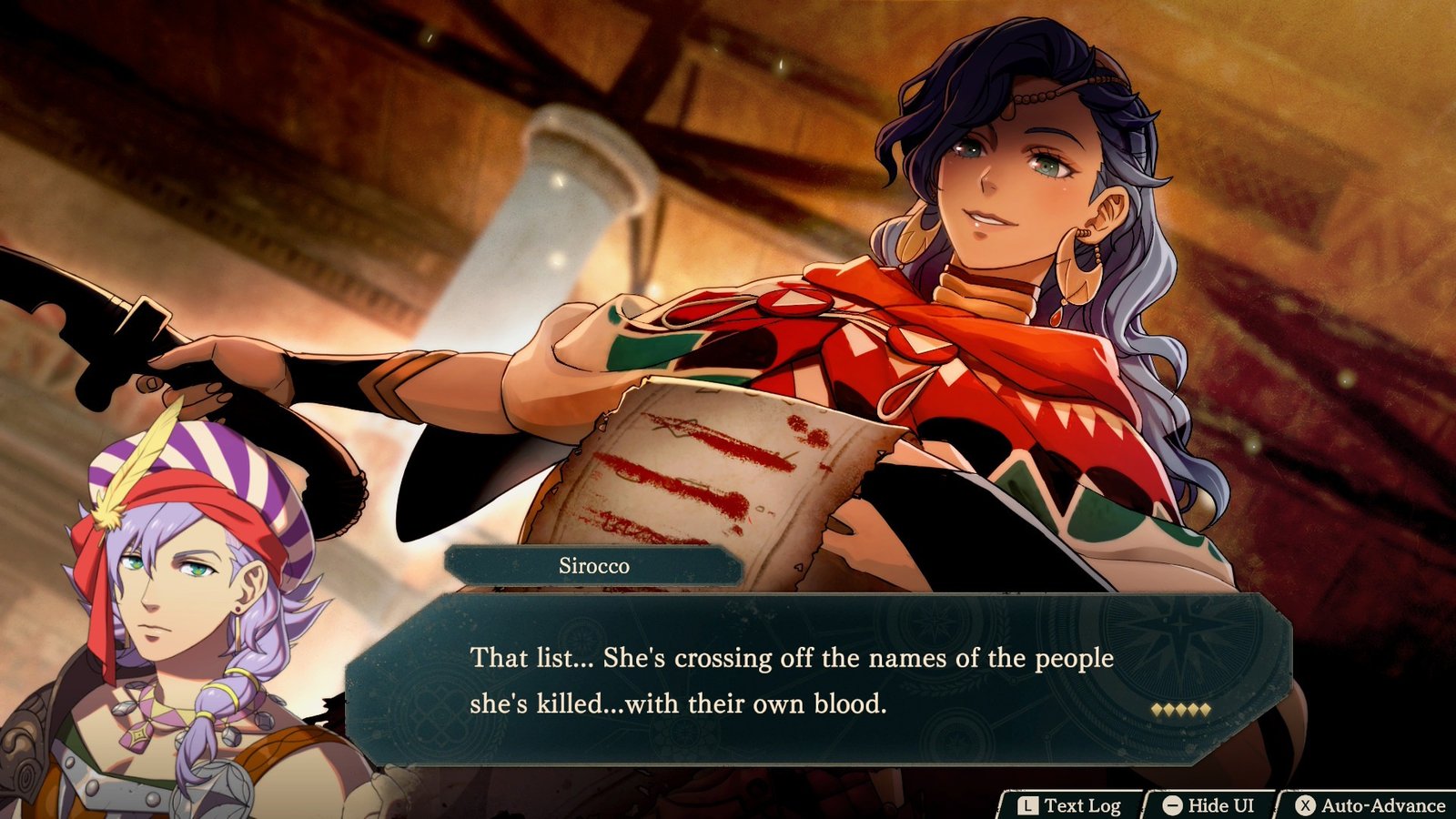
Once the opening chapters of Fire Emblem: Fortune’s Weave are out of the way, the tournament gives you room to prepare between major events. Each day is divided into four turns, and the number remaining before the next story sequence or battle determines how much you can do. Spend those turns in Dagsion, and you can train at the colosseum, visit a play or relax at the spa, with activities offering ways to improve your party and prepare for the challenges ahead.
There is a pleasure in watching those preparations take shape. Training refines a character’s abilities, while meeting the right requirements allows them to change class and take on stronger roles. A unit that can move over difficult terrain or withstand attacks more effectively can reshape how you approach a battle, making the time spent away from the battlefield feel connected to what happens on it.
You can also leave the city and travel across Dagda in Fire Emblem: Fortune’s Weave, though moving around the map consumes the same limited turns. Towns, caves, side quests and smaller encounters compete for your attention, and different protagonists have their own opportunities to pursue. Cai or Theodora may approach a journey with different priorities, and choosing where to go becomes a question of what your current group needs before the next major event.
The world gives you plenty of reasons to wander. Increasing your renown can open access to better equipment, improve training, or help bring new characters into your ranks, while caves provide a change of pace through encounters that play more like conventional turn-based RPG battles. These activities are enjoyable in their own right, but their greatest appeal is the sense that the time between tournament matches is yours.
Some stretches leave just enough room to tackle a side quest and return to the city; others give you a more comfortable window to strengthen your team. Finding a rhythm within those limits of Fire Emblem: Fortune’s Weave was often satisfying, particularly when I could look back at a period of preparation and see how it had helped my party grow. Much like the broader adventure, however, the appeal of those routines changes considerably once you have repeated them across several campaigns.
Battles That Reward Preparation
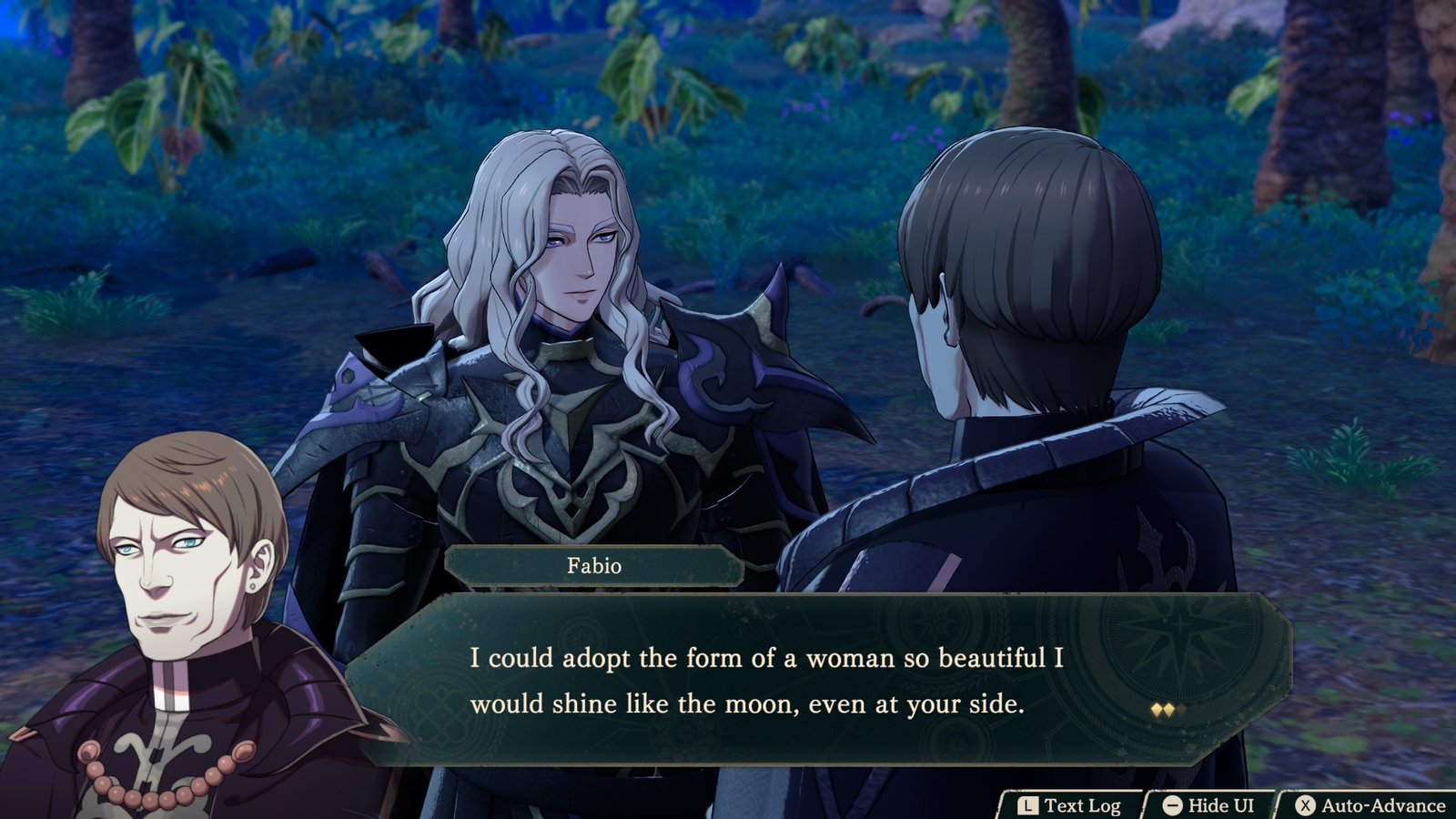
When it is time to fight, Fire Emblem: Fortune’s Weave returns to the tactical foundations that have served the series so well. Units move across a grid, positioning matters, and the familiar weapon triangle helps determine which combatants have an advantage: swords overcome axes, axes beat spears, and spears have the edge against swords.
That foundation is easy to understand, but battles ask for more than matching a weapon to the right enemy. Depending on the encounter, victory might involve defeating a particular foe, protecting another character, reaching a destination or collecting more objects than your opponents before time runs out. The objectives give each map a sense of purpose, and the best encounters keep you alert by changing the goal partway through a fight.
Those moments are particularly effective in Fire Emblem: Fortune’s Weavebecause the party you have built outside combat suddenly becomes part of the answer. A durable unit can hold a dangerous position, while one with greater mobility can reach a distant objective or cross terrain that would slow another fighter down. Decisions made during free time pay off when an encounter asks you to reconsider how those characters can work together.
Some battles appear in more than one protagonist’s route, but they are not always presented in exactly the same way. A different piece of music or an additional cutscene can change an encounter’s mood, while another hero’s perspective may clarify something left unresolved elsewhere. Early on, those differences made returning to a familiar stage feel like another chance to understand the story.
Still, a new perspective does not always make the fight itself feel new in Fire Emblem: Fortune’s Weave. When the same maps and preparations recur over dozens of hours, the smaller changes become less effective at disguising how often you are repeating the same actions. The combat remains enjoyable, but it has to carry much of the game’s weight.
Four Paths, One Long Road
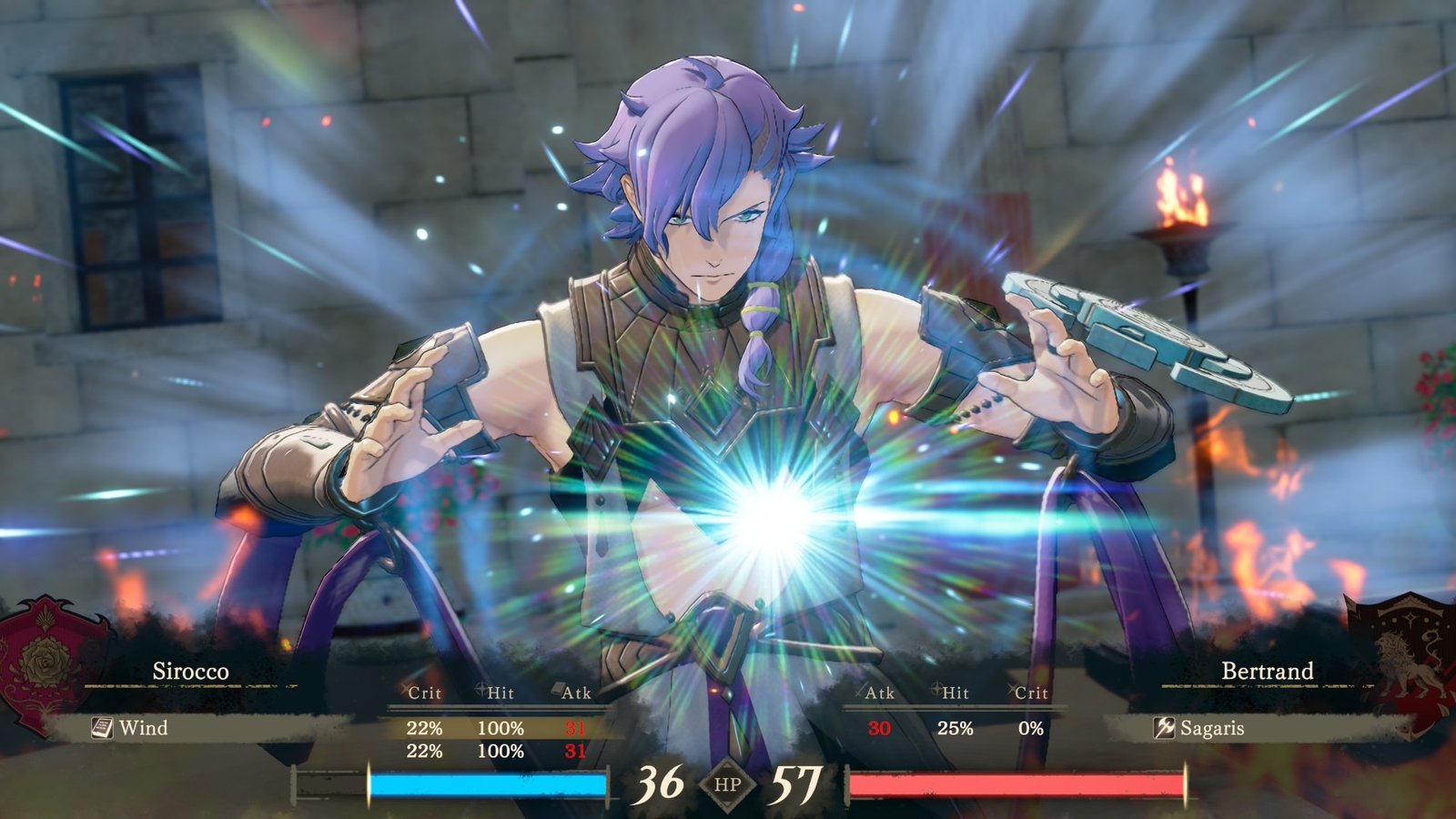
Each hero’s Part I campaign can take roughly 20 to 25 hours, and seeing all four gives you the fullest view of their individual stories and the allies they bring to the wider conflict in Fire Emblem: Fortune’s Weave. That breadth has an obvious appeal: each route offers another reason to care about Dagda, and another chance to meet characters who may later stand alongside you.
The game lets you advance without completing every route, so players who want to press ahead have that option. From my experience, though, later battles can call for substantially larger forces than those in the opening act, making recruitment and preparation feel particularly valuable. Completing additional campaigns offers more opportunities to strengthen your army, even if the time investment can be considerable.
My experience of Fire Emblem: Fortune’s Weave reached 132 hours, but that shouldn’t be mistaken for a fixed completion time. Players can take different approaches to the routes and their preparation, and the game offers ways to speed up some repeated progression, including the option to skip Part II on subsequent runs. Those concessions are welcome, but they didn’t erase the fatigue I felt as similar battles, tutorials, and training routines piled up.
A first campaign can be engrossing; by the time I reached the later ones, I found it harder to appreciate the fresh story details amid the familiar tasks. The issue is not simply that there is a lot to do. Some of the work needed to reach those new moments feels too similar to what came before, gradually turning an exciting journey through multiple perspectives into a test of endurance.
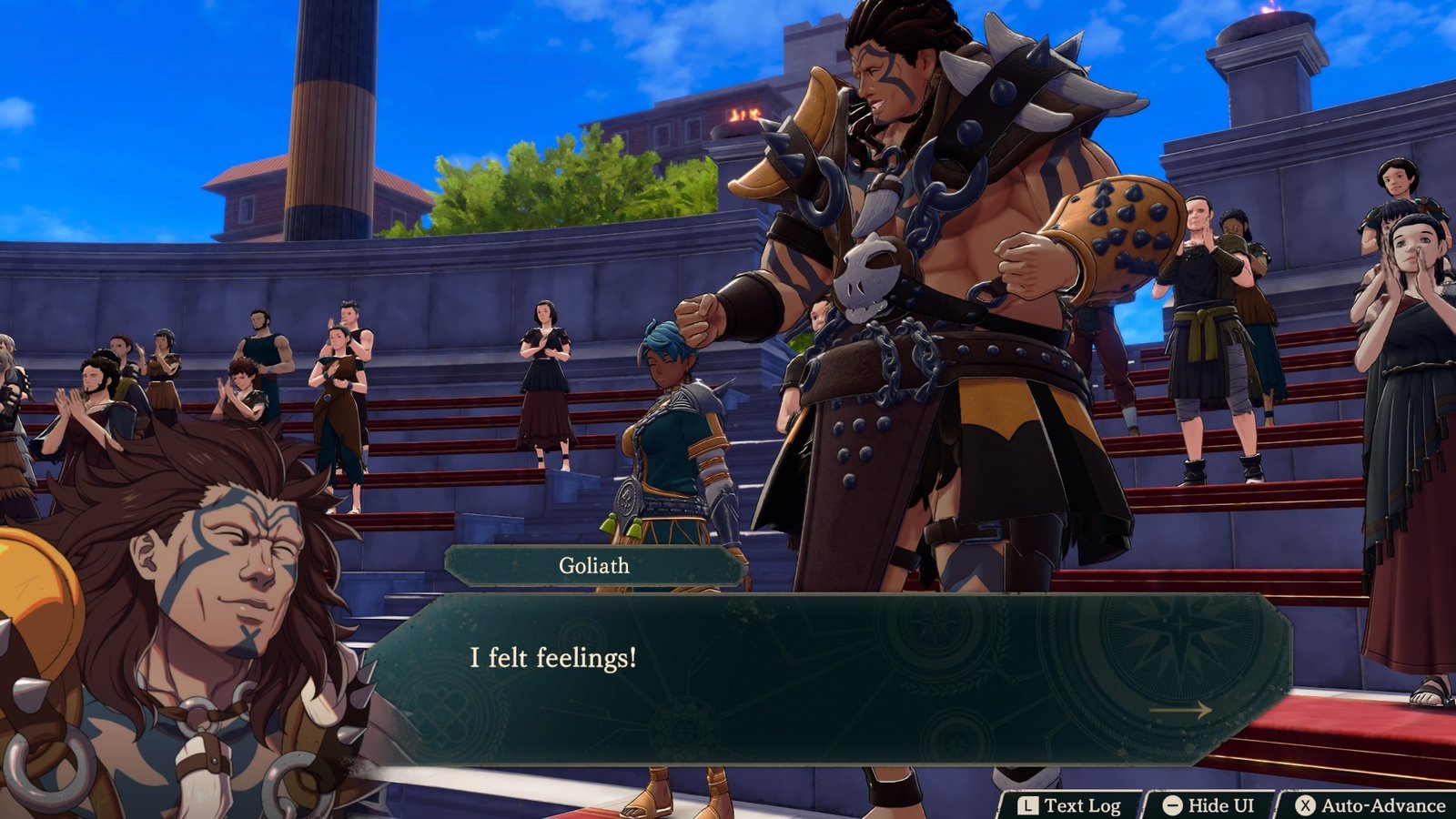
That frustration extends to characters whose stories feel tantalisingly incomplete in Fire Emblem: Fortune’s Weave. Bertrand, the White-Maned Demon and a formidable gladiator, appears to have the makings of a tragic hero, yet his encounters with mysterious opponents left me wanting more context about who they were and what those confrontations meant. In a game already asking for so much of my time, those glimpses can feel less like satisfying mysteries and more like threads left hanging.
A Finale Worth Reaching For
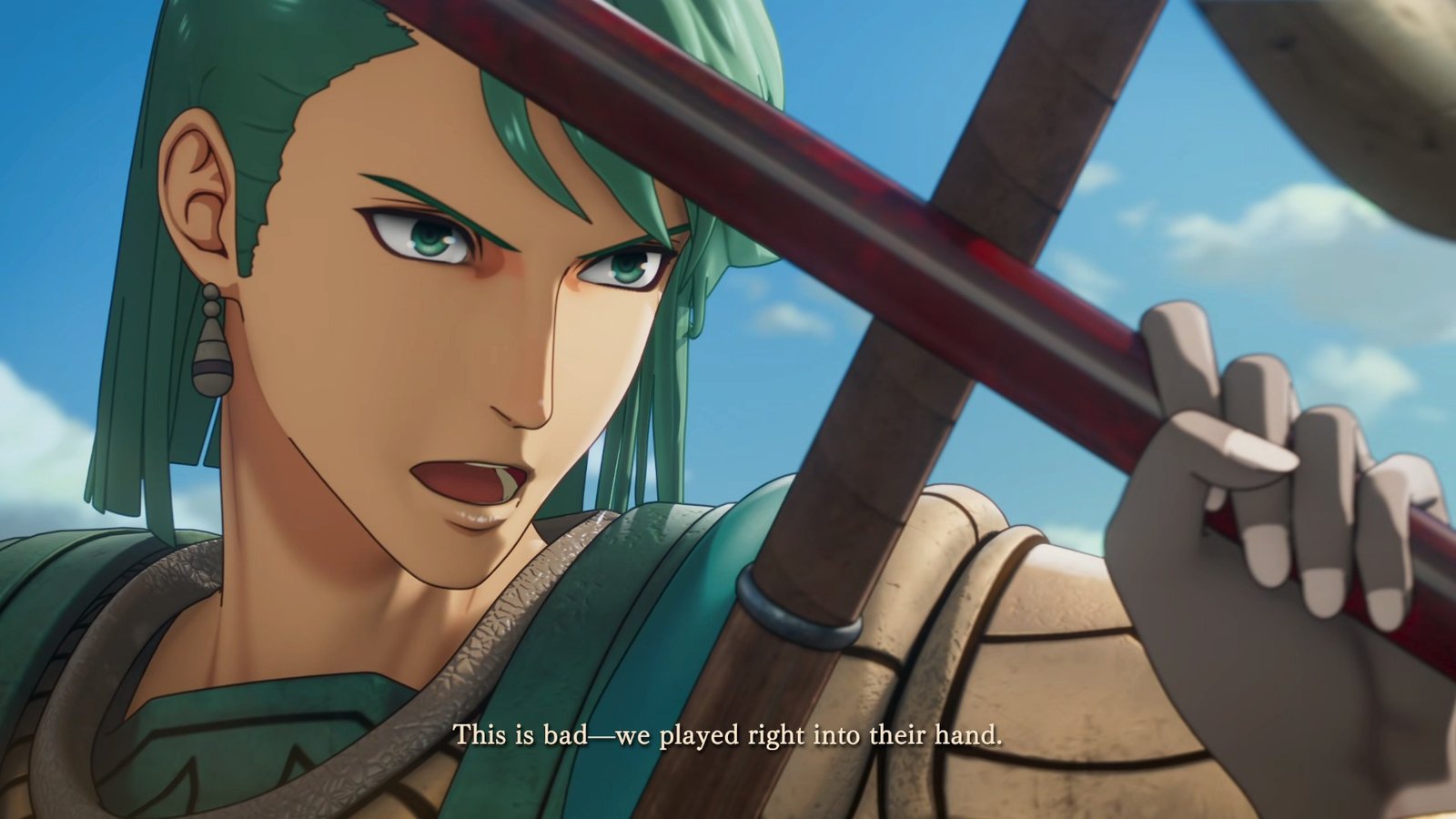
Despite my frustrations with the journey, the later acts show why I stayed invested in Fire Emblem: Fortune’s Weave. Part II moves away from the extended free-time structure and towards a more direct sequence of battles, giving the story a welcome sense of momentum. The conflict feels as though it is finally gathering its forces, and the shift in pace provides relief after so much preparation and repetition.
The battles grow alongside it. Larger maps and greater numbers of enemies demand more consideration than many of the shorter encounters in Part I, and some missions can take close to an hour to complete. You can still strengthen your units and acquire useful equipment, but the increased scale gives your assembled army a chance to feel like more than a collection of statistics built up over the preceding campaigns.
The story of Fire Emblem: Fortune’s Weave leans into traditions that long-time fans will recognise, from an unabashedly evil villain to shadowy organisations and armies moving across a map. Not every character introduction lands equally well, especially when figures who once felt peripheral become more important, but the sense of conflict building toward something larger is compelling. For someone who has followed the series since before Fire Emblem Awakening, it feels like a welcome return to a grander kind of war story.
Part III brings back free time, but uses it differently. With larger forces at your disposal, sending multiple squadrons across Dagda makes planning feel more closely tied to the scale of the conflict. Combined with strong story moments and some excellent battles, it leads to a final stretch that reminded me why I had been so eager to see Fire Emblem: Fortune’s Weave through.
The Cost of an Epic Journey in Fire Emblem: Fortune’s Weave
There is something admirable about how much Fire Emblem: Fortune’s Weave tries to bring together. Its separate heroes make Dagda feel larger than any one campaign; its preparation systems can be deeply absorbing, and the battles at their best deliver the sense of hard-won progress that keeps me coming back to the series. For players who want a vast strategy RPG to disappear into, the sheer breadth of what is on offer will be part of the attraction.
For me, that breadth eventually became a burden. Even with the option to approach its routes differently and move towards the ending sooner, my experience of seeing the story through was shaped by too many repeated activities and encounters. The moments that made the adventure special were still there, but finding them became harder as the hours wore on.
I am glad I saw what awaited at the end, and I can appreciate the ambition that made those closing battles possible. I am less certain that the journey needed to be quite so exhausting. Fire Emblem: Fortune’s Weave is a great game at its best, but its most rewarding victories come wrapped in enough repetition to make reaching them a formidable challenge in its own right.
Fire Emblem: Fortune’s Weave is now available for Nintendo Switch 2.
