

Table of Contents
ANOMALITH on PS5
There is something unsettling about a place that should be familiar but no longer feels quite right. An empty office corridor, a deserted shopping centre or a hospital room can become far more threatening when the rules that govern them begin to fall apart. Add monsters, mysterious objects, and a government agency tasked with investigating them, and you have the foundations for an intriguing survival horror shooter.
That premise immediately drew me to ANOMALITH, a third-person action game from developer and publisher FuRyu. Its grid-based inventory and emphasis on firearms also promised the kind of resource management that has long made Resident Evil so appealing, even if its supernatural setting suggested something stranger was waiting beneath the surface.
While ANOMALITH never quite reaches the heights of its inspirations, it still has plenty to offer players willing to work around its rough edges. Building an arsenal and taking on the unknown feels satisfying, but stiff combat, frequent interruptions, and a frustrating amount of backtracking make the journey more cumbersome than it needs to be.
A Search Through the Unknown
At the centre of the story is Reona Minazuki, who becomes trapped when an Anomaly Zone overtakes a shopping mall. These zones are distorted spaces where ordinary locations overlap with something far more dangerous, and an encounter with an anomalous locker leaves her asleep for 10 years. When she emerges, she joins the government-backed Anomaly Zone Countermeasures Office as a Diver, hoping to find her missing friend.
The agency investigates these warped environments and deals with the objects and creatures found within them. Among its most significant targets are Landmarks, objects that transform an area into an Anomaly Zone. Shades of the strange bureaucracy and dangerous artefacts that make the Federal Bureau of Control so compelling in Control Resonant, though ANOMALITH approaches its mystery with its own anime-inspired presentation.
Unfortunately, Reona’s story takes a while to become as interesting as its setting. Much of the first half feels routine: visit a new location, explore its rooms, defeat a boss and move on. Only after the halfway point, when important secrets begin to surface and the plot focuses more directly on Reona, does her journey become more absorbing.
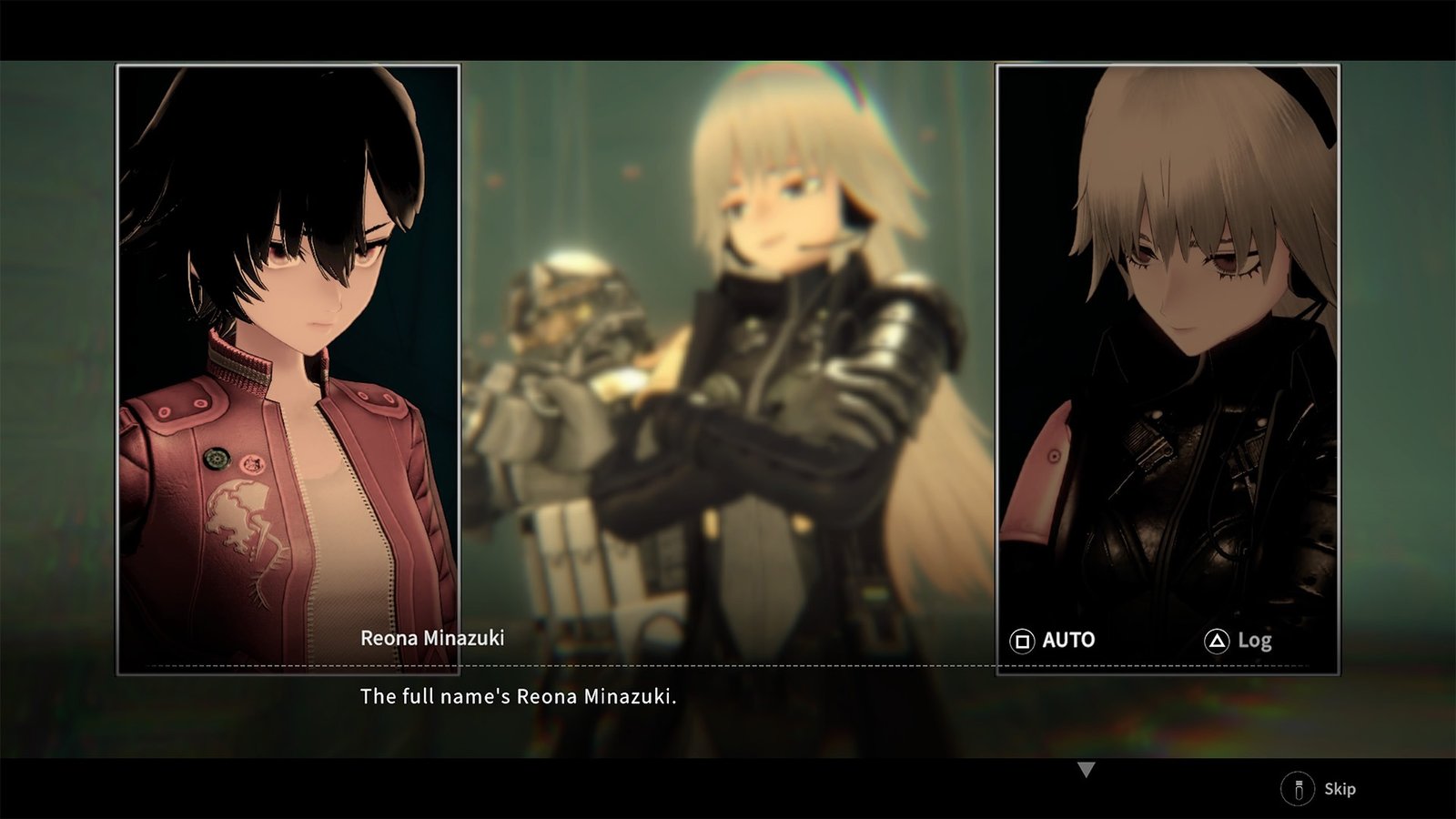
The delivery does the story few favours, either. Conversations generally play out through dialogue sequences with static character portraits, and they interrupt missions far too often. At times, I would finish one scene, walk a short distance, and trigger another, making it hard to settle into exploration or enjoy a mission’s momentum.
Armed for the Anomaly
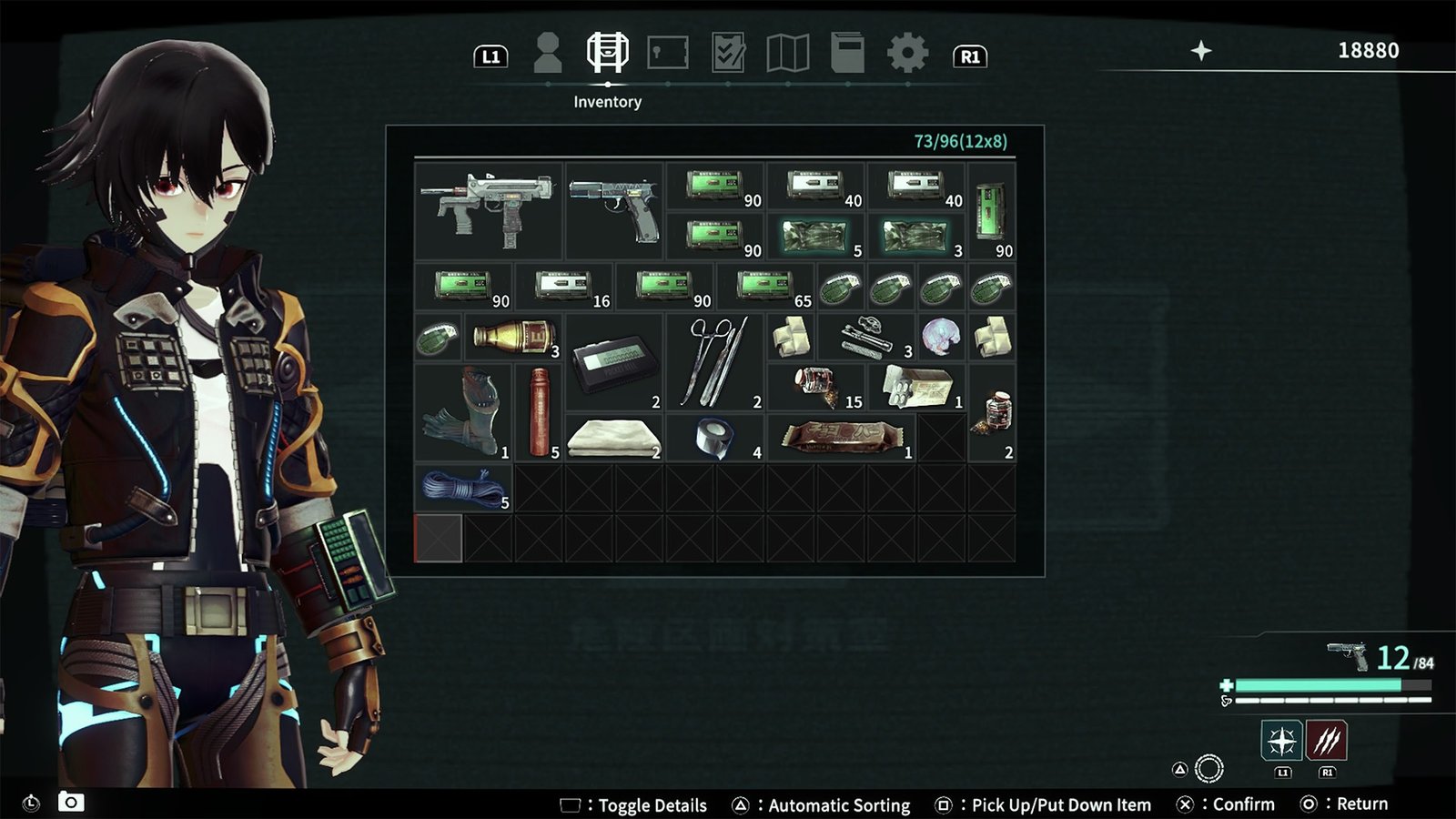
Once the dialogue gives way to action, ANOMALITH takes the shape of a relatively straightforward third-person shooter. Reona can collect and upgrade a variety of firearms, while ammunition, supplies and other items must be arranged within a limited grid inventory. It is a familiar combination, and there is a simple pleasure in heading into a dangerous zone with a loadout prepared for whatever might be waiting.
The shooting, however, feels noticeably stiffer than the modern Resident Evil games it evokes. Reona’s movement can feel cumbersome in combat, and while she has access to supernatural melee abilities and a parry, their reliance on MP means they aren’t always available as reliable alternatives to gunfire. The result is a set of tools that sounds flexible but can feel restrictive when the action becomes more demanding.
That is especially noticeable when trying to avoid damage. Reona doesn’t move quickly enough to make repositioning feel consistently reliable, and without a dodge roll, there were moments when I wanted another way out of danger in ANOMALITH. The parry offers an option in close quarters, but enemies rarely came within range during my playthrough, leaving it feeling less useful than it might have been.
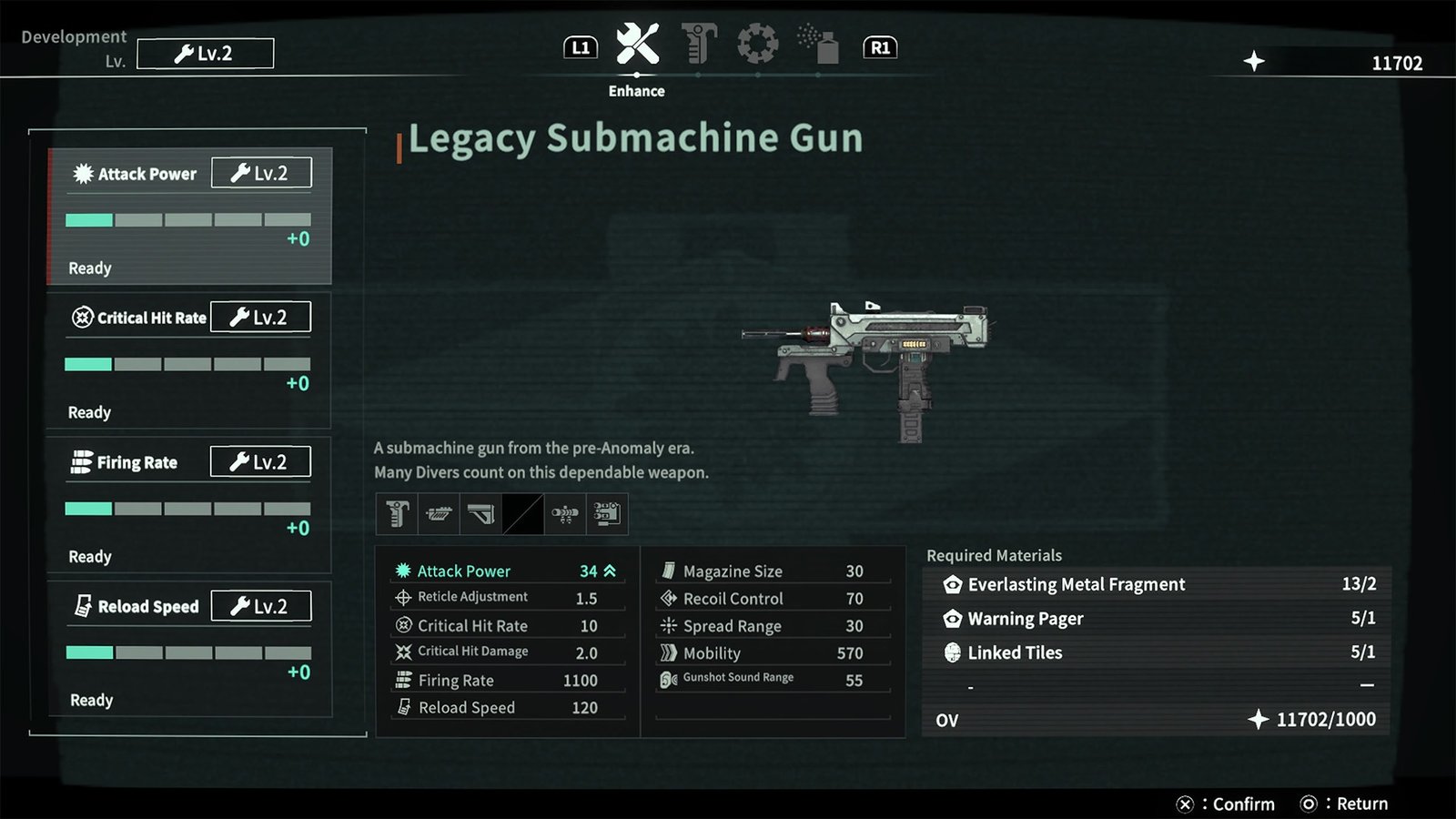
What kept combat engaging was the ability to refine my equipment between dives. Each weapon has several stats to upgrade, including attack power and reload speed, while attachments can provide further benefits. Some come with trade-offs, so improving one characteristic may mean accepting a reduction elsewhere. It gives players room to shape a favourite gun around their preferences, even if the underlying shooting remains a little rigid.
Weapons can also be fitted with artefacts that alter their performance in ANOMALITH. One might increase damage against weak points while reducing it elsewhere, for example, asking players to consider whether their accuracy justifies the compromise. Players obtain artefacts by shooting special coloured blocks attached to enemies before killing them, adding a small but welcome objective to encounters.
Reona has her own artefact slots, with bonuses that can affect how she uses MP and moves around the world. I particularly appreciated those that increased her movement speed outside combat, given how frequently the game asks players to revisit areas. You can’t swap these during a dive, though, so discovering that a choice doesn’t suit your playstyle means waiting until you return to base to change it.
A Burden to Carry
For all the enjoyment I found in customising my equipment, managing everything I picked up was another matter. Materials collected from enemies are needed to upgrade weapons, but they come in different sizes and can quickly fill the available inventory. Even with the extra capacity from DLC items in my playthrough, I found myself running short early on.
Some of that pressure is clearly intentional, and deciding what to carry can be part of the appeal of a grid inventory. The problem is how often ANOMALITH asks for small adjustments that don’t feel like meaningful choices. An item might fit if I moved something over by a few squares, but I still had to stop and rearrange the space myself. Over time, those interruptions became more irritating than engaging.
Portals found during missions let players send materials back to base, and dropped items remain available when moving between areas, giving players a chance to return for them. Portal placement can be inconsistent, however. During one lengthy stretch of encounters, my inventory filled up while the nearest drop-off point remained some distance behind me. With no new portal appearing as I pushed forward, collecting rewards from those fights became especially frustrating.
The amount of backtracking makes the issue more pronounced in ANOMALITH. Revisiting an area to gather resources or complete a side quest can be worthwhile, but returning through familiar corridors loses its appeal when the route brings more inventory rearrangement and encounters with the same enemies. A system that initially promises satisfying resource management too often slows down the more enjoyable parts of the game.
At least, there are welcome personalisation options back at base. Weapons can be painted in different colours and patterns, while clothing offers equipment bonuses alongside a choice of appearances. A transmog system also lets players keep the stats of useful gear while choosing a different look, a thoughtful inclusion for anyone who wants Reona’s outfit to suit their tastes.
The Familiar Becomes Strange in ANOMALITH
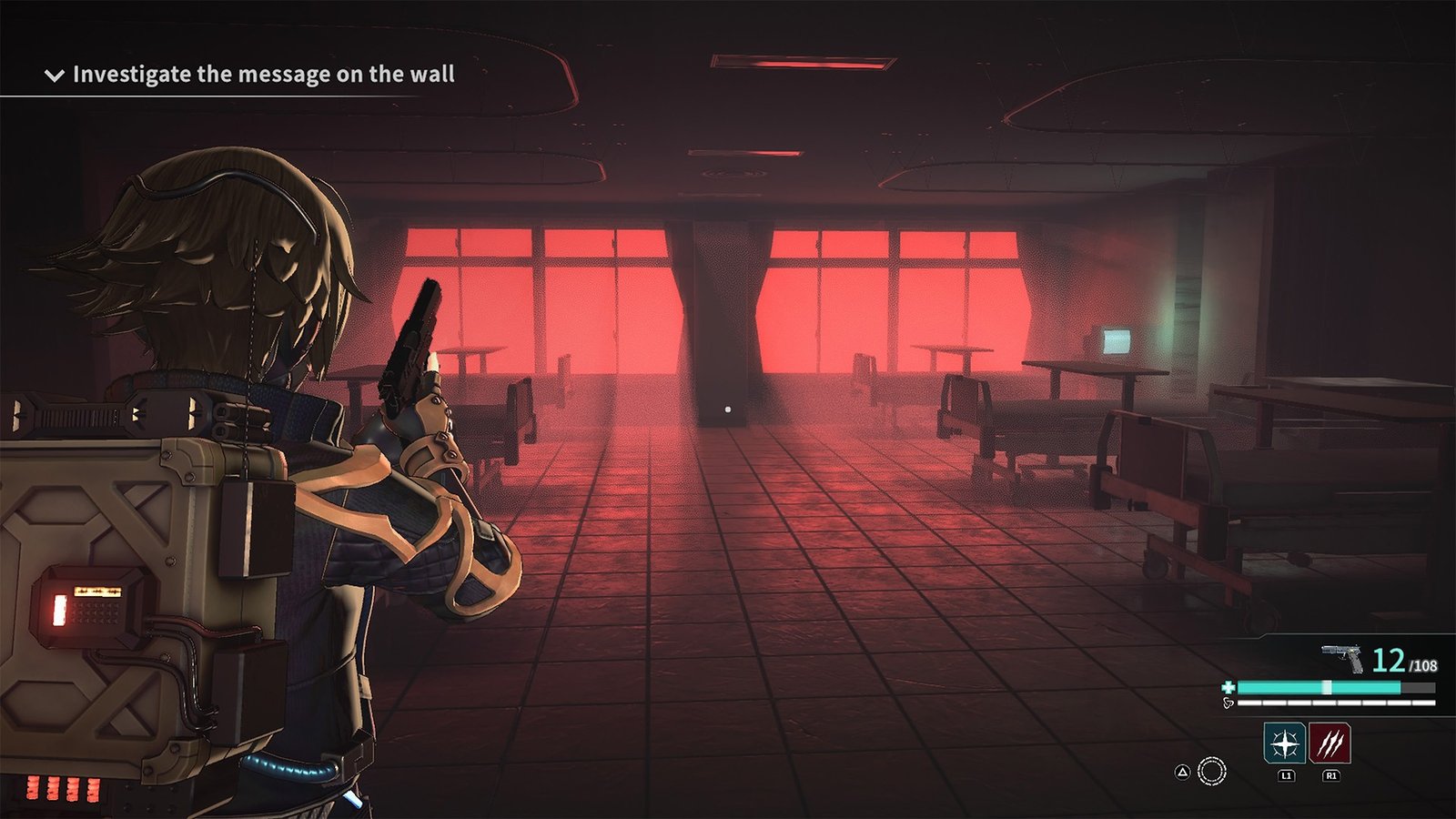
The Anomaly Zones are at their best in ANOMALITH when they turn recognisable spaces into unpredictable places. The opening draws on the familiar image of an empty, seemingly endless office, but other locations have their own unsettling qualities, and a door that appears to lead onwards can instead reveal a room full of supplies or an unexpected group of enemies.
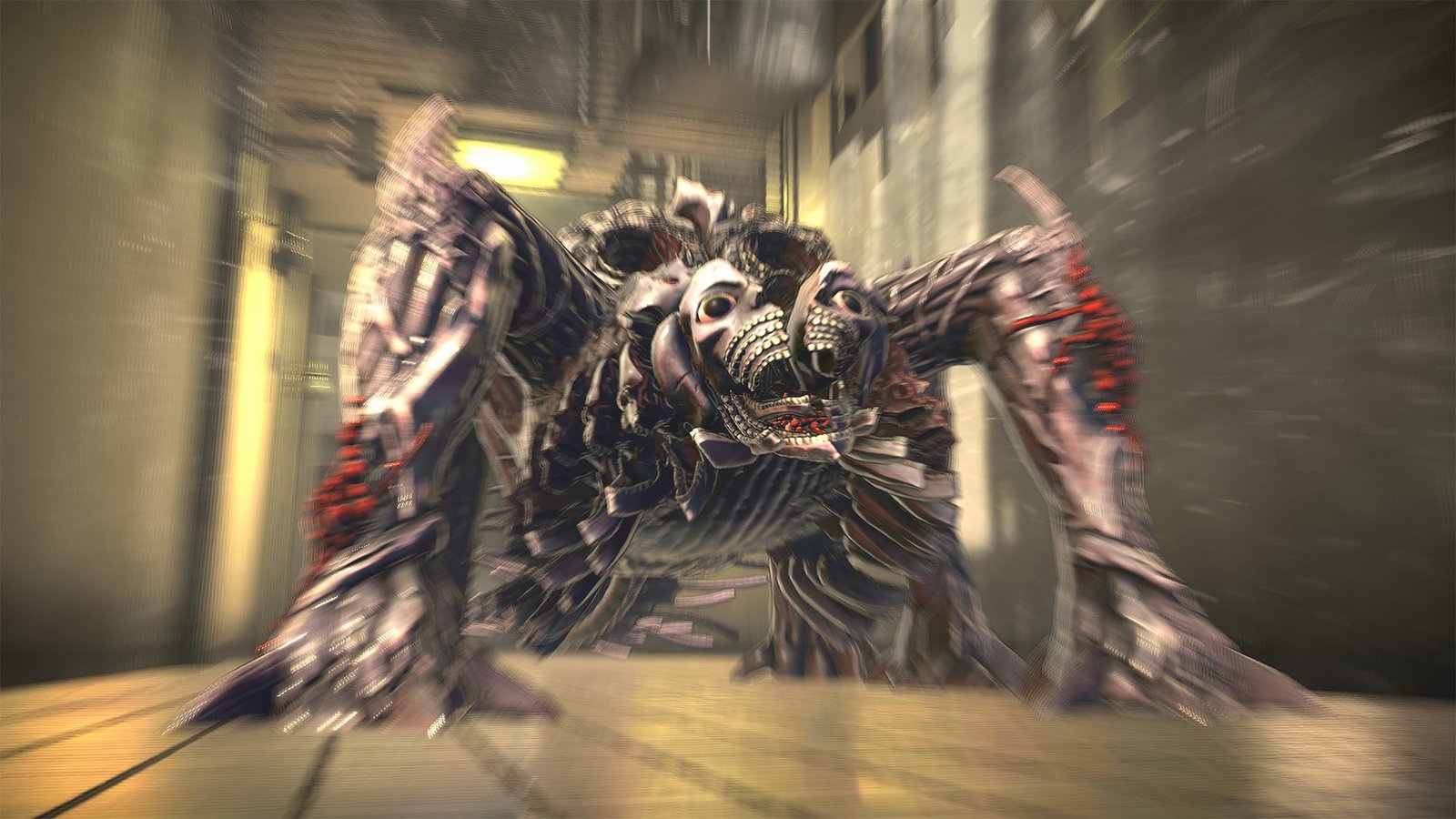
That uncertainty gives the zones personality, and the creature designs are similarly appealing. Although I found myself facing the same broad enemy types and variations repeatedly, their appearances were distinctive enough that I enjoyed using photo mode to inspect a new arrival mid-fight. It is a shame the encounters themselves do not always offer the same variety as the monsters’ designs suggest.
Repeated visits also diminish some of the initial impact of ANOMALITH‘s environments. A location that feels intriguing on the first trip becomes less exciting by the third, particularly when side quests ask players to interact with objects scattered throughout an area. There is a reasonable number of optional missions, but too many feel like another reason to retrace familiar ground.
Their endings are inconsistent, too. Some side quests return Reona to base automatically once completed, while others leave her to find a portal herself. A choice to return immediately would have made those missions more convenient without taking away the option to keep exploring.
My playthrough was largely free of major technical issues, although I encountered a troublesome loading bug a couple of times. The game would hang when trying to enter a new area, forcing me to reload. Fortunately, generous autosaves let me resume close to where I was, but the interruption was still unwelcome.
ANOMALITH has a scrappy appeal that survived those frustrations. Its locations are intriguing, its weapons offer plenty of room for experimentation, and its later story developments make Reona’s search more rewarding. For players who enjoy steadily improving an arsenal and venturing into strange spaces, that may be enough to make the trip worthwhile.
Just be prepared for an adventure that does not always make the most of its ideas. Between the stiff action, repeated detours, and constant inventory juggling, ANOMALITH can make exploring the unknown feel like hard work, even when something interesting is waiting on the other side of the door.
ANOMALITH is available now on PlayStation 5, PC, and Nintendo Switch 2.
Saveoint Score
Summary
Anomalith delivers an intriguing world and plenty of freedom to customise its arsenal, but stiff combat, repetitive exploration and an intrusive inventory system undermine the appeal of its otherwise enjoyable supernatural shooting.
