

Table of Contents
When we first went hands-on with Rayman Legends Retold in June, there was one question hanging over almost everything. Could Ubisoft Montpellier and Ubisoft Milan rebuild one of the finest 2D platformers of its generation in 3D without losing the movement and rhythm that made it special?
The early answer was encouraging. Running, jumping, gliding and chaining actions together still felt natural. The new hubs gave the Glade of Dreams more cohesion, Dragon Rides provided a different kind of spectacle, and the jump into 3D proved considerably less disruptive with a controller in hand than it initially sounded on paper.
That is no longer the most interesting question surrounding the game. With Rayman Legends Retold now much closer to launch, the latest look at its expanded worlds and systems makes the bigger challenge clearer. Ubisoft has already shown that it can preserve Rayman Legends, now it has to prove why this version needs to be Retold.
Starting to Explain What Retold Actually Means
The distinction matters because simply recreating the 2013 levels in prettier 3D environments would never have made this project particularly necessary, since the original remains excellent.
What is becoming more compelling is how Ubisoft is using the remake to connect ideas that were previously allowed to exist largely because they were fun. Mystic Mesa is perhaps the clearest example.
Mystic Mesa Gives Old Absurdity Some Actual Geography
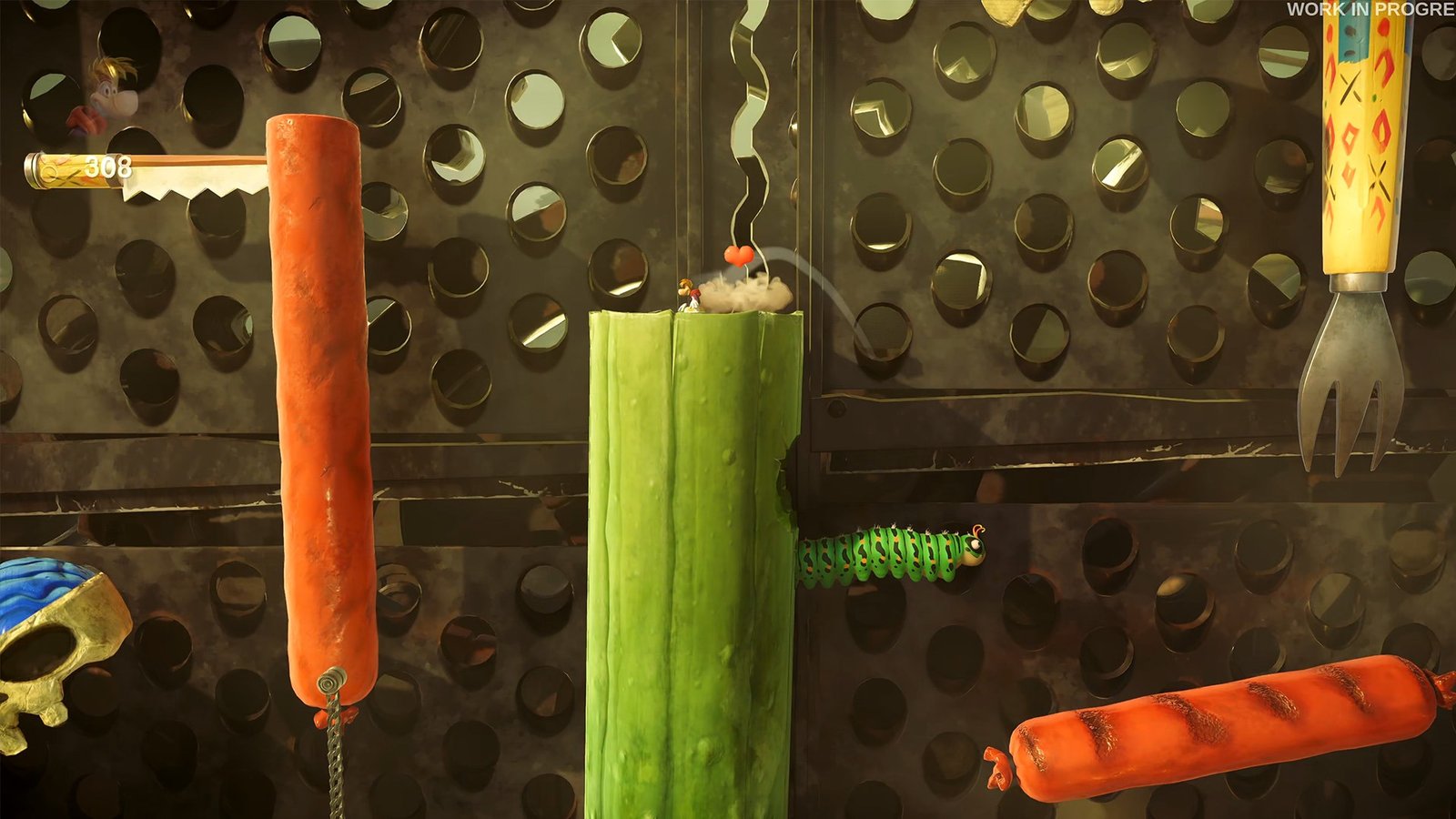
Previously known as Fiesta de los Muertos, Mystic Mesa retains the food, Mexican influences and general visual chaos associated with the original realm in Rayman Legends Retold. The difference is that Ubisoft has started asking why all of those things exist beside one another.
Speaking this week about the remake, animation and realisation director Marco Renso explained that some of the original stages were deliberately abstract. The new version instead tries to give those strange ideas context within a believable connected world, and that meant starting with geography.
Brand producer Loïc Gounon said the team first mapped out where these places would actually sit in relation to one another before working out how the bizarre ingredients of each stage could exist within that structure. That may sound like an unnecessary amount of logic to apply to a series containing limbless heroes and sentient food, but it gets closer to what Rayman Legends Retold should be doing.
The goal isn’t to make Rayman sensible; it’s to make the absurdity feel like it belongs to the same adventure. One of the new musical stages built around the Macarena, for example, takes the chilli sauce imagery associated with the realm and turns it into part of the surrounding storytelling rather than simply another visual joke.
It is still ridiculous, but now there’s a little more connective tissue underneath it.
New Musical Stages Have More to Prove Than Returning Favourites
Our previous preview already established that movement remained Rayman Legends Retold‘s strongest foundation, so another faithful recreation of an existing stage would not tell us much more; however, completely new levels do. Ubisoft is adding four musical stages, and our impressions suggest they retain the original game’s habit of turning platforming into something closer to choreography.
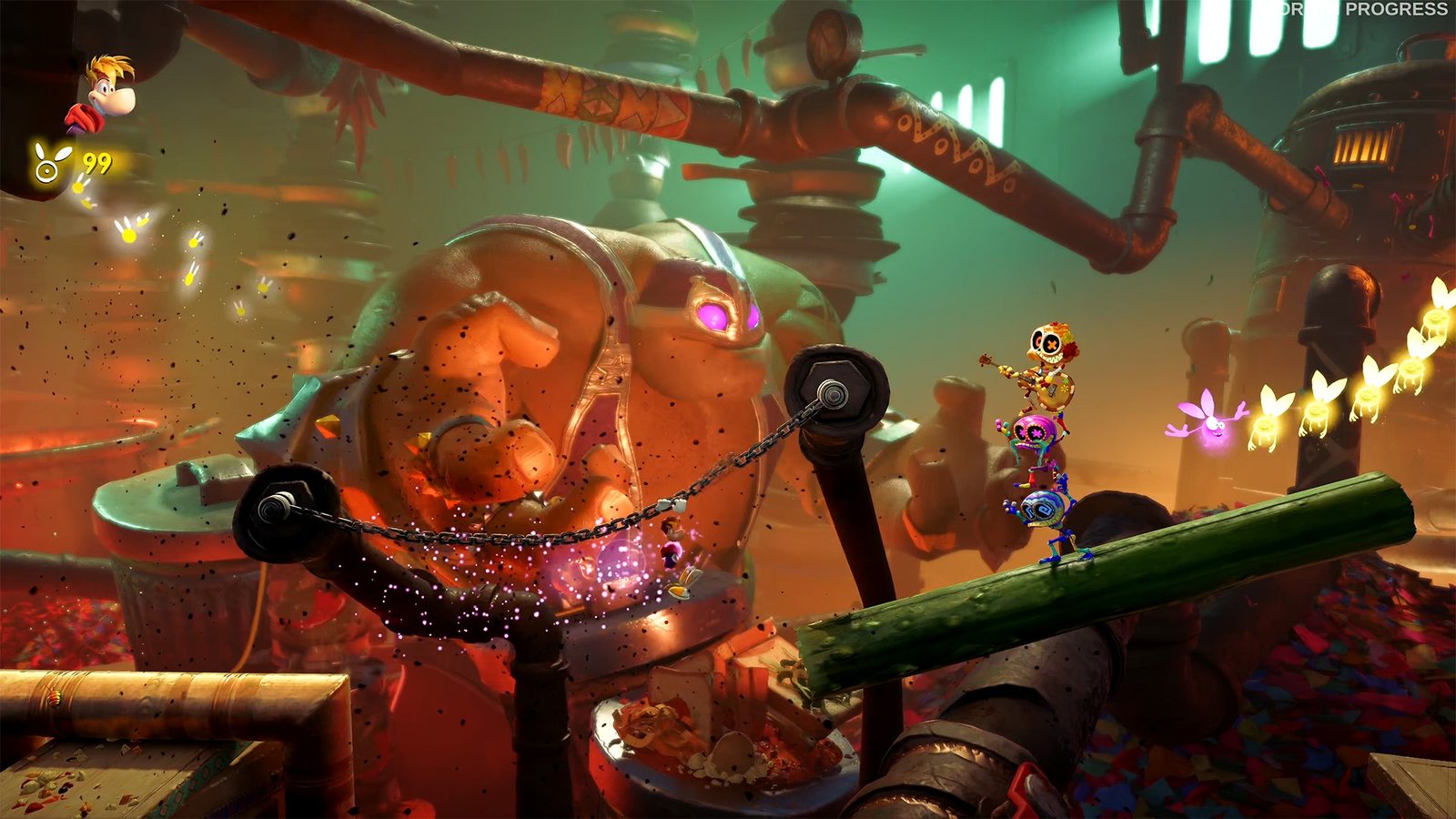
The new Macarena sequence has repeatedly stood out because success eventually stops feeling like a chain of individual inputs. Players learn where the hazards sit, when to jump, and how movement fits the beat until the entire stage flows as one continuous action. That is important because Ubisoft is no longer relying on nostalgia there.
If these new stages can sit comfortably beside some of Rayman Legends‘ most memorable levels, that tells us considerably more about Rayman Legends Retold than simply seeing an old favourite recreated with modern lighting.
Land of the Livid Dead Is the Real Test of Ubisoft’s Ambition
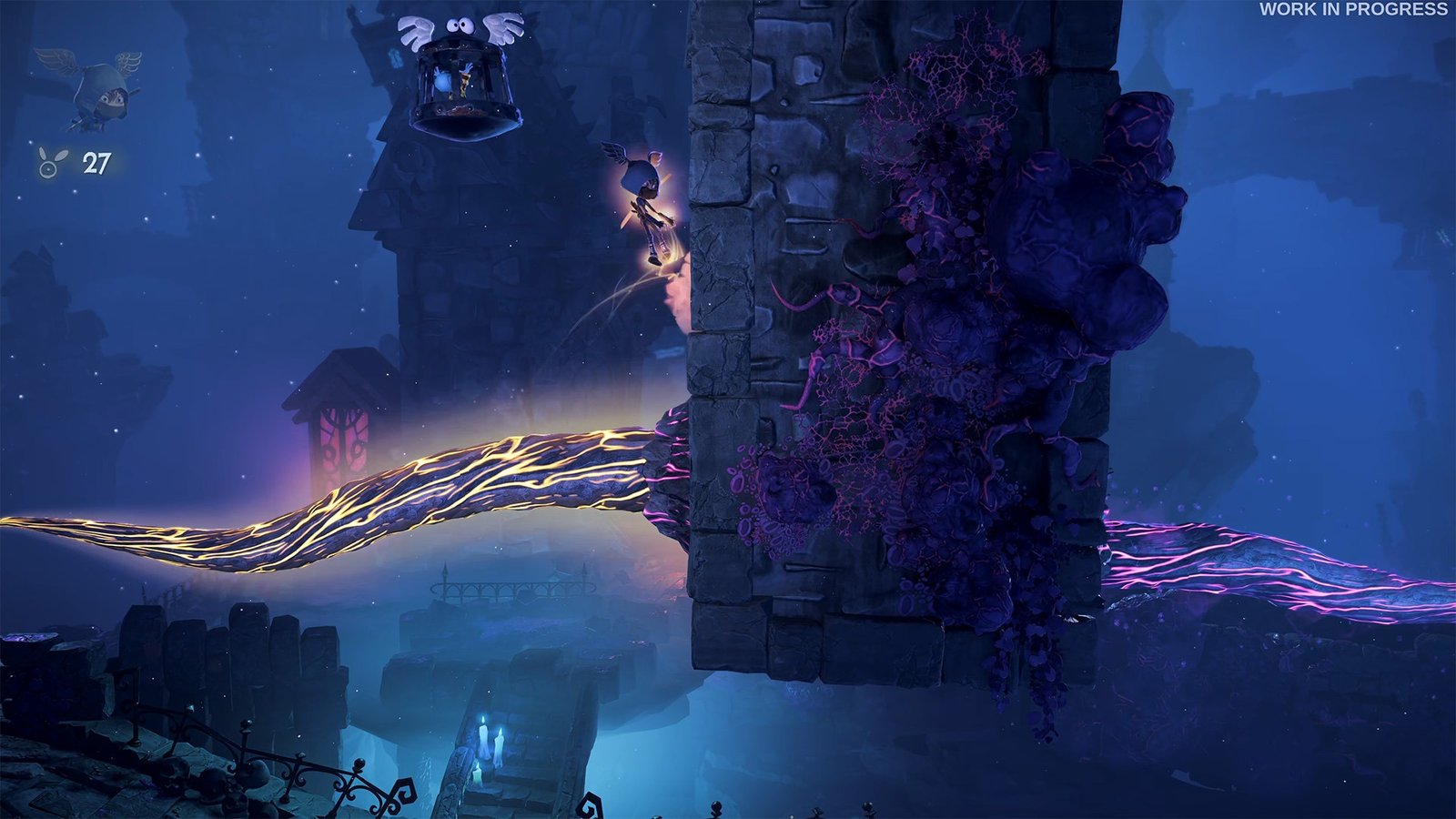
The new sixth realm pushes that argument further in Rayman Legends Retold. Land of the Livid Dead is not another visual reinterpretation of somewhere players already know. It gives Retold space to establish its own atmosphere, challenges and mechanics.
It is noticeably darker than the surrounding realms, with corrupted environments adding another layer to the usual platforming.
Fairy Radiance Adds Another Job While Rayman Is Moving
Betilla grants players Fairy Radiance in the new realm, allowing them to fire pulses of light that clear corruption from enemies and environmental objects, which creates another demand during platforming. Players still need to read hazards, maintain momentum, and deal with enemies, but now they also have to consider when and where to use that light.
The additional layer works precisely because it does not replace the familiar platforming. Instead, it gives players something else to juggle while doing what Rayman Legends Retold already asks of them. That is exactly where completely new Retold content needs to land.
Accessibility Directly Addresses One of Our Original Concerns
One area also stands out: Ubisoft’s newer reveals directly address something we raised in our first preview. Back in June, the move into more detailed 3D environments created occasional readability issues. Enemies and interactive objects could sometimes blend into the background, which matters in a game where fast reactions and rhythm matter so much.
Ubisoft now has a surprisingly comprehensive response in Rayman Legends Retold. Highlights can outline relevant objects with distinctive colours, while High Contrast Mode goes further by separating interactive objects, enemies, collectibles, players and environmental hazards from the background.
Senior UX designer Andrea Scambia identified the move from 2D to detailed 3D environments as the reason these options became important, noting that greater visual complexity can make gameplay-critical elements harder to distinguish.
That makes these additions more than an accessibility checklist added late in development, as the team addresses an actual consequence of the remake’s visual direction.
Fairy Blessing Lets Players Decide When Failure Stops Being Fun
Difficulty is being treated similarly in Rayman Legends Retold. By default, health behaves like the original Rayman Legends, but Red and Golden Hearts can provide additional protection for players who want it. The Fairy Blessing goes much further.
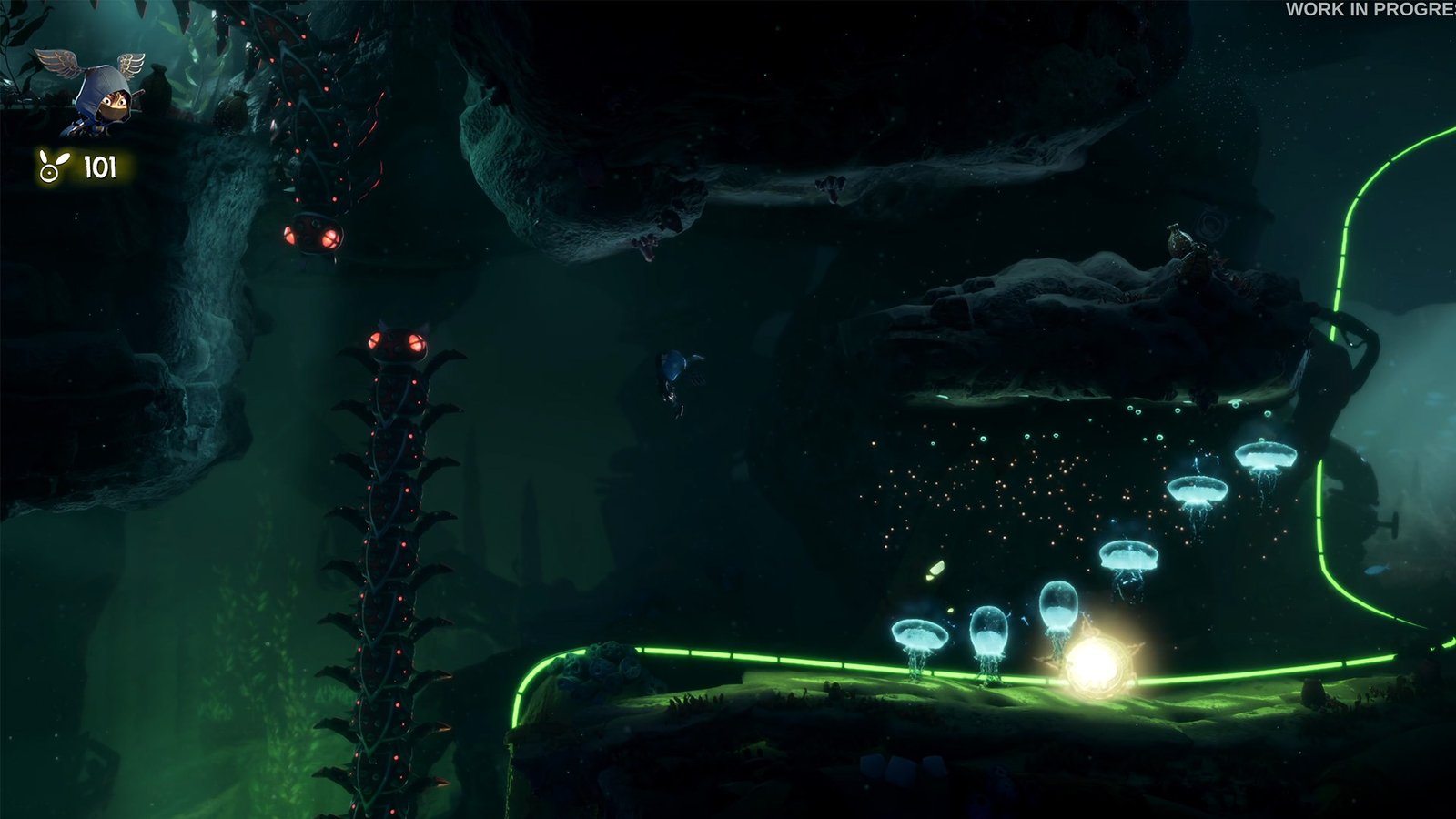
Players can invoke Betilla’s help to fly, become invulnerable, defeat enemies and pass through difficult sequences when a particular section becomes a barrier. There are no usage limits during regular stages, although competitive activities such as the Cave of Trials and Kung Foot Evo disable it in Rayman Legends Retold.
That could sound antithetical to a game where repeated failure is part of learning the rhythm, and in practice, the important part is that these systems are optional. The game is perfectly willing to let players fail repeatedly until timing and movement finally click, and Fairy Blessing does not need to remove that process for people who enjoy it.
It gives someone else the power to decide when that process stops being entertaining. That is a much more interesting form of modernisation than simply reducing difficulty everywhere.
Rayman Origins Is Being Preserved Rather Than Retold
There is another substantial part of the package that takes almost the opposite approach to Rayman Legends Retold. Every copy also includes Rayman Origins: Enhanced Edition, and unlike Legends, Ubisoft has not rebuilt the 2011 platformer around a new 3D presentation.
The hand-drawn visual style remains intact. Instead, the Enhanced Edition brings the original adventure up to modern standards with 4K resolution and 60 FPS, alongside new quality-of-life improvements and 60 hidden Relics scattered throughout the game. Four-player local co-op also remains part of the experience.
That creates an interesting contrast inside the package, while Rayman Legends is being aggressively reconsidered as its worlds are being rebuilt in 3D, the story expanded, entirely new levels added, and familiar mechanics adapted around a different presentation. Origins is largely being allowed to remain Origins, and that decision is reassuring.
The 2011 game’s hand-drawn presentation remains one of its defining qualities, and rebuilding it through the same visual philosophy as Retold would risk turning two deliberately different games into something aesthetically interchangeable. Instead, players effectively get both approaches to preservation in the same package: one game reinterpreted and another polished.
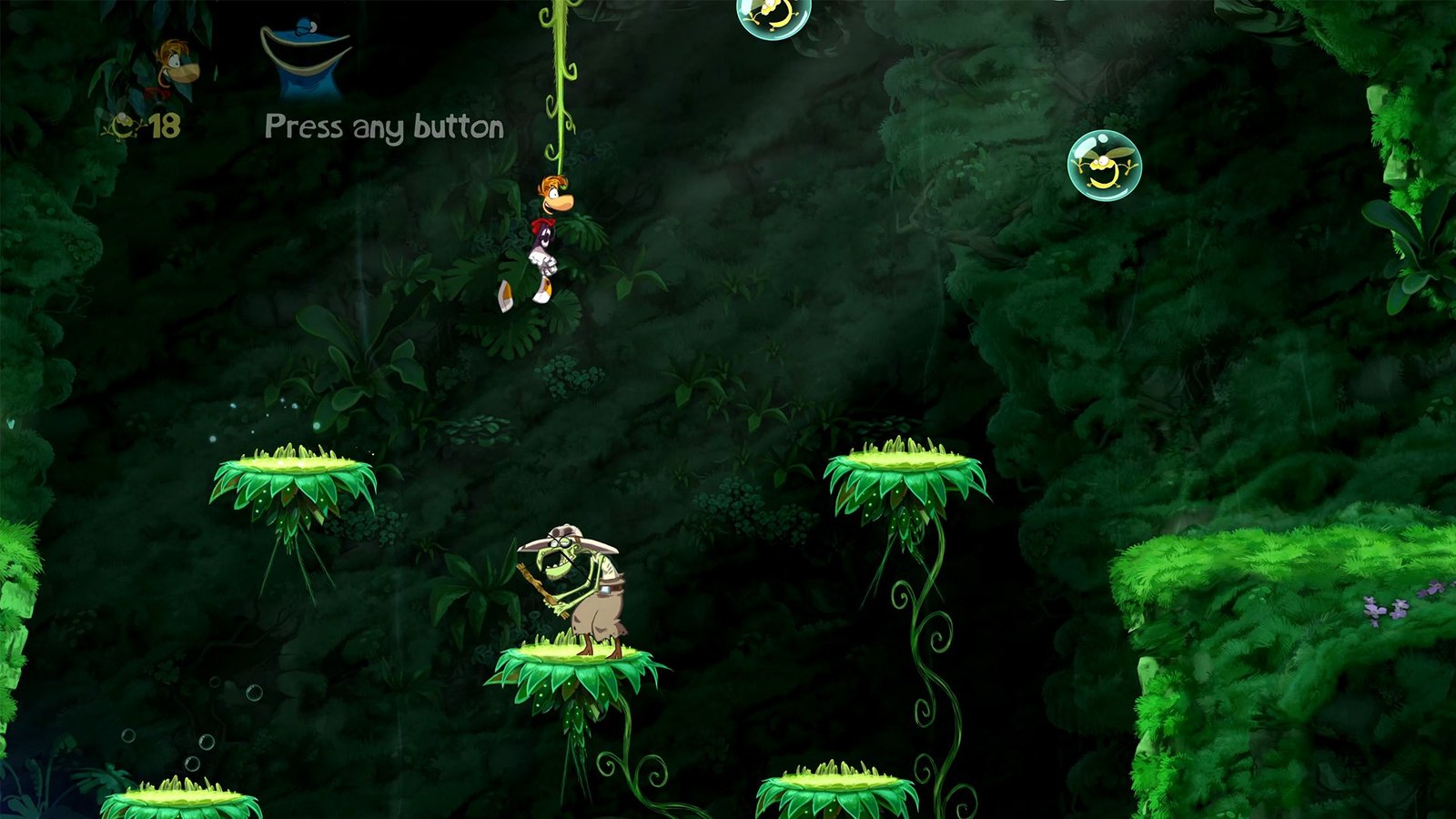
More importantly, including Origins makes Rayman Legends Retold feel less like an isolated remake and more like a surprisingly substantial snapshot of this particular era of Rayman. For newcomers, that means seeing where the movement and visual identity of Legends came from. For returning players, it also creates perhaps the clearest comparison possible between what Ubisoft believes should be retold and what was already worth leaving largely alone.
Rayman Legends Retold No Longer Needs to Prove It Can Feel Like Rayman
Our first hands-on left us wondering whether the transition into 3D could preserve Rayman Legends’ movement, humour, and effortless platforming flow. That concern has largely receded this time around, and the more interesting question now is whether Ubisoft has done enough with that foundation.
Mystic Mesa shows how old ideas can gain context without explaining away their absurdity. The new musical levels have to stand beside beloved stages without nostalgia helping them along. Land of the Livid Dead gives Ubisoft a chance to build mechanics and atmosphere almost entirely of its own, while the accessibility suite directly responds to the challenges of moving a highly readable 2D game into a much busier 3D world.
This does not need to be the definitive replacement for the 2013 original. The inclusion of Rayman Origins: Enhanced Edition makes that philosophy even clearer. Ubisoft is willing to radically reinterpret one game while recognising that another may only need careful preservation. We already know Rayman Legends: Retold can still feel like Rayman Legends; now it has to show us why familiarity is only the beginning.
Rayman Legends Retold launches on December 3 for PlayStation 5, Xbox Series X|S, Nintendo Switch 2 and PC. The package also includes Rayman Origins: Enhanced Edition.
