

Table of Contents
Rayman Legends Retold Turns a Platforming Classic Into a Bigger Adventure
There is an immediate question hanging over Rayman Legends Retold. How do you take a game as tightly associated with 2D platforming rhythm as Rayman Legends and rebuild it as a 3D adventure without losing what made it special?
After playing through the opening stretch, the Old Teensie Kingdom, The Stinkbog, and the newly added dragon ride sequences, the early answer is encouraging. Rayman Legends Retold does not feel like Ubisoft Montpellier and Ubisoft Milan are simply dragging a beloved 2013 platformer into 3D for novelty’s sake. It feels like a more ambitious attempt to turn Legends into a fuller adventure, while keeping the same movement energy, sense of humour, and expressive platforming flow that made the original so memorable.
Rayman Legends Retold is supposedly built around a more cohesive world, new hubs, new storytelling, dragon rides, voiced characters, and a broader sense of adventure. In play, that ambition is visible most clearly in how natural the transition feels. This is still recognisably Rayman, only now the world has more depth, more texture, and more room to breathe.
Movement Still Feels Like the Heart of Rayman
The most important thing Rayman Legends Retold needed to prove was movement, and that is where it makes its strongest first impression. Rayman feels natural in 3D, the controls retain the floaty quality associated with the original, and momentum still plays a meaningful role in how running, jumping, gliding, and chaining actions together feel.
There is a brief adjustment period, especially for newer players. 3D adds more spatial information to read, so the rhythm of movement takes a little time to settle in. Once it does, however, it becomes second nature. The best moments happen when platforming, timing, and forward motion start to flow together. That familiar Rayman groove is still here, and for veterans, it should feel surprisingly easy to slip back into.
The only notable concern at this stage is visual readability. Some enemies and interactive elements can blend slightly into the background, which may be intentional art direction, encouraging players to pay attention to the whole screen rather than relying on obvious visual signposting. It is not a dealbreaker from what was playable, but in a platformer where reaction and rhythm matter this much, it is something worth watching as development continues on Rayman Legends Retold.
The 3D World Adds Tangibility Without Breaking the Flow
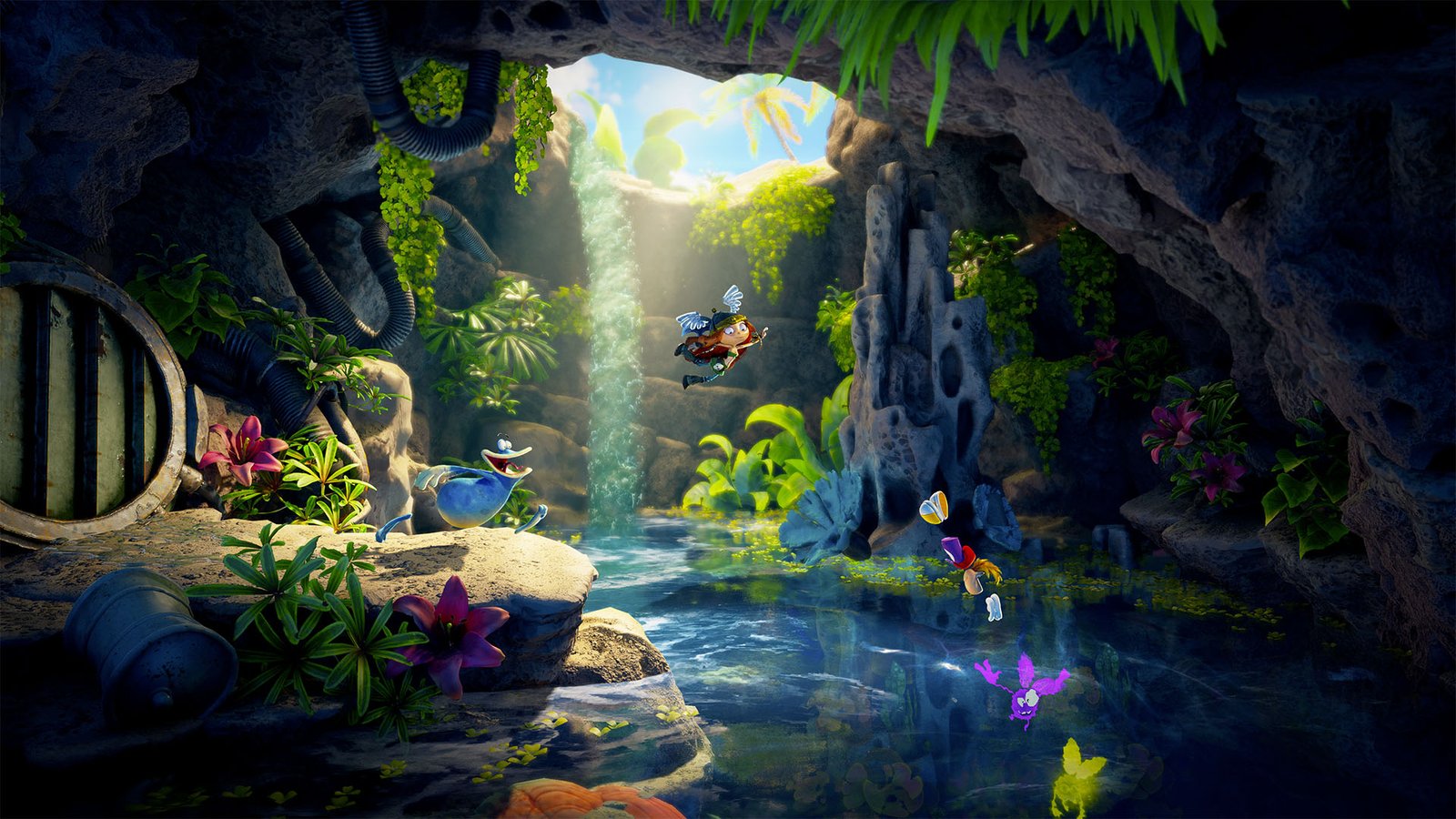
Visually, Rayman Legends Retold is a treat. The vibrant colours, lighting, and visual effects give the world a more tangible quality, making environments feel like handcrafted spaces rather than flat reinterpretations of the original. The move to 3D does not radically alter the platforming foundation, but it does make the world feel more impactful. Stone, foliage, swampy spaces, and background details all carry more weight.
The Old Teensie Kingdom works well as a reintroduction. It is bright, inviting, and expressive, giving players enough room to get used to Rayman’s movement without overwhelming them. The Stinkbog then pushes the platforming a little further, introducing more complexity and challenge in a way that feels gradual rather than abrupt. Rayman Legends Retold does not seem interested in punishing players early, but it wants them to learn the rhythm, then asks them to pay closer attention.
Collecting Lums, finding hidden Teensies, and tracking what has been missed all sit comfortably within that structure. The new hubs help here by making it easy to access each level, see how many Teensies remain undiscovered, and teleport between levels within the biomes. It is a practical quality-of-life addition, but also one that supports the remake’s larger sense of cohesion. The game feels less like a row of isolated levels and more like a connected journey through the Glade of Dreams.
Dragon Rides Bring Spectacle Between Worlds
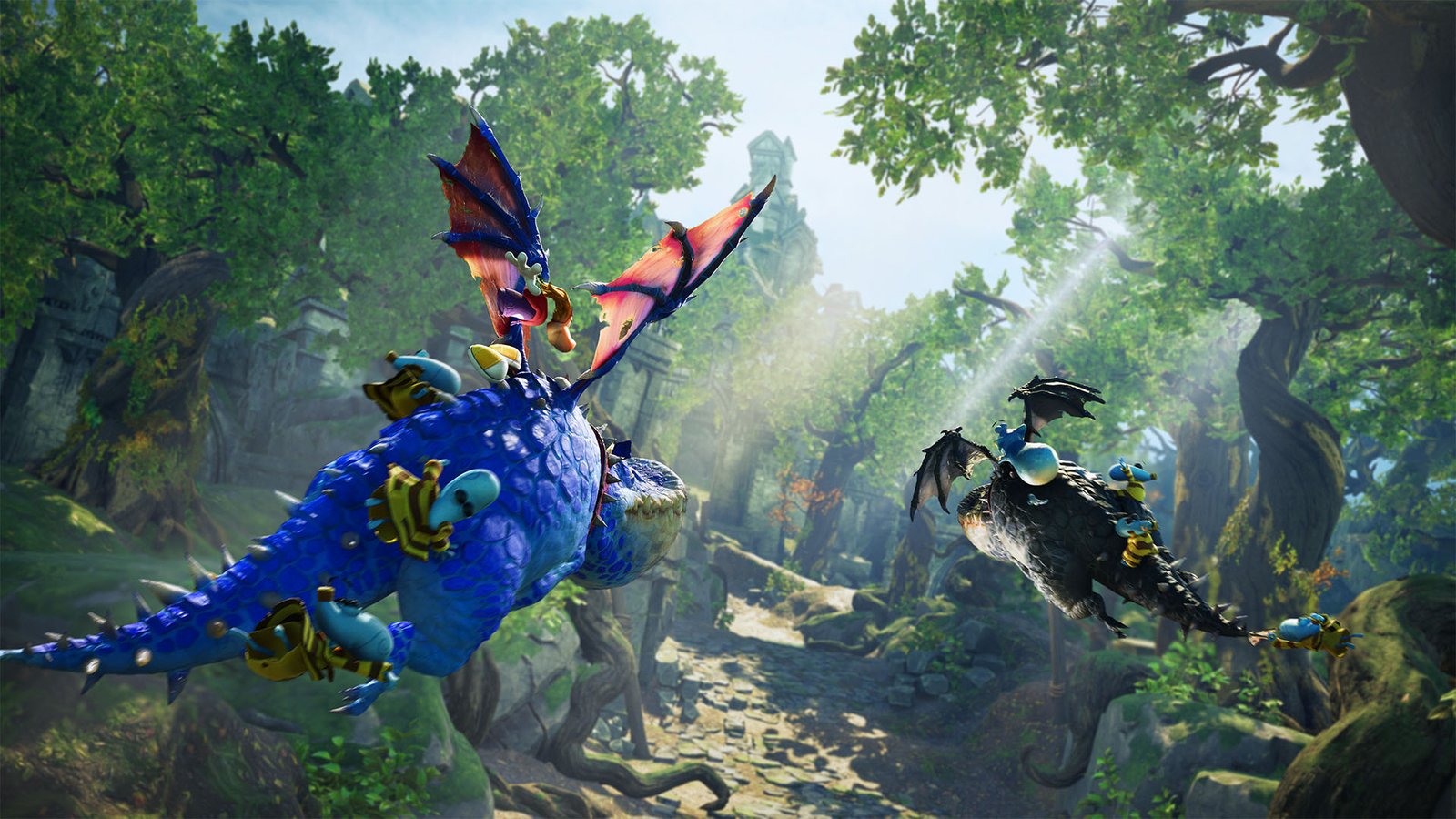
The dragon ride sequences are among the clearest new additions, and they work well as punctuation points between realms. They are linear, but that does not feel like a weakness. If anything, the on-rails structure allows Ubisoft to lean into speed, spectacle, obstacles, enemies, and shifting visual beats without asking the player to manage too much at once.
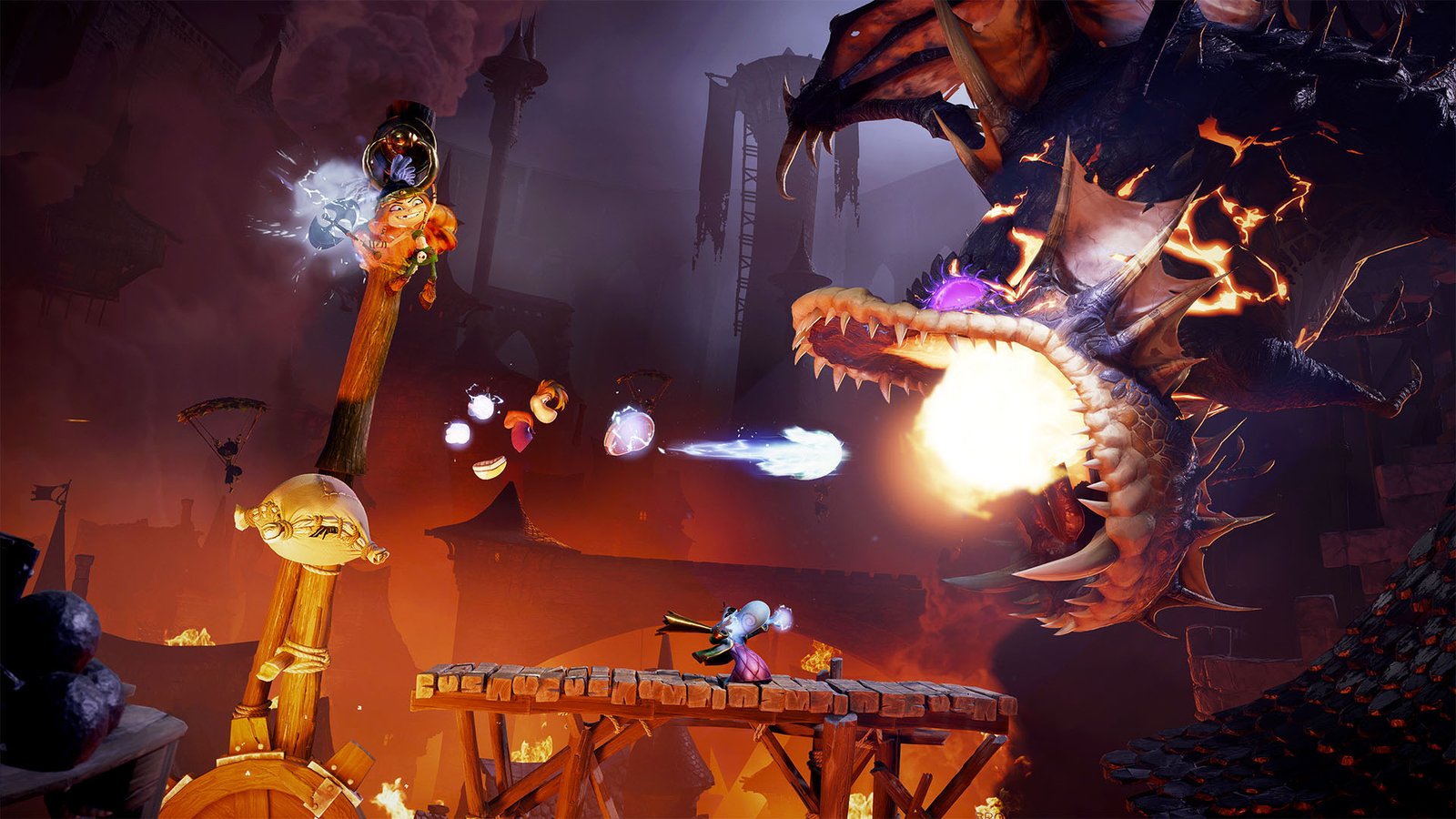
The first dragon ride gives a sense of the broader scale of Rayman Legends Retold, but the second ride was more interesting mechanically. Its shift into a side-scrolling shooter section later on was a nice surprise, giving the sequence a different flavour and showing how Retold can still play with perspective even within its new 3D framework.
These rides may not be the deepest gameplay sequences in the demo, but they add energy and variety. They also fit the remake’s broader personality. Rayman has always thrived on playful interruptions, sudden shifts, and levels that seem to grin at the player, and these levels understand that tone.
Humour, Voice Acting, and Tone Still Carry the Charm
For all the technical changes, Rayman Legends Retold still works because it remembers to be funny. The humour remains one of its clearest strengths. The voice acting, character animation, and general look of the game all preserve the joyful absurdity that has long defined Rayman’s world.
Players are meant to experience a more ambitious story approach, with new 3D cutscenes, voiced characters, more of the Bubble Dreamer, and a new shadowy villain. That sounds promising, but from the playable session, the story remains the biggest element still to be proven. The tone is clearly intact, and the personality is there, but whether the new storytelling meaningfully elevates the adventure will depend on how it develops across the full game.
Rayman Legends Retold is clearly trying to be more than a visual remake, and Ubisoft is positioning this as a foundation for Rayman’s future, not just a return to a fan favourite. For that to fully land, the new structure and story will need to justify themselves alongside the nostalgia.
A Genuinely Exciting Return, With One Key Question
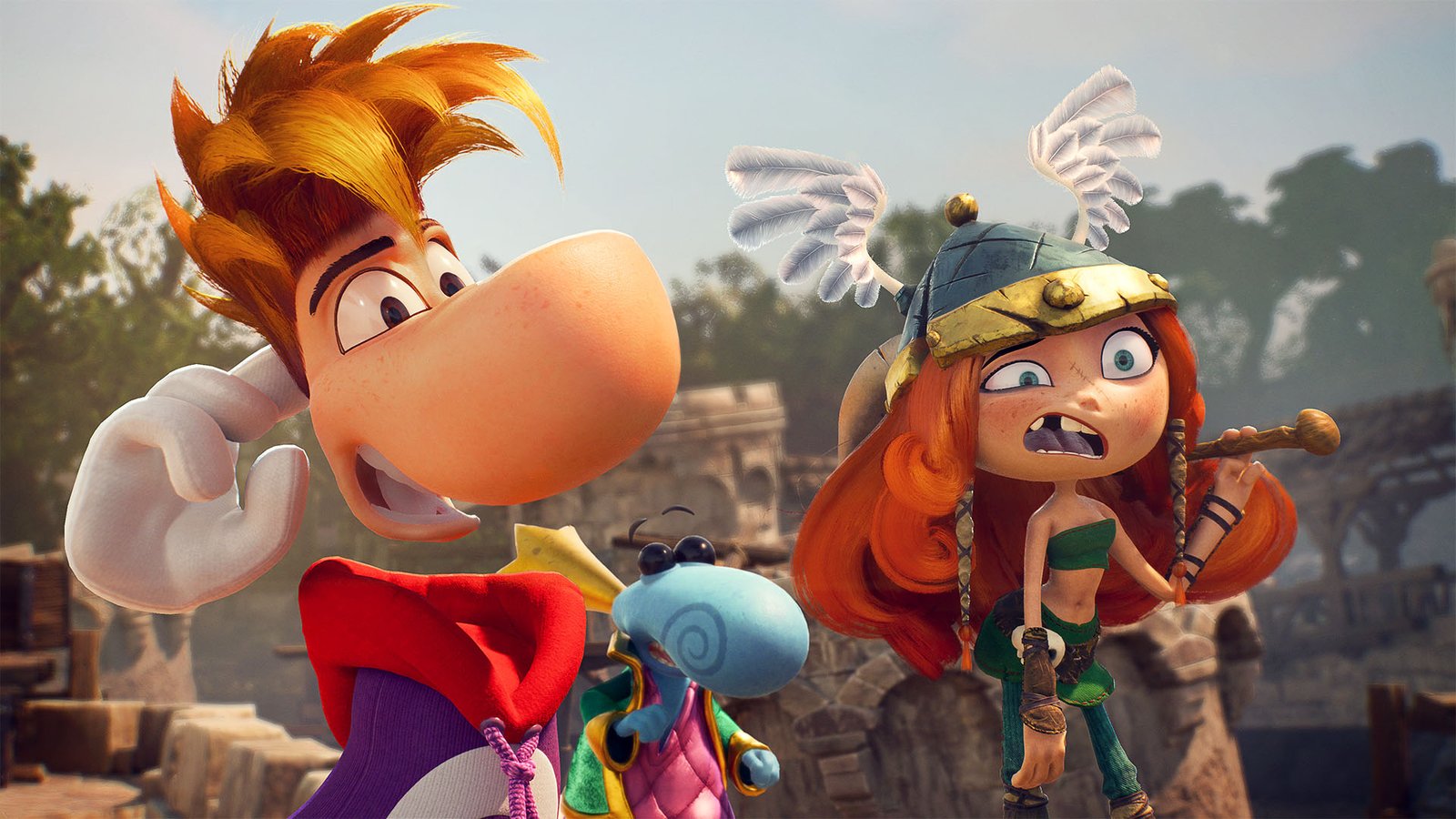
The strongest compliment to give Rayman Legends Retold at this stage is that the move to 3D feels much less risky in the hands than it sounds on paper. Movement feels smooth, humour remains intact, the worlds look gorgeous, and the platforming ramps up in a way that feels natural. For returning players, the best parts of Rayman Legends still seem present. The rhythm, movement, colour, and joyful absurdity are all here. For newcomers, this may be an easier way into Rayman’s world, especially with the more cohesive hubs and fuller sense of adventure.
The main question is whether the remake can maintain a balance between nostalgia and its new structure. So far, that balance looks promising. Rayman Legends Retold does not feel like it is abandoning what made the original special. It feels like it is trying to give those ideas more space, more spectacle, and a more modern platforming language.
That makes this one of the more genuinely exciting remakes to watch. Not because it simply brings Rayman back, but because it suggests Ubisoft may finally be thinking about where he can go next.
