

Table of Contents
Mina the Hollower for Nintendo Switch 2
Mina the Hollower was described as a “make it or break it” release for Yacht Club Games, and that kind of pressure is almost impossible to ignore. Announced in 2022 on Kickstarter with an original estimated release window of December 2023, the game was delayed multiple times and eventually became more than just the studio’s next project. According to founder Sean Velasco, if Mina underperformed, the developer behind Shovel Knight may not have survived.
That context makes the final result feel even more remarkable. Mina the Hollower reportedly sold 300,000 copies in its first three days, giving Yacht Club Games the kind of happy ending that feels almost too neat to be real. What makes it all the sweeter is that this is not just a game worth rooting for, it is simply fantastic.
Mining From the Greats
It is clear from the outset that Mina the Hollower draws inspiration from some truly classic games. The design philosophy of The Legend of Zelda: Link’s Awakening is on full display, the gothic charm of Castlevania runs through its bones, and its combat carries more than a little of that Bloodborne style tension. That alone makes it a brilliant cocktail, but saying this masterpiece only pays homage to those games would do it a disservice.
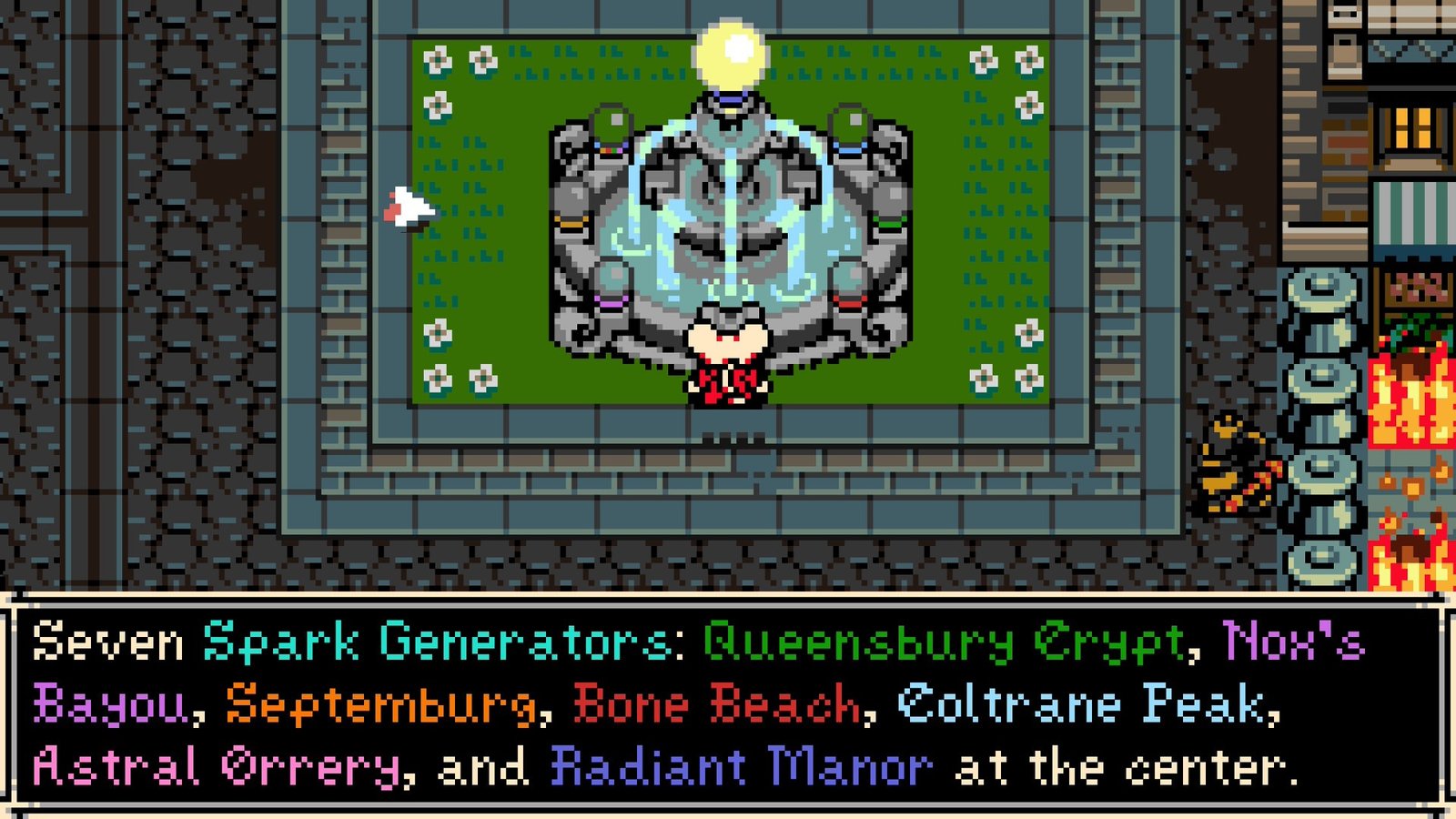
This is a game ripe with options and experimentation. Once you make your way through the tutorial and arrive in the city of Ossex, the whole of Tenebrous Isle opens up. Your goal is to fix six generators spread throughout the island, but how you do that is largely up to you. The game gives you a suggested level order through newspaper stands, yet it never forces your hand. You can follow the intended path, wander into somewhere dangerous, or simply pick a direction and see what happens.
That freedom is refreshing because Mina the Hollower trusts the player. You will absolutely run into difficult enemies if you push too far too soon, but it rarely feels unfair. I never felt like I was being punished for curiosity. Even death is surprisingly lenient. Instead of immediately losing all your Bones, which act as both currency and experience, you lose Sparks first. Only when all of your Sparks are gone do your Bones truly disappear.
That small adjustment changes the rhythm of failure. Bosses can only take a set amount of Sparks, which means repeated attempts never feel like the game is draining you dry just for learning. You can keep trying, leave to explore elsewhere, or come back with a better setup. Mina the Hollower wants you to overcome its challenges rather than feel trapped by them.
Navigating Tenebrous Isle
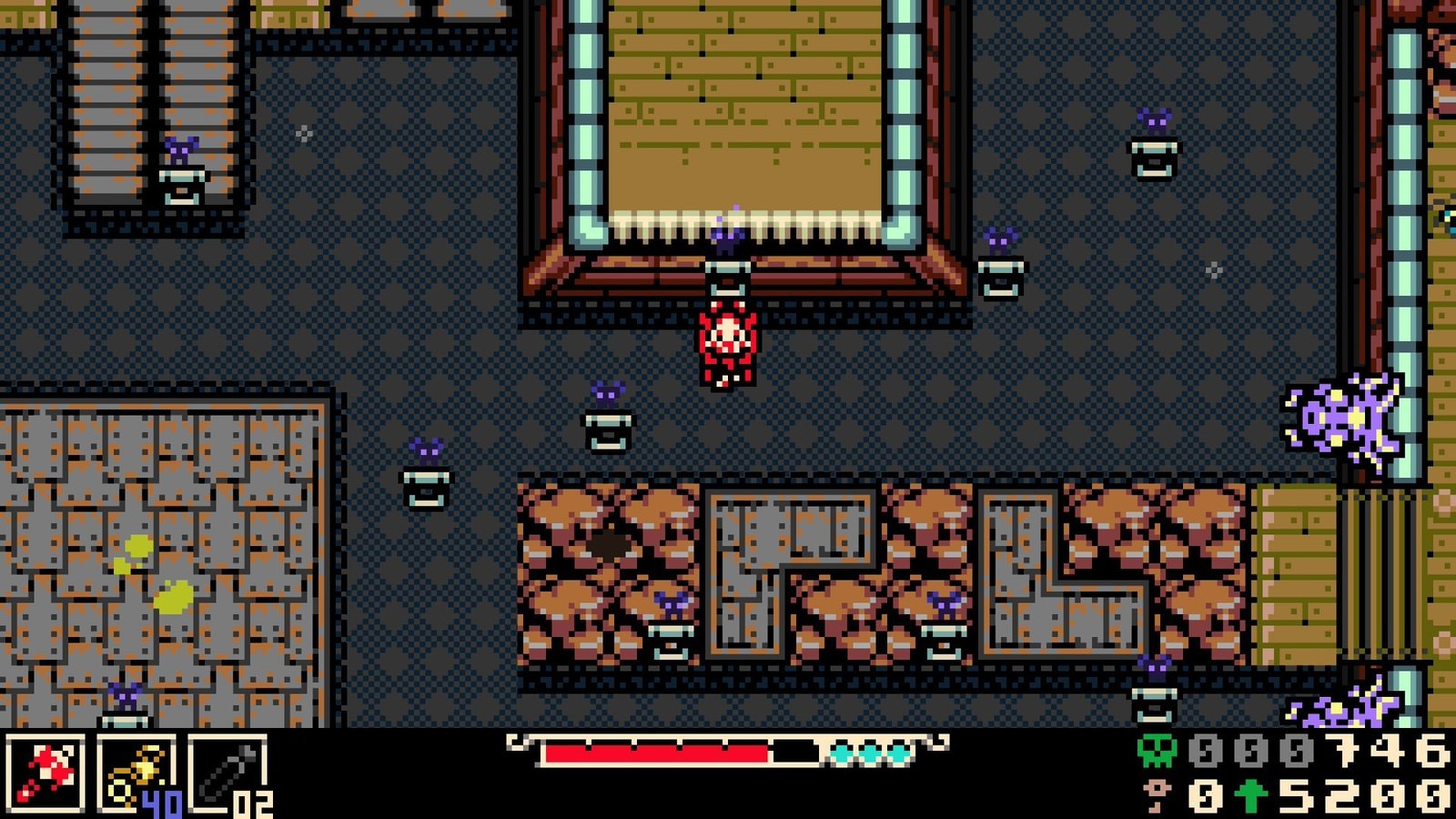
While you can simply walk around Tenebrous Isle, Mina the Hollower constantly encourages you to burrow through it. Burrowing is the heart of the game’s movement, and while it can initially feel loose, it eventually becomes second nature. Hold the jump button, and Mina dives underground, zipping beneath enemies, slipping past obstacles, and uncovering secret routes that hide all kinds of rewards.
Once you realise how safe and fast burrowing can be, the entire game opens up. You can bait an enemy attack, dive underneath it, burst up behind them, and land easy damage. You can use it to escape pressure, create enough distance to heal, or reposition during a hectic boss encounter. Since healing takes a few seconds and can be interrupted, that ability to vanish underground becomes more than a traversal trick. It becomes part of your survival.
Because of this, combat and navigation blend into one flowing dance. You are dipping in and out of the ground, learning how far you can push Mina’s momentum, and discovering little mechanical quirks naturally. Emerging from the ground can give you extra distance, which turns previously impossible gaps into routes waiting to be solved. The game rarely stops to explain itself, but that makes its discoveries feel more satisfying when they finally click.
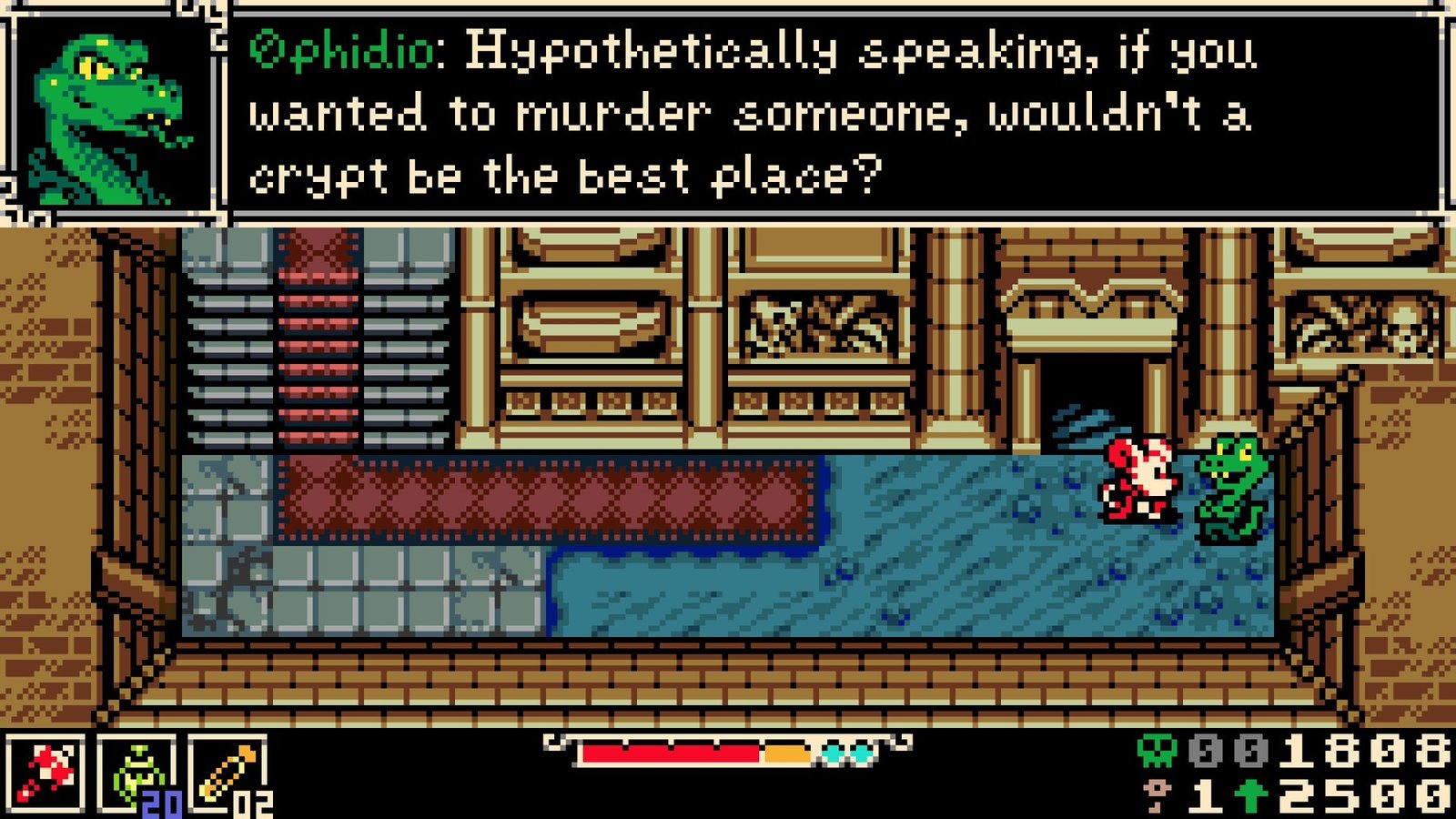
And even if you struggle, Mina the Hollower gives you options. Its modifiers can make navigation easier, letting you walk over pits or jump higher, while others can reshape the experience in sillier or more demanding ways. Some may call that dumbing the game down, but I call it welcome accessibility. If you do not want to use those tools, you do not have to. If you do, the game is better for giving you the choice.
Making Mina Your Own
Throughout your journey, you will find chests, complete sidequests, and stumble into strange corners of Tenebrous Isle that reward your curiosity. Many rewards come in the form of Bones, but the real prize is often a Trinket. These function as Mina’s equipment, and while you can only use one at first, unlocking additional slots transforms the game’s customisation into something genuinely special.
Trinkets mostly fall into two groups: combat and navigation. Some are straightforward, increasing attack power or giving you more healing items. Others completely change how you think about the world. On the way to the autumnal farm town of Septemberg, for example, you can find a Trinket that allows Mina to burrow into walls. Pair that with another Trinket that lets you immediately burrow again after emerging, and suddenly you can cross gaps that seemed impossible by digging through walls again and again.
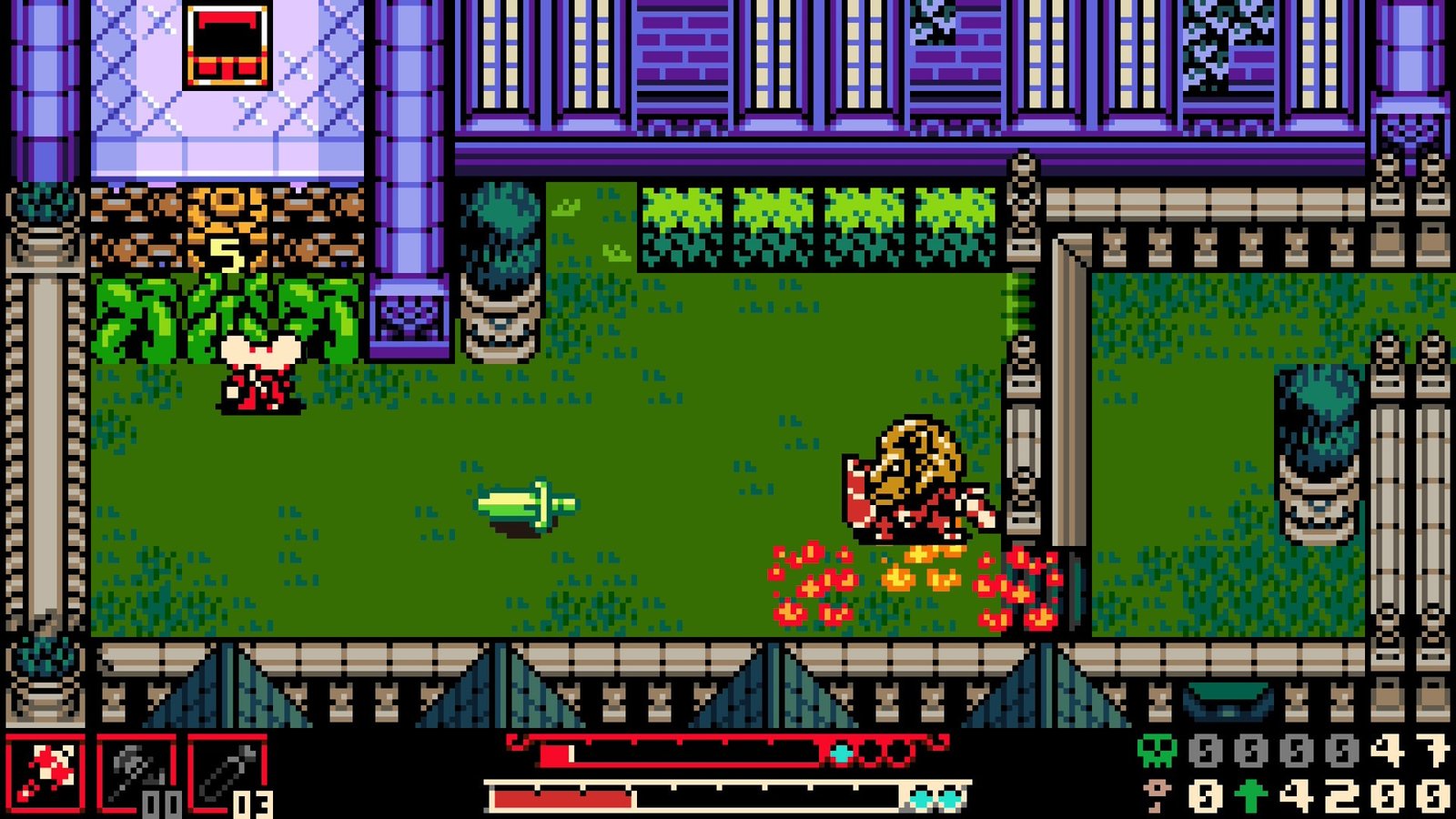
What makes this brilliant is that Mina the Hollower does not treat those tricks as exploits. It allows them, but more than that, it rewards them. One of the game’s earliest challenges is an enormous pit that appears impossible to cross. No basic jump or burrow will get you over it, but through experimentation with Trinkets and Sidearms, Mina the Hollower’s equivalent of Castlevania subweapons, you can eventually break through. Better yet, there is rarely just one solution.
Combat can be broken in similar ways, and I mean that as praise. Several bosses are ferocious if you charge in carelessly, but with the right Trinket combinations, you can dismantle them in seconds. At times, I was reminded of Castlevania: Symphony of the Night, not just because of the gothic influence, but because of how gleefully the game lets you become overpowered if you understand its systems.
A part of me wanted to restrict myself just to appreciate those bosses more fully, but then I discovered how far the game’s new game plus structure goes. The difficulty keeps climbing across future runs, giving players more reasons to return and test different builds. For a game already packed with secrets, that extra replay value feels like a gift.
Mina can also switch between five weapons, with three available as starting choices. Some players may favour the range of the whip, others may prefer the brutal weight of the hammer, while the shield turns combat into something closer to a parry-focused playstyle. Weapons can be swapped and upgraded freely once acquired, making it even easier to tailor the adventure to your preferences. By the end, no two players are likely to have approached Mina the Hollower in exactly the same way.
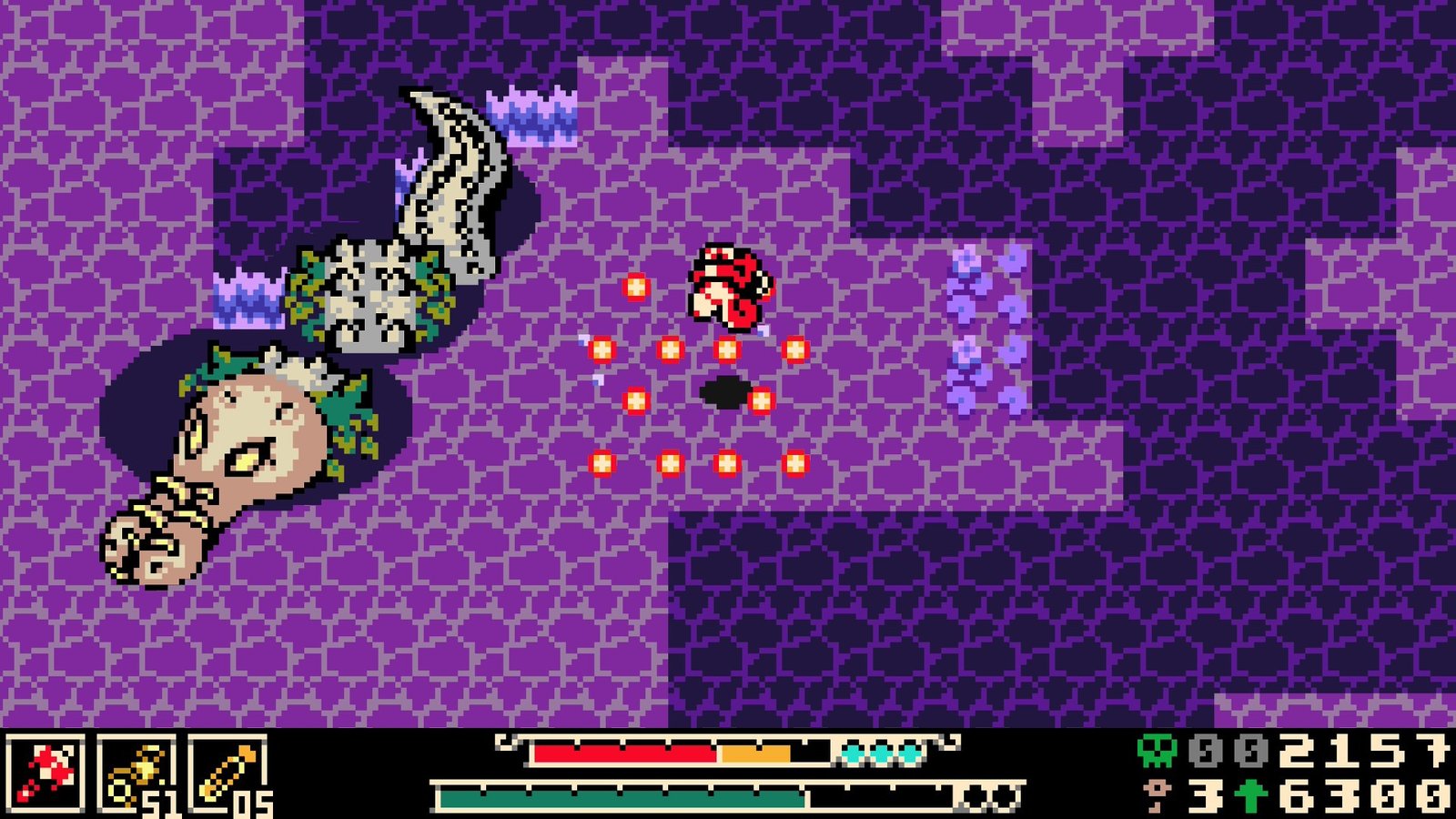
Even levelling asks you to make meaningful choices. Bones can increase Mina’s strength, defence, or Sidearm power, but they can also be converted into Bonestones, allowing you to store value safely instead of risking everything after death. Do you level up now? Do you save for later? Do you spend what you have, or bank it before heading into unknown territory? These decisions may sound small, but they add tension to every expedition.
Game Boy Color Nostalgia at Its Finest
Retro-inspired indie games are everywhere, but Mina the Hollower stands out for its commitment to recreating the feel of a Game Boy Colour classic. While Shovel Knight lovingly channelled an earlier console era, this game feels like something that could have slipped directly into a handheld library from decades ago, only with modern design intelligence quietly powering it beneath the surface.
The limited colour palette, chunky sprites, and chiptune score by Jake Kaufman all work together beautifully. The music has that instantly hummable quality you want from this style of game, while the visuals balance cute creatures with grotesque monstrosities. It is charming, eerie, funny, and occasionally much bleaker than its tiny characters might suggest.
Tenebrous Isle itself is not a happy place. The poor beg in the streets, the wealthy look away, and the newspapers slowly twist into propaganda. There is plenty of silliness, including a funeral service for a sentient leaf and a band of bayou critters, but the island’s decay gives the whole adventure a sharper edge. The generators are broken, yes, but Mina the Hollower gradually makes it clear that the machinery is not the only thing falling apart.
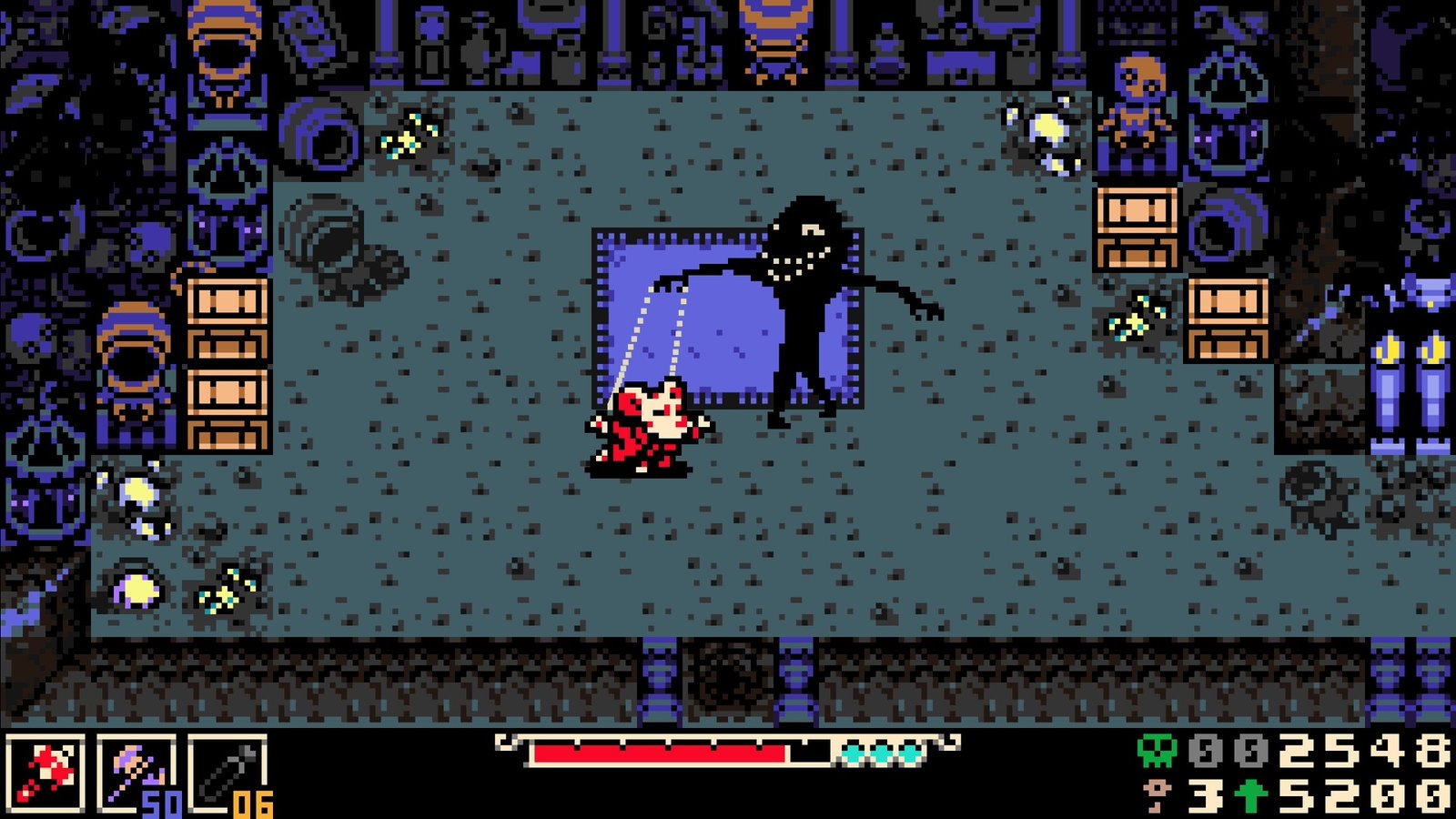
The plot itself is not especially hard to predict, but the tone carries it. You arrive after being summoned by your old friend Lionel, only to discover that betrayal, class tension, and rot run much deeper than expected. It is not a story that needs to shock you at every turn. It works because the world around it is so carefully textured.
Navigation can occasionally be tricky, especially since Mina the Hollower does not provide a traditional minimap. You can unlock maps at save points, but they provide a broad overview rather than constant guidance, and for some players, that will be frustrating. For me, it made Tenebrous Isle feel more physical. The areas loop back into themselves, shortcuts gradually reveal the island’s structure, and before long, you know the place because you have actually travelled through it rather than followed an icon.
Nitpicking at a Molehill
By about the five-hour mark of my first 20-hour trip through Mina the Hollower, I kept asking myself if there was anything I genuinely disliked. I knew I would review it months ago, and I always try to be as fair as possible. Yes, Mina the Hollower draws from several of my favourite games, but I did not want that affection to cloud my judgement.
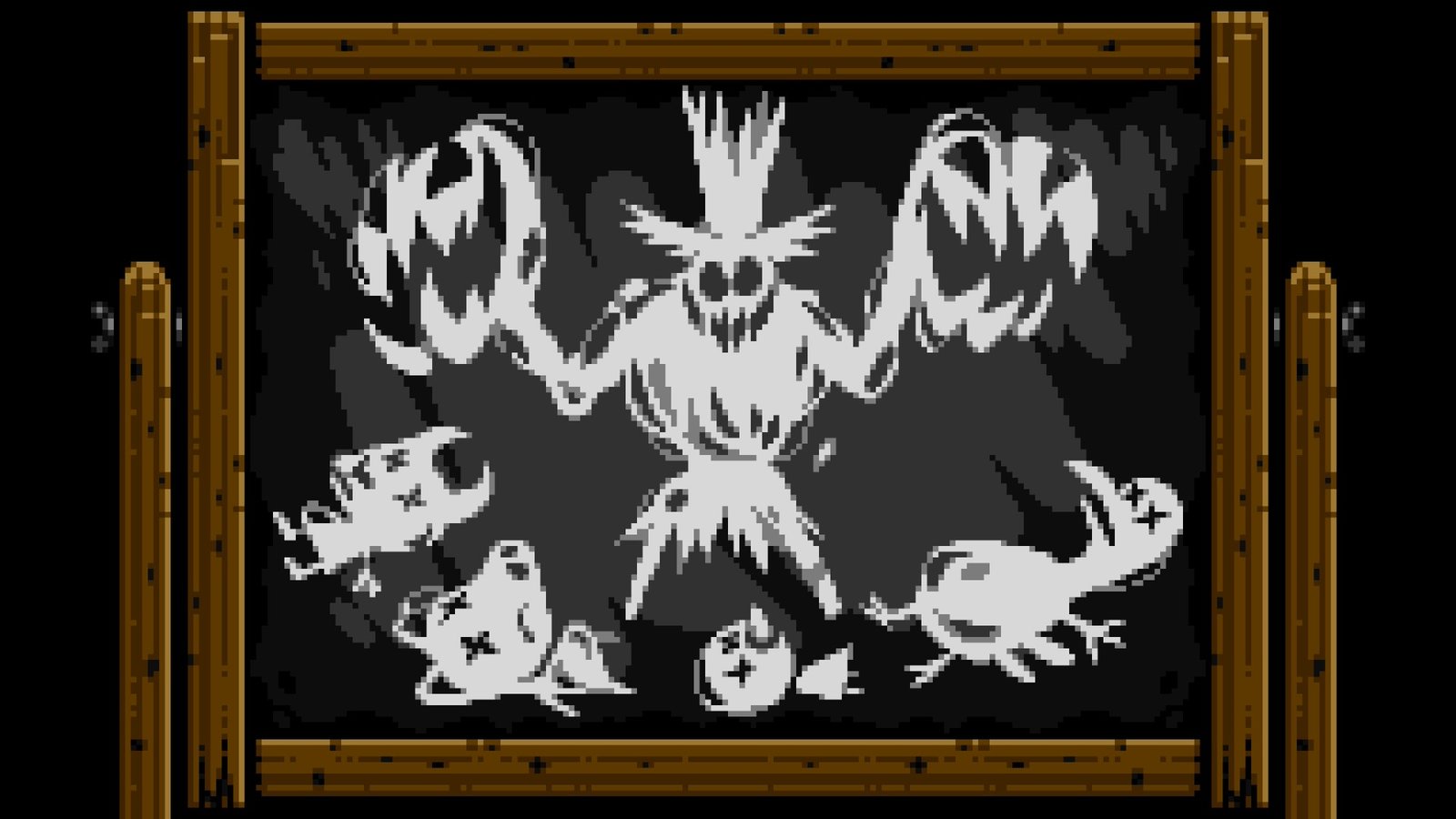
Even after seeing the credits roll, I struggled to find anything that truly bothered me. Every small annoyance came with a design explanation. Bosses could become too easy, but only because I had optimised my build using the tools the game gave me. Backtracking could occasionally drag on, but two fast-travel methods kept it from becoming more than a mild inconvenience. Some platforming puzzles could feel obtuse, but Mina the Hollower had spent the entire game encouraging me to think around problems rather than through them.
Eventually, the only complaint I could settle on was that I do not love the fishing minigame. It is optional unless you are chasing completion, and even then, it eventually rewards you with the fishing rod, which turns out to be far more useful than expected. Once I realised it was effectively the game’s version of a grappling hook and could be used for sequence breaking, even that minor irritation became part of Mina the Hollower’s wider toy box.
At a certain point, I stopped trying to force criticism and simply let the gothic charm wash over me. Mina the Hollower is not a flawless game in the impossible, abstract sense, but it is the perfect game for me. Its Game Boy era presentation won me over, its freedom kept surprising me, and its combat, platforming, progression, and secrets made every new session feel worthwhile.
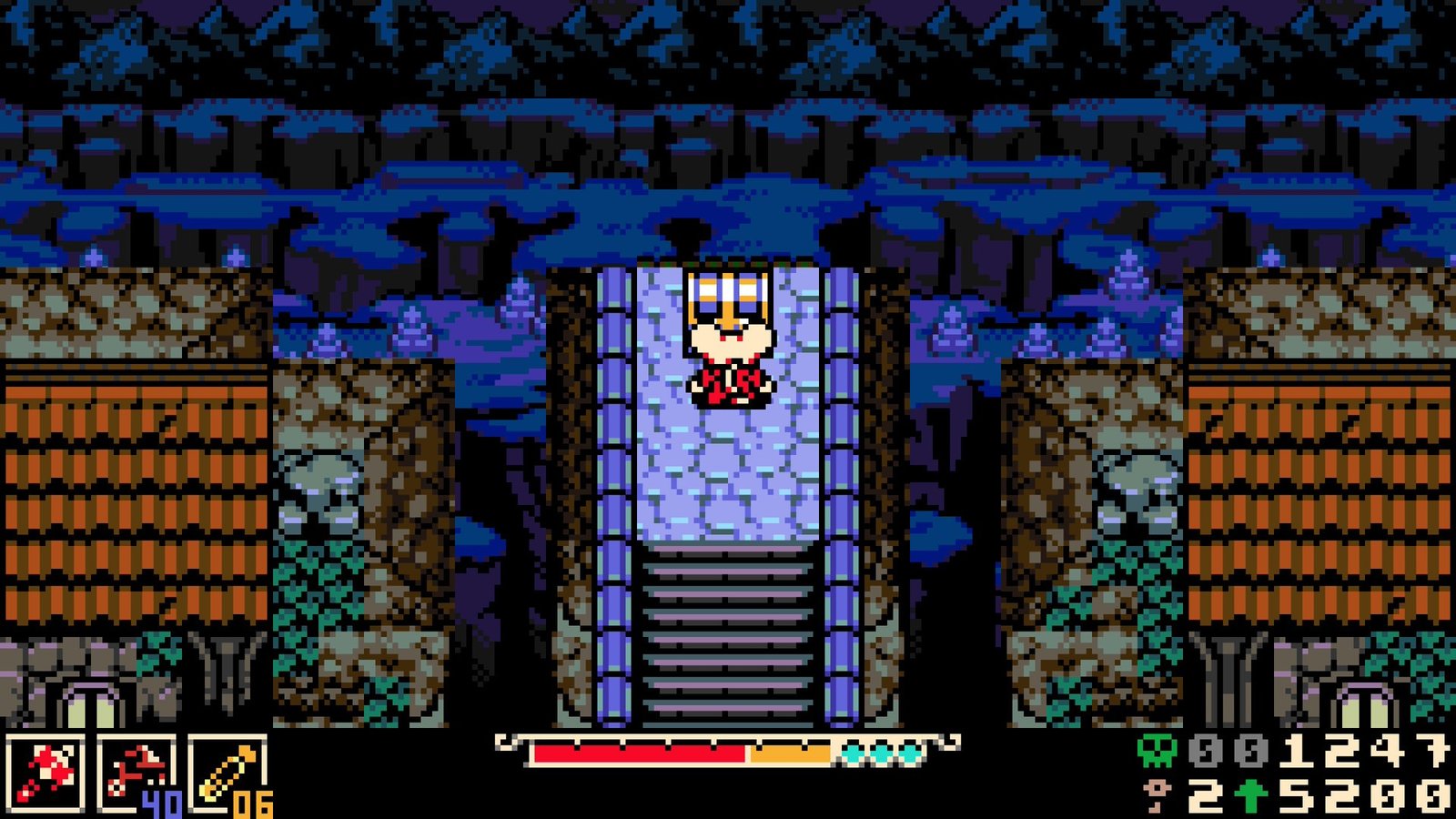
Even the smallest details impressed me. The start-up screen loaded almost instantly on Switch 2, which should have barely mattered, yet somehow it did. When a game this good also respects your time in tiny ways like that, it becomes hard not to admire the craft behind it.
Mina the Hollower deserves to be remembered as one of the all-time greats. There are years of love poured into it, and that care is present on every screen. Beneath all the noise of modern gaming, with its bloated budgets and endless monetisation schemes, there is still room for something this focused, strange, generous, and joyful, that is pure, unadulterated gold.
Mina the Hollower is available on Nintendo Switch, Nintendo Switch 2, PlayStation 5, Xbox Series X/S, and PC.
SavePoint Score
Summary
Mina the Hollower blends gothic atmosphere, expressive movement, clever customisation, and meaningful player freedom into one of the most rewarding indie adventures in years. Its minor frictions are easily outweighed by its charm, craft, and replayable design, ingredients that make for a modern masterpiece.
