

Table of Contents
Talking Rayman Legends Retold at Gamescom Asia x Thailand Game Show 2026
The question surrounding Ubisoft Milan and Ubisoft Montpellier’s Rayman Legends Retold has changed considerably since we first saw the game.
When we went hands-on with Rayman Legends Retold in June, the immediate concern was whether a platformer so closely associated with precise 2D movement could survive being rebuilt within substantially richer 3D environments. It did, with Rayman‘s familiar rhythm, momentum and joyful absurdity coming through far more naturally with a controller in hand than the transformation might have suggested.
By the time of our final Rayman Legends Retold preview in September, that was no longer the most interesting question. New musical stages, the Land of the Livid Dead, expanded storytelling and the very different decision to preserve Rayman Origins: Enhanced Edition much closer to its original form had begun showing why Ubisoft was doing more than simply recreating a favourite with modern visuals.
What we still did not know was how the people making it decided where those boundaries should sit for Rayman Legends Retold.
That was what we wanted to understand when speaking with Alessandro Arndt Mucchi, Production Director at Ubisoft Milan, following his appearance at Gamescom Asia x Thailand Game Show. Mucchi had joined Ubisoft Singapore’s Erik-Jon Evangelista for a session about how Ubisoft is approaching the reimagining of classic games, and his answers reveal that preserving Rayman is less about refusing to change anything than understanding precisely how far an old idea can bend.
Ubisoft Literally Bent Rayman Legends to Make 3D Work
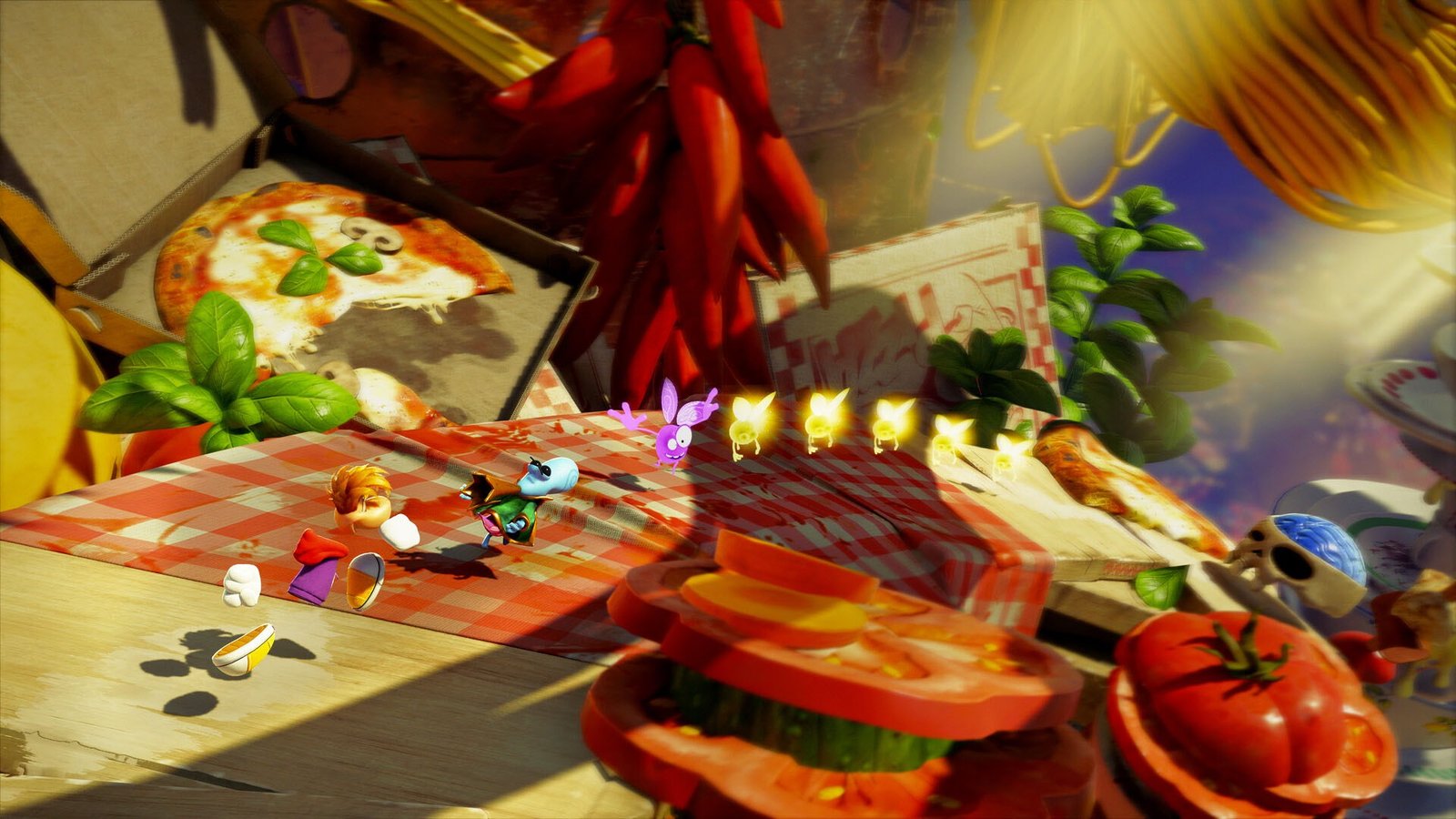
Sometimes that bending is not metaphorical. Mucchi described a technique the development team simply calls “bending”, created to solve one of the fundamental problems involved in transforming the original Rayman Legends.
The 2013 game was designed around characters travelling across a horizontal plane. For Rayman Legends Retold, Ubisoft took those existing walkable routes and began curving them through a 3D world, adding depth without rewriting the underlying gameplay logic that determined where Rayman was supposed to move.
That required restraint. Bend a route too little and the new dimension risks feeling cosmetic; take it too far and a stage designed around readable side-scrolling platforming could become something mechanically different. For Mucchi, the goal was to let players “peek behind the curtains of the Glade of Dreams without breaking the gameplay.”
It is a useful explanation for something our first hands-on already suggested without being able to see the machinery underneath it. Rayman Legends Retold frequently looks considerably deeper than the original game, with paths curling through environments and backgrounds given far more physical presence, yet Rayman’s movement still tends to feel reassuringly familiar.
There are consequences to adding all that visual depth. Our June preview found that certain interactive elements could occasionally become harder to pick out against busier scenery, an issue Ubisoft has since addressed through options such as Highlights and High Contrast Mode. The studio’s official accessibility breakdown specifically identifies greater visual complexity as one of the challenges created by moving from 2D presentation into a richer 3D world.
That is the interesting trade-off behind Rayman Legends Retold: Ubisoft wants players to see more of the Glade of Dreams without losing the clarity that allowed them to move through it so effortlessly in the first place.
Rayman Still Has to Be Dreamy, Joyful and Bizarre
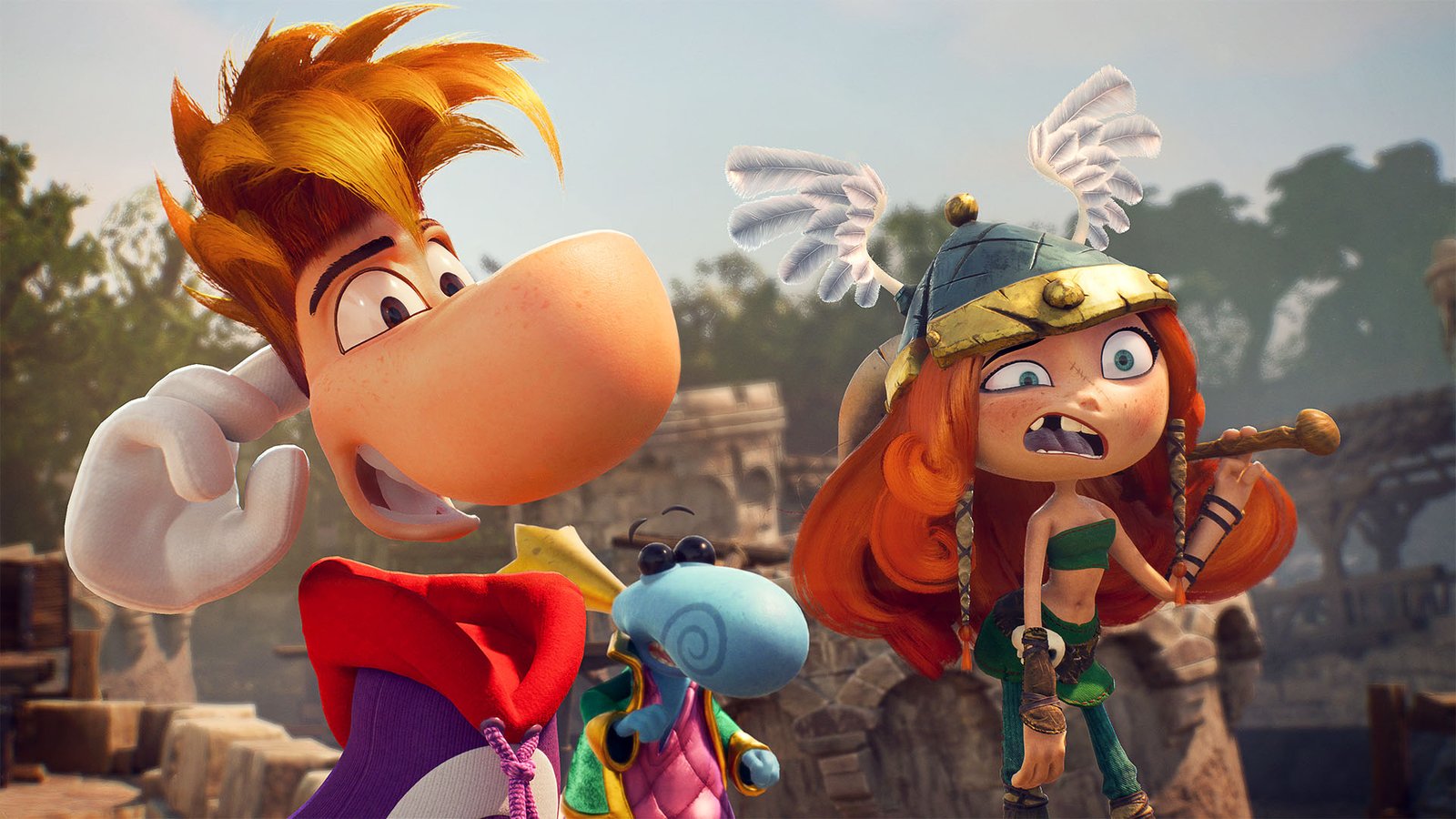
Visual depth is not the only thing Ubisoft is adding. Rayman Legends Retold has a more connected storyline, voiced cinematics, additional character encounters and an entirely new antagonist, which creates another risk. Start explaining too much about a world this strange and the Glade of Dreams could stop feeling dreamlike altogether. Mucchi’s answer was remarkably simple.
“To us, Rayman is dreamy, is joyful, and it is bizarre,” Mucchi shared. “You will see that some characters will not say everything they know… Some are more mysterious, and we can’t wait for players to experience it. There’s still a lot to tell about Rayman in the future.”
Those are the three storytelling pillars Ubisoft has used throughout Rayman Legends Retold, and despite adding considerably more narrative structure, Mucchi stressed that the team has deliberately resisted explaining everything.
Mystic Mesa, formerly Fiesta de los Muertos, now exists within a more coherent geography. Its food, Mexican influences and general absurdity are given more context within the wider journey, but that does not mean Ubisoft has attempted to rationalise every strange thing players encounter. There is a difference between giving a world internal logic and explaining the joke.
Rayman Legends Retold increasingly appears interested in the former while protecting the latter. That may be particularly important because Ubisoft sees it as a substantially expanded adventure, including a new storyline, sixth realm, four new musical stages and additional challenges alongside the returning material. The more connective tissue Ubisoft adds, the more important it becomes that Rayman’s world never feels completely knowable.
New Mechanics Have to Feel Like They Were Always There
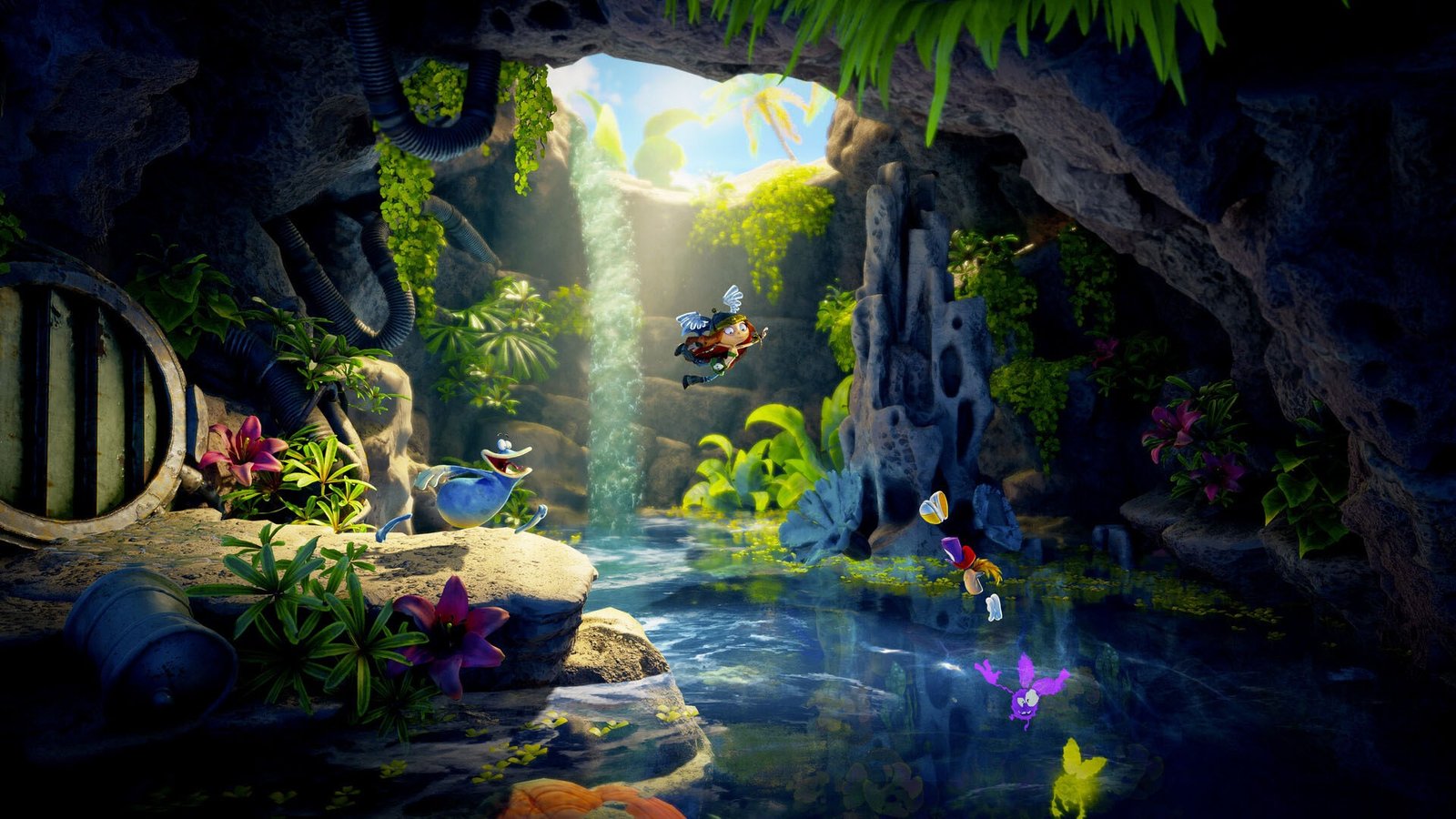
That same restraint applies to gameplay. When we asked which idea within the new realm had required the most iteration, Mucchi focused not on how spectacular the new ability looked, but something far less glamorous: where its button should go.
Adding another power to an existing moveset meant looking at controls that had already been assigned to actions players understood, then finding a way to introduce something new without disrupting that familiarity in Rayman Legends Retold. It sounds like a small production problem until you consider how quickly one awkward input can interrupt a platformer’s flow.
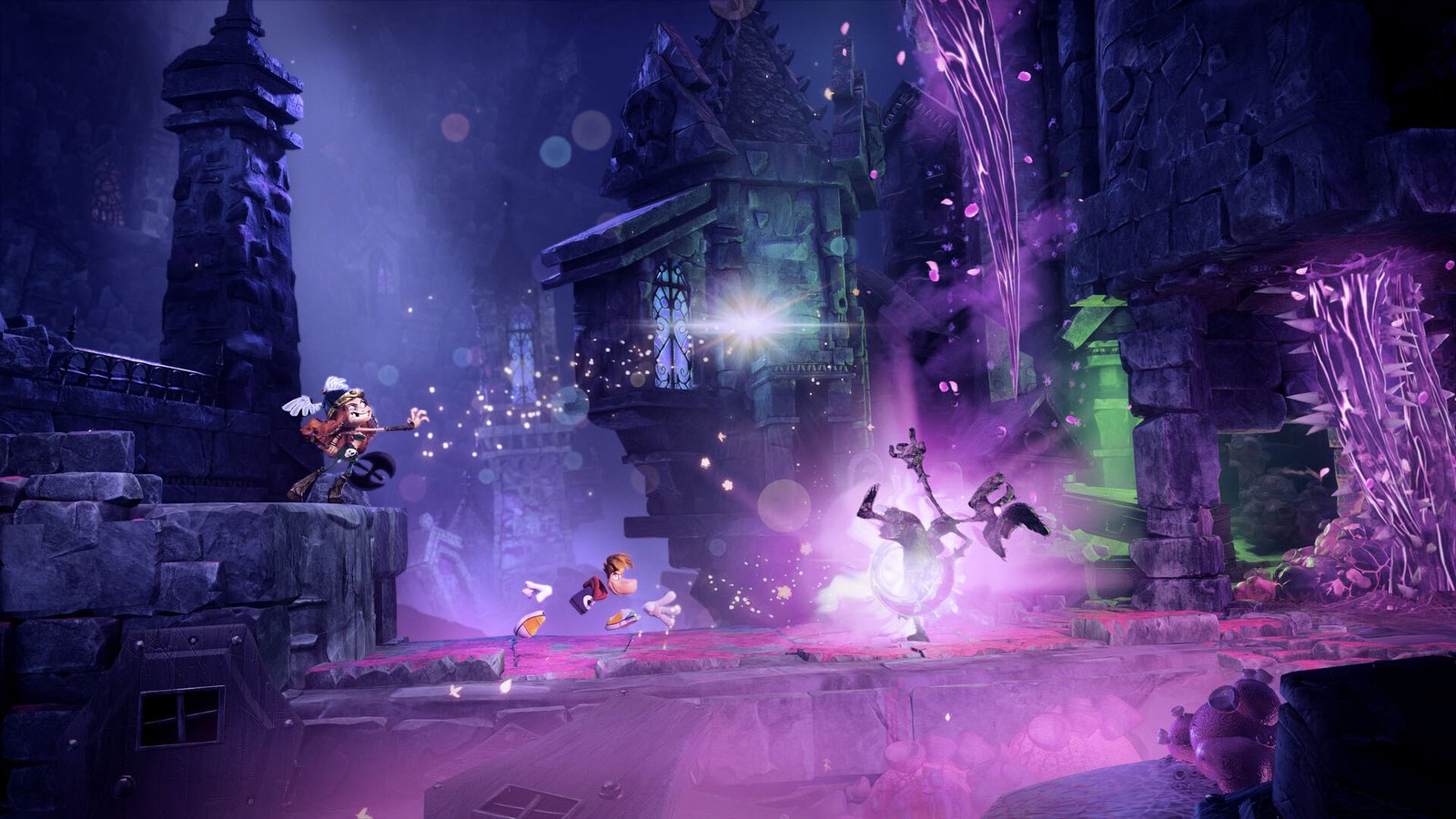
The new Land of the Livid Dead demonstrates why that attention is necessary. In our final preview, Fairy Radiance added another action for players to consider while already jumping, attacking anfd reading environmental hazards. The mechanic worked because using it did not feel like temporarily stepping into another game; it existed inside the same movement language.
Mucchi believes the new power ultimately “matches perfectly with the rest of the move set of our characters.” That may be one of the more useful ways to judge Rayman Legends Retold‘s additions in general. New content does not merely have to be enjoyable on its own. It has to feel as though Rayman could always have done it.
Rayman Fans Were Involved Before Ubisoft Even Revealed the Game
That judgement was not made entirely behind closed doors. When asked for one concrete example of player feedback changing Rayman Legends Retold, Mucchi did not single out a particular mechanic or level. Instead, he revealed that Ubisoft had already begun speaking with community leaders before the remake was publicly announced.
Some were invited to the Montpellier studio and shown what the teams were building, with their responses feeding into decisions about what should change, what could be improved and what was better left alone. The lack of a single named change is worth noting. Mucchi’s answer points towards consultation informing the broader production process rather than one easily marketable “fans asked, Ubisoft changed it” moment.
That arguably fits Rayman Legends Retold better anyway. Its most convincing changes have generally been subtle ones. The platforming still feels familiar despite the additional dimension. New levels behave like Rayman levels rather than diversions designed to advertise the remake. Accessibility options respond to problems introduced by the richer presentation without changing the default experience for players who do not need them.
The interesting question was therefore never whether Ubisoft listened to players on one feature, it was whether the team understood why people cared about the original in the first place.
Ubisoft Milan and Montpellier Did Not Have to Learn How to Love Rayman
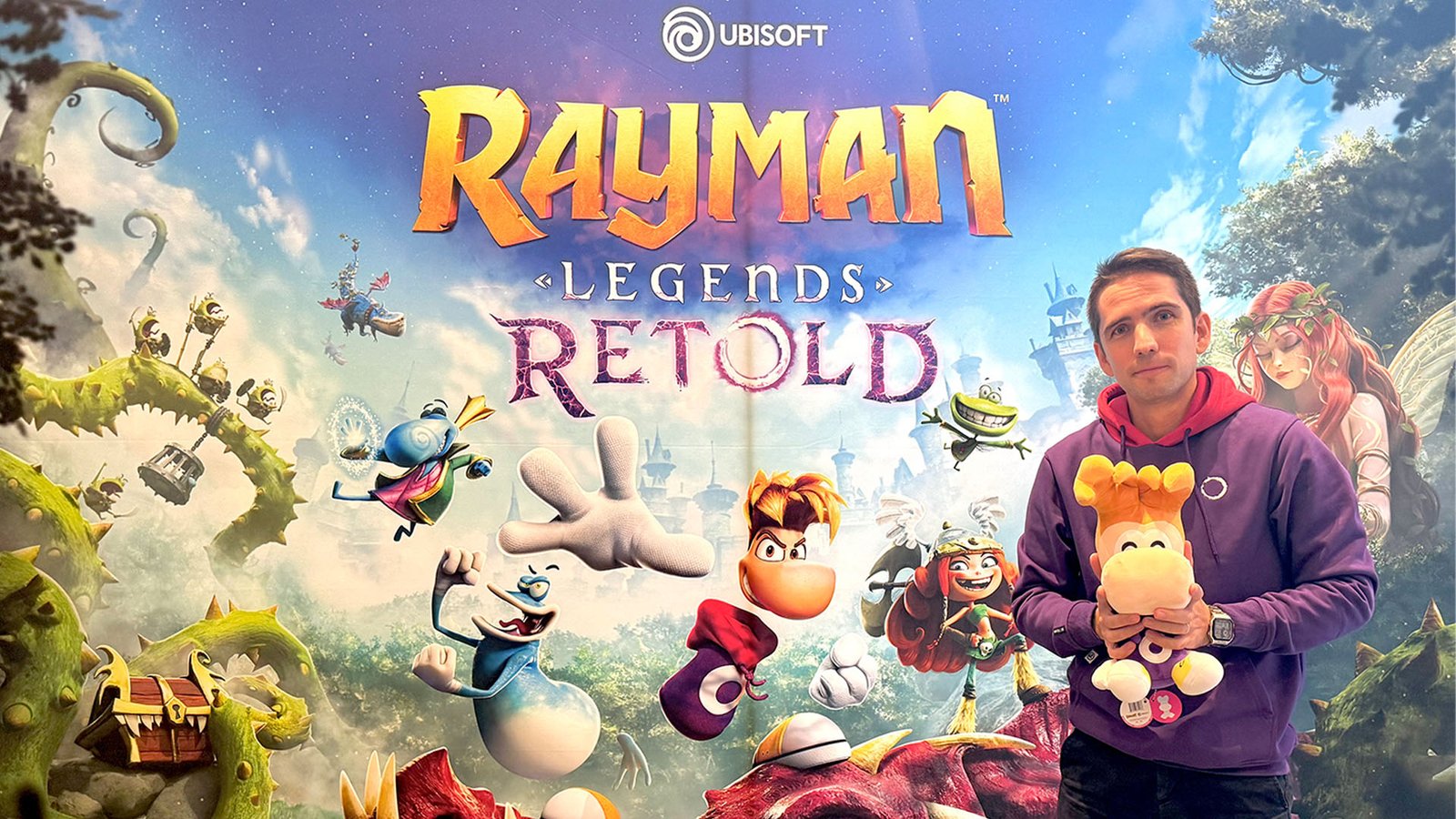
There is also a wider significance to two studios sharing responsibility for rebuilding such a recognisable platformer. We asked Mucchi what part of Rayman’s design knowledge had been hardest to transfer between Milan and Montpellier. His answer was effectively that the difficult part was not creative at all.
Both studios, he argued, already share an enthusiasm for colourful, playful experiences and memorable characters. That common sensibility meant there was no singular piece of “Rayman knowledge” that had to be painfully taught from one team to another. Getting the developers into the same room was apparently another story.
Mucchi recalled the teams taking seven-hour road trips between the studios because Milan and Montpellier are surprisingly awkward to connect despite not being enormously far apart geographically, journeys he now counts among his favourite memories from development. There is something appropriately old-fashioned about that detail in a project concerned with bringing something old forward.
All the technology involved in recreating Rayman Legends in 3D could not make two European studios any closer together, so sometimes the solution was simply getting in a vehicle and spending seven hours on the road.
Restraint Is Part of Rayman Legends Retold
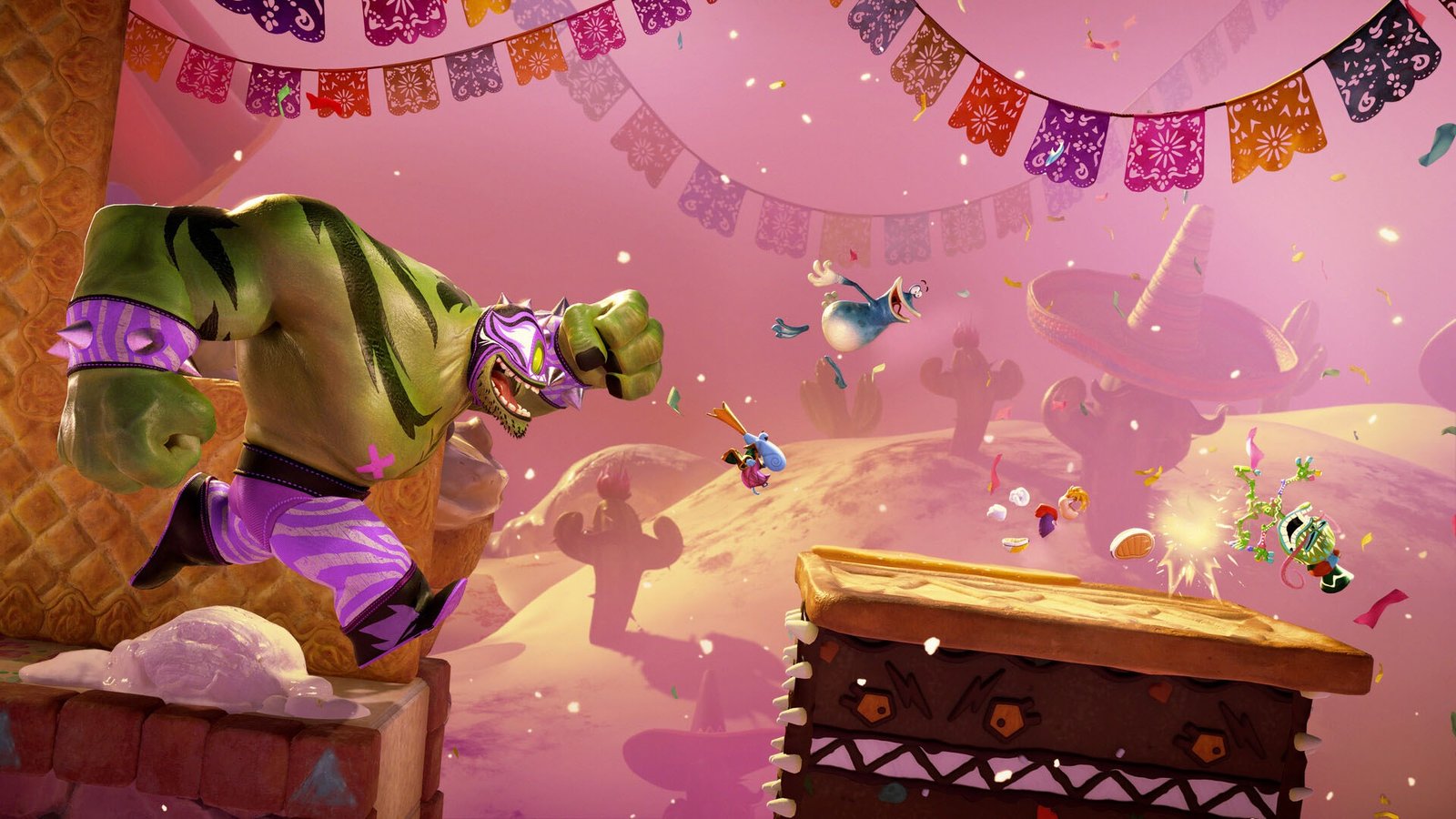
Across our previous hands-on sessions, Rayman Legends Retold has gradually answered most of the obvious questions. Yes, the movement can survive the shift into 3D. Yes, Ubisoft can build genuinely new stages that still fit beside the originals. The expanded world can provide greater context without completely draining the Glade of Dreams of its wonderfully strange identity, while Rayman Origins: Enhanced Edition offers an interesting counterpoint by showing that not everything from this era of Rayman needed the same degree of reinvention.
Mucchi’s answers reveal the less visible rule connecting those decisions. Ubisoft is willing to bend an old level, but not so far that its platforming breaks. It is willing to tell a fuller story, but not one that explains every mystery. A new ability can join Rayman’s repertoire, but only if it feels comfortable beside everything he could already do. Even community feedback appears to have been used partly to test whether the developers understood what should remain untouched.
That gives the word Rayman Legends Retold a slightly different meaning: it is not simply permission to add more, sometimes it means knowing exactly when to stop.
Rayman Legends Retold launches on December 3 for PlayStation 5, Xbox Series X|S, Nintendo Switch 2 and PC, with Rayman Origins: Enhanced Edition included in the package.
